Home
» Pets
»
Why Does a Dog Drink More Water After a Diet Change?
Why Does a Dog Drink More Water After a Diet Change?
Illustrative example: Imagine that Milo, a healthy adult dog, has eaten canned food for months. His family switches him to dry kibble, and over the next few days they notice him visiting the water bowl more often. This made-up example is a way to apply general guidance; it is not a real patient story or a test result.
A dog may drink more after a diet change because the new food contains less water. Dry kibble has far less moisture than canned food, so a dog eating kibble may need to get more of its water from the bowl. That can explain a modest shift, especially if the dog otherwise seems normal. But a noticeable, persistent increase in thirst can also have causes unrelated to food. A diet change happening at the same time does not prove the diet caused it.
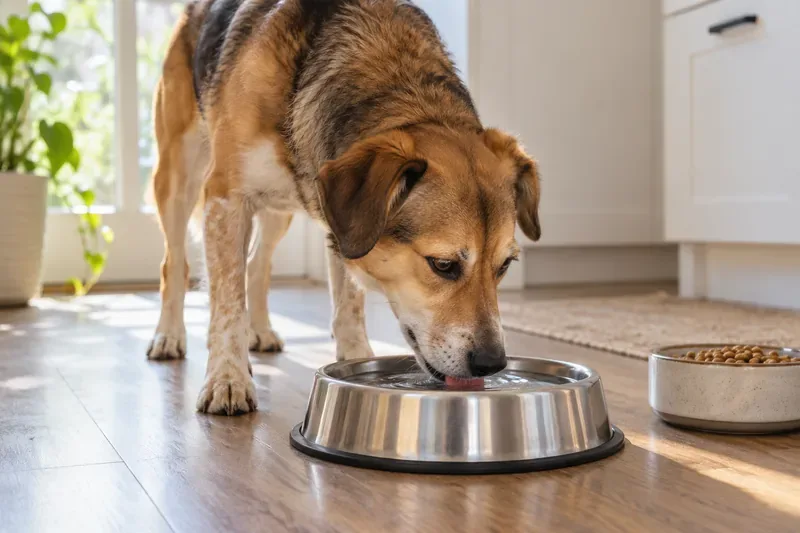
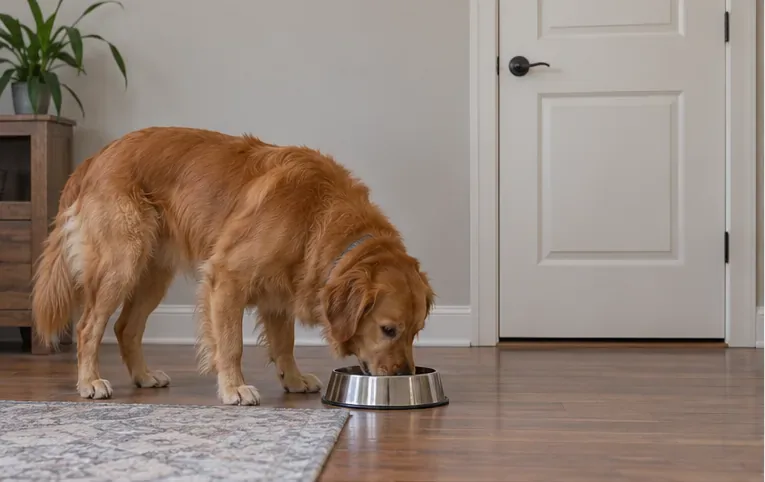
A dog drinks from a water bowl beside dry kibble, a scene that can help explain why a switch to a lower-moisture food may change bowl drinking.
How can the new food change water intake?
Food supplies water as well as nutrients. According to the Merck Veterinary Manual’s nutritional guidance, canned pet foods commonly contain about 60% to more than 87% water, while dry foods contain about 3% to 11%. Dogs eating mostly canned food therefore often drink less from a bowl than dogs eating mostly dry food.
For Milo, the change from canned food to kibble means less water arrives with each meal. He may compensate by drinking more at the bowl. That does not automatically mean his total daily water intake has increased by the same amount: some of the water he previously received in food is now coming from his bowl.
The reverse can happen, too. A dog switched from dry kibble to canned food may drink less from the bowl because more water is included in meals. Some dogs still drink frequently for their own reasons, so bowl habits alone do not tell the whole story. Keep fresh water available regardless of food type.
What if the new food is still wet or looks similar?
“Diet change” can mean more than changing from canned food to kibble. Recipes differ in moisture, ingredients, and mineral content, and some prescription diets are formulated for particular health goals. The label’s guaranteed analysis may not make two foods easy to compare directly, especially when one is wet and the other dry. A veterinarian can interpret the specific products and advise whether a prescribed diet should stay unchanged.
Other factors may coincide with the food switch. Warm weather, a longer walk, more play, or a change in routine can raise drinking temporarily. A dog may also appear to drink more if a new bowl is smaller, water spills, another pet shares the bowl, or the family is paying closer attention. These details can help explain a short-lived difference, but they should not be used to dismiss an ongoing change.
How to check what is happening at home
Use Milo’s example as a practical checklist. His family can record what changed without restricting his water or trying to diagnose the cause.
Write down the timeline. Note when the new food began, how the transition was made, and when the extra drinking started. Record the exact product and whether it is canned, dry, or mixed.
Measure bowl water for a day or two if it is practical. Start with a known amount, measure what remains after 24 hours, and note refills. Keep the dog’s usual access to fresh water. Spills, outdoor bowls, shared bowls, and water mixed into food can make the total hard to calculate.
Track bathroom changes. Note whether the dog asks to go out more, urinates larger amounts, has accidents, strains, or seems uncomfortable. Increased thirst with increased urination is more informative than bowl visits alone.
Record other changes. Include appetite, energy, weight, vomiting or diarrhea, exercise, weather, medications, treats, and any unusual food or water sources.
Keep the food package or take photos of its label. Share the product name and feeding amount with the veterinary team. Do not add salt, broth, supplements, or a second diet to try to control thirst unless the veterinarian recommends it.
As a broad reference rather than a target, Cornell’s Riney Canine Health Center describes roughly 40–60 milliliters of drinking water per kilogram of body weight per day for many dogs, while noting that normal intake varies with diet, activity, heat, and health. The center says intake above 100 milliliters per kilogram per day is considered excessive thirst (polydipsia, the veterinary term for abnormally increased drinking). These figures cannot diagnose an individual dog, and home measurements are imperfect, particularly in a multi-pet household. See Cornell’s April 2024 overview of increased drinking and urination for context.
When should you call a veterinarian?
Contact your veterinarian if the increase is pronounced, persists, keeps worsening, or comes with more frequent or larger urination. Call sooner if your dog is losing weight, eating much more or less than usual, unusually tired, vomiting, or having accidents. Increased thirst and urination can accompany several illnesses, including diabetes and kidney or urinary problems; only an examination and appropriate tests can sort out the cause. The American Animal Hospital Association’s diabetes guidance, updated February 6, 2026, advises veterinary evaluation when a pet empties its water bowl faster than normal or needs more frequent bathroom breaks.
Seek prompt veterinary advice for straining or inability to pass urine, blood in the urine, repeated vomiting, marked weakness, collapse, or difficulty breathing. These signs are not routine adjustment to a new food. If the dog is on a therapeutic diet or takes medication, tell the veterinary team before changing the plan; the diet may be part of treatment.
Do not withhold water to test whether thirst is “real.” Cornell advises leaving water available while a dog with increased drinking or urination awaits assessment, because restriction can cause dehydration or dangerous electrolyte problems. If the dog is otherwise comfortable, a brief log can make the veterinary call more useful, but do not delay contacting the clinic to complete a log when the change is concerning.
What the example teaches
If Milo’s thirst rose modestly after the switch from canned food to kibble, his urination and behavior stayed typical, and measured drinking settled near his own prior pattern, the lower moisture content could reasonably explain the change. If he continued draining bowls, needed many extra trips outside, or developed another symptom, his family should call the veterinarian rather than assume the food explains everything. The useful question is not only “What did he start eating?” but also “How much did drinking and urination change, for how long, and what else changed with them?”