Home
» Pets
»
Boredom or Anxiety? What Your Pet’s Behavior When Left Alone Can Tell You
Boredom or Anxiety? What Your Pet’s Behavior When Left Alone Can Tell You
A chewed cushion or a noisy greeting does not, by itself, tell you whether a pet was bored or frightened. The most useful clues are the pattern: what happens before you leave, how soon behavior starts, whether your pet can settle or engage with a safe activity, and whether distress continues. These clues can guide your next step, but they cannot diagnose a behavior problem on their own.
A dog watches the front door while an enrichment toy sits within reach.
What is the clearest difference between boredom and anxiety?
Boredom is more likely when a pet has energy or exploratory needs without enough to do. The animal may investigate, chew, scratch, or seek stimulation, then pause, nap, or switch activities. Anxiety is more likely when being alone or a departure cue brings sustained distress: pacing, repeated vocalizing, panting or drooling, frantic scratching at exits, or an inability to settle.
There is no single behavior that reliably separates the two. Dogs may chew or soil the house for several reasons, and an anxious dog may also be under-stimulated. A pet can have more than one need at once. The ASPCA’s separation-anxiety guidance describes signs such as distress around departure, persistent barking or howling, pacing, and escape behavior; it also notes that destructive behavior can occur. Those signs are clues to discuss with a veterinarian, not a home diagnosis.
Which clues are worth comparing?
What you notice
May fit under-stimulation
Raises more concern for distress
Timing
Exploration or chewing appears intermittently during a long, quiet absence.
Behavior starts around departure cues or soon after you leave and repeats or escalates.
Body and behavior
The pet moves between activities, takes breaks, and eventually rests.
Repeated pacing, whining, barking, panting, drooling, trembling, or frantic attention to doors or windows.
Response to enrichment
The pet uses a familiar, safe toy or food puzzle and can later settle.
The pet ignores a normally appealing activity, abandons it quickly, or stays focused on escape or reunion.
Damage or elimination
Chewing may be limited to accessible objects and may happen alongside a lack of exercise or outlets.
Damage clusters around exits, or house-soiling occurs with other signs of distress.
These are tendencies, not rules. A toy that is untouched does not prove anxiety; the pet may simply not be hungry or interested. Likewise, a calm-looking room after you return cannot show what happened earlier. A sudden change can also reflect pain, illness, noise fear, a bathroom need, or a change in the home.
How can you observe what happens while you are away?
If it is safe, use a camera or phone to record a typical departure. Keep the setup simple and avoid changing several things at once. Note when you pick up keys, put on shoes, leave, and return. Record how quickly behavior begins; what your pet does; whether the pet eats, drinks, rests, or moves around; and how long it takes to settle. A short clip may miss an episode, so consider recording a representative portion of the absence, especially the beginning, without deliberately leaving a pet in distress to “test” them.
Also write down what happened before the departure: walk or play, bathroom break, visitors, construction noise, feeding, and how long the pet was alone. The Merck Veterinary Manual recommends a detailed behavioral history, including onset, frequency, episode length, schedule, and what changes the behavior; it says video can help a veterinarian assess a problem. Share the recording and notes with your clinic. Video can reveal patterns, but it cannot rule out a medical cause or replace an examination.
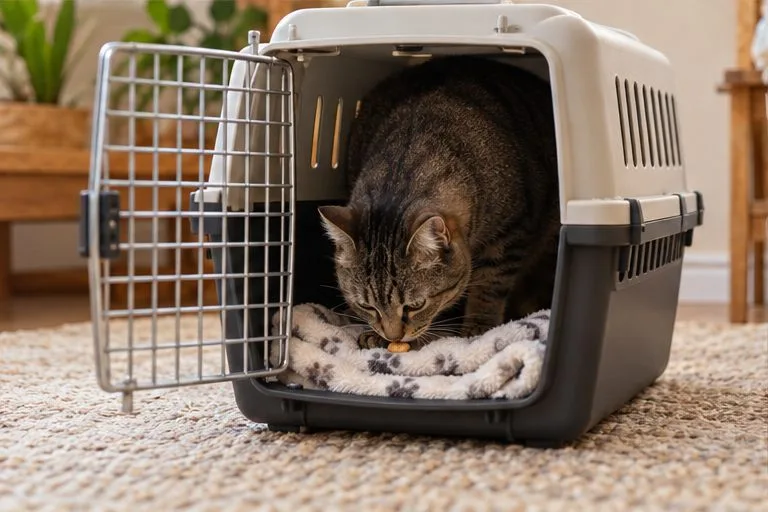
Do not use a crate as a diagnostic test if your pet panics when confined. Some animals are distressed by confinement, while others are distressed by separation; the distinction matters because the best management can differ. A veterinarian can help assess the context before you change confinement arrangements.
What can you try first if your pet seems under-stimulated?
Start with needs that are practical and low risk. Provide age- and health-appropriate movement and sniffing opportunities, a bathroom break before leaving, and safe outlets for chewing, foraging, or play. Rotate a few familiar activities rather than leaving many new objects at once. If the pet is alone for a long stretch, a trusted pet sitter or walker may offer social contact and a break.
Call your veterinarian and describe the pattern rather than labeling it yourself. Ask whether a health problem should be checked and whether a veterinary behavior professional or qualified reward-based trainer is appropriate. If separation-related distress is suspected, behavior plans often use gradual, controlled practice with absences short enough that the animal remains comfortable, then build slowly. The pace depends on the individual pet; repeated full-intensity panic is not a useful training exercise.
While arranging help, reduce avoidable distress where feasible: consider a sitter, family member, or daycare only if your pet is comfortable there. Avoid scolding or punishing damage after you return. Your pet may not connect a delayed punishment with the earlier behavior, and punishment can add fear without addressing the cause. Do not give sedatives or supplements without veterinary advice.
When should you contact a veterinarian promptly?
Seek veterinary advice if the behavior is new, worsening, or accompanied by appetite changes, repeated house-soiling, vomiting, diarrhea, signs of pain, or unusual lethargy. Contact a veterinarian promptly for frantic escape attempts, self-injury, damaged teeth or paws, or persistent distress that prevents eating or resting. If an injury is severe, breathing is difficult, or the animal collapses, seek emergency veterinary care.
House-soiling is especially easy to misread. A medical condition, incomplete housetraining, a long gap between bathroom opportunities, noise fear, and other behavior issues can all contribute. The Merck Veterinary Manual advises considering medical causes as part of behavior assessment. A vet visit is a better first step than assuming that an accident is deliberate or simply “bad behavior.”
Does the same checklist work for cats?
Not exactly. Much of the commonly cited separation-related guidance is based on dogs, and cats may show distress differently or remain hidden while a person is away. Changes in hiding, appetite, litter-box habits, grooming, or social behavior deserve context rather than a direct label of boredom or anxiety. If you have a cat, share the specific changes and a timeline with your veterinarian; do not assume a dog-focused checklist applies.
A useful next step
For several ordinary departures, keep a brief log and, when appropriate, record what happens. Compare timing, body language, ability to settle, and response to familiar enrichment. If the pattern is mild and the pet can relax, adding suitable daily outlets or help during a long absence may be reasonable. If distress is intense, persistent, new, or physically risky, start with your veterinarian. The goal is not to guess a label from one mess; it is to identify what your pet needs and choose a safe response.
Guidance reviewed September 30, 2026. This article provides general information and does not diagnose an individual animal.