Home
» Pets
»
How to Introduce Two Pets When One Guards Food or Toys
How to Introduce Two Pets When One Guards Food or Toys
When one pet guards food or toys, a new roommate changes the meaning of everyday moments: a bowl on the floor, a chew under the sofa, or a favorite resting spot can become a point of conflict. A safer introduction does not aim to make pets share prized items. It aims for calm, predictable contact while each animal’s resources remain protected.
The steps below focus mainly on introducing two dogs when one dog guards resources. Resource guarding can range from moving away with an item or freezing over a bowl to growling, snapping, or biting. Some signals are subtle: a dog may lower its head over a chew, go still, stare hard, or show the whites of its eyes. These are reasons to increase distance, not to test whether the dog will “get over it.” If the new pet is a cat or another species, the separation and gradual-exposure principles may still help, but dog-to-dog meetings and parallel walks are not a substitute for a species-specific introduction plan.
Set a realistic definition of progress
Early success is not playing together or eating side by side. Look for each pet being able to notice the other and then relax, look away, sniff the floor, respond to a familiar cue, or move away without being followed. During meals, success may simply mean both pets eat normally in separate rooms. Separate feeding can remain part of the long-term household routine even if the pets later become comfortable together.
A loose body, normal breathing, and an ordinary eating pace are more useful signs than silence alone. A quiet, rigid dog that freezes or stares can be more worried than a dog that makes a brief sound and then disengages. The American Veterinary Society of Animal Behavior’s overview of canine body language describes how stillness, a lowered head over a valued item, and a hard stare can signal discomfort.
Prepare the home before the pets meet
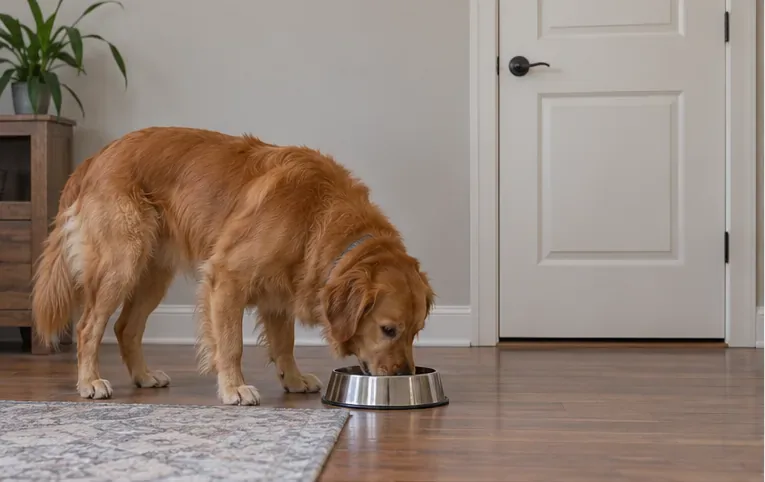
Start by mapping the resources either pet may value: meals, food puzzles, bones, toys, beds, resting places, litter areas, doorways, and access to people. Do not assume the guarded item is the only trigger. Put bowls, chews, and toys away before shared sessions. Feed each pet behind a closed door or another secure barrier, and pick up bowls after meals. Keep water available to both pets in separate, accessible locations.
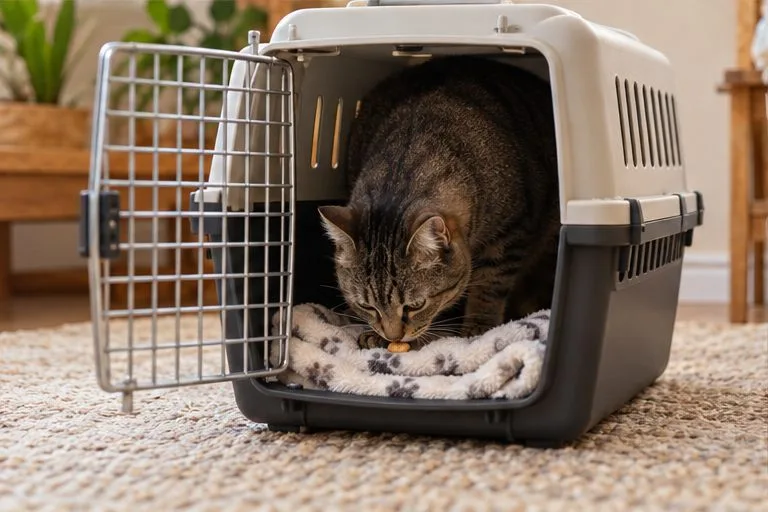
Feed pets in separate closed rooms so each can eat without the other approaching.
Create separate resting areas where each animal can retreat without being approached. Use a closed door or a barrier the pets cannot push through, jump over, or climb. Keep children and visitors away from a guarding pet while it eats or has a valued item. Do not reach into the bowl, grab a toy from the dog’s mouth, or leave the pets together unsupervised to “work it out.” A veterinarian can check for pain or health changes if guarding has appeared suddenly or intensified.
Use gradual steps and let the pets set the pace
1. Begin with scent and sound, without shared items
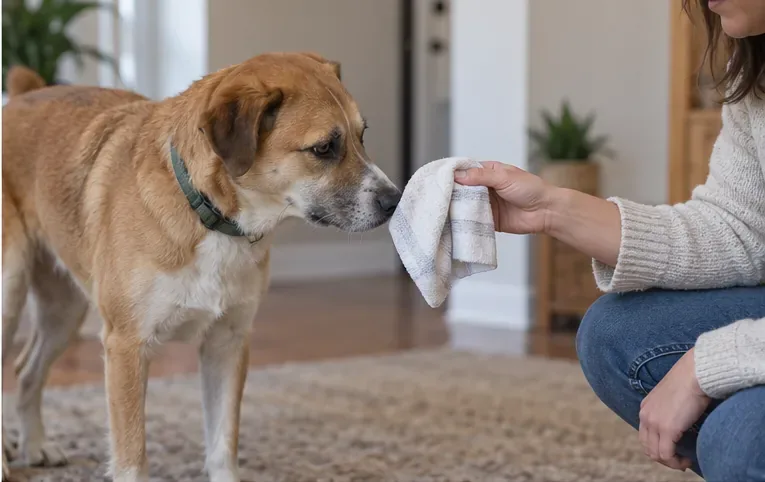
Keep the pets in separate areas for the first part of the introduction. You can let each notice the other’s scent through a cloth or bedding item, but only if the item itself is not valuable or guarded. Place it far enough away that the pet can investigate or ignore it. Do not put the cloth in a food bowl, beside a chew, or directly in the animal’s face. If either pet avoids the area, freezes, guards the cloth, or becomes agitated at sounds from the other room, increase separation and try again later at an easier level.
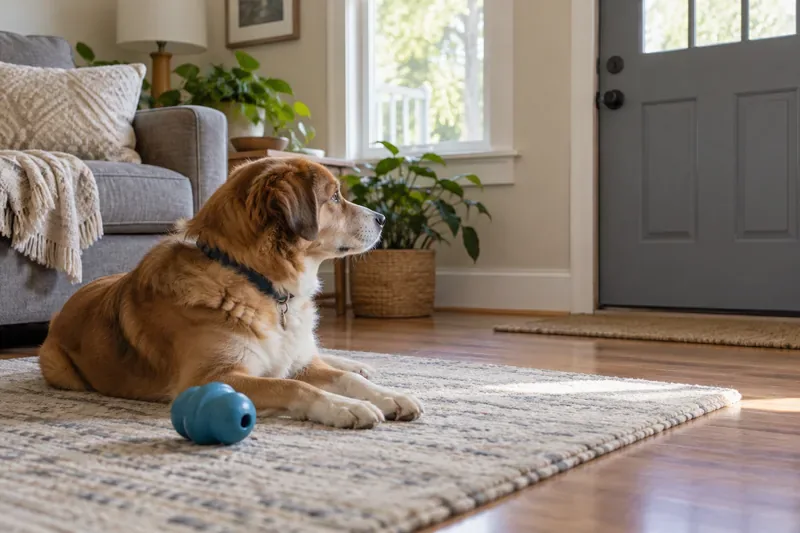
Let a dog investigate a cloth carrying the other pet’s scent, with room to turn away.
2. Add brief visual contact through a secure barrier
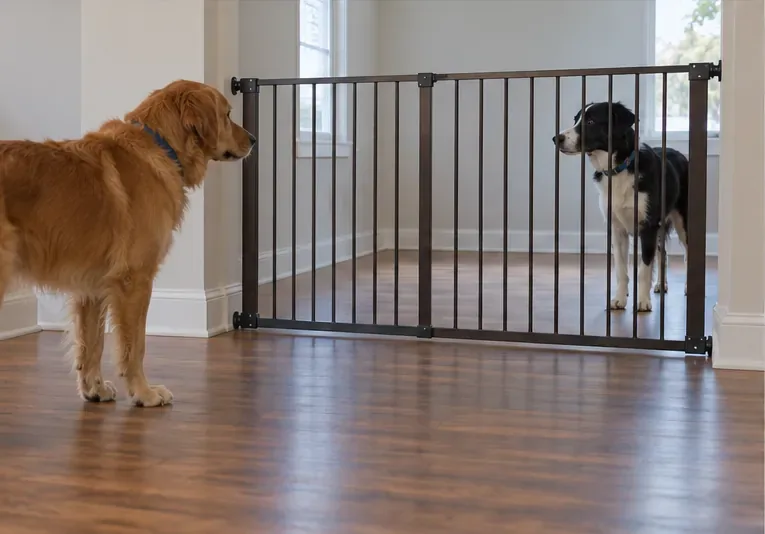
When both pets can remain relaxed in separate spaces, allow a short view of one another through a secure gate or screen. Begin far enough away that both can look and then turn away. Keep food, toys, chews, and favorite resting spots out of the shared view. Let each pet leave. A barrier is only useful if it is secure and does not trap an animal close to the other; if a pet rushes, paws at, or fixates on the gate, close the door and create more distance.
A secure barrier and generous distance allow brief visual contact without shared food or toys.
3. Try a parallel walk for dogs, if both are comfortable outside
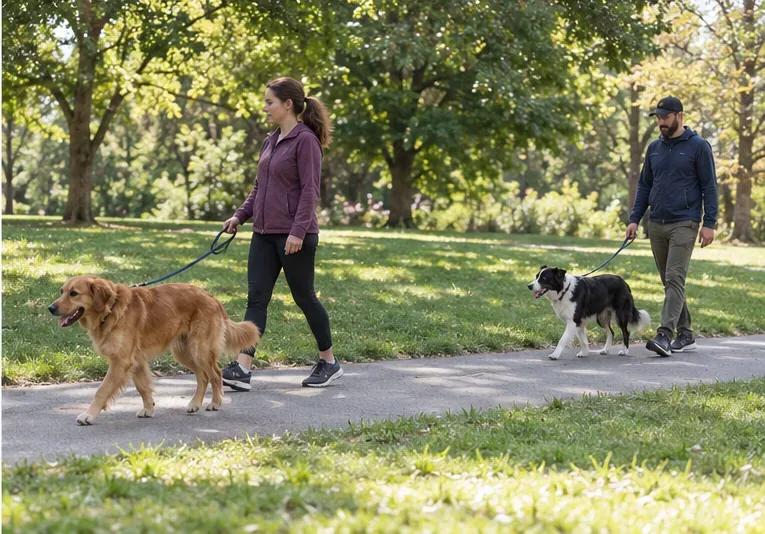
For two dogs with no history of serious aggression, two adults can walk them in the same direction outdoors with plenty of space between them. Avoid pulling the dogs toward each other for a nose-to-nose greeting. The distance is right only if both can move normally, notice the other, and then disengage. If either dog stiffens, lunges, barks continuously, or cannot respond to its handler, move farther away and end the session. For a dog with a bite history or a pattern of lunging at other dogs, do not attempt an in-person meeting without professional guidance.
Parallel walking keeps the dogs moving in the same direction without forcing a face-to-face greeting.
4. Consider a short shared-space session only after earlier stages stay calm
If several short barrier or parallel sessions have been easy, you may try a brief meeting in a spacious, neutral area with no food, toys, beds, or other guarded objects. Have an adult responsible for each dog and keep clear routes to separate areas. Allow the dogs to move apart; do not hold them close, corner them, or force interaction. End while both are still settled. Return to an earlier stage if either animal becomes tense. A good session is one the pets can recover from quickly, not one that lasts a long time.
How to judge the result and when to change course
Progress is a pattern across multiple sessions, not one friendly moment. Record where the meeting happened, what resources were present, how close the pets were, and what each did with its body and attention. Continue at the same level only while both remain relaxed and able to disengage. Change course by increasing distance, shortening the session, restoring a closed-door setup, or removing a trigger if you see:
freezing, a closed tense mouth, a lowered head held over an item, hard staring, or body blocking;
eating faster, hovering over a bowl, guarding a doorway or person, or following the other pet when it tries to leave;
growling, snarling, showing teeth, snapping, lunging, chasing, or any bite.
Stop the exposure and calmly separate the pets with a door or other safe barrier. Do not punish a growl or use “dominance” methods, leash corrections, or forced sharing. Punishment can increase fear and may suppress warnings without making the underlying concern safer. The AVSAB’s current humane dog-training position recommends reward-based methods for behavior modification. Do not put your hands between fighting dogs or grab collars during a fight; people can be bitten when they intervene. If an animal or person is injured, seek appropriate veterinary or medical care.
When professional help is the safer next step
Consult your veterinarian and a qualified behavior professional before further introductions if the dog has bitten, snapped, or lunged; guards several kinds of resources; guards places or people as well as food; or cannot relax even with substantial distance. Get help as well if you cannot reliably maintain separate feeding and resting areas, or if children are in the home. A veterinarian can rule out health factors and refer you to a board-certified veterinary behaviorist or another professional with specific experience treating aggression using humane, reward-based methods.
Some pets can learn to share space safely while continuing to eat and play separately. Others may need permanent resource separation or may not be safe living together. No introduction schedule can guarantee friendship, and a calm first meeting does not prove the pets are safe alone. The practical measure of success is whether both animals can live with predictable access to food, rest, and retreat without repeated fear or conflict.
Sources and scope
This article summarizes dog-focused guidance available as of September 30, 2026. It is general educational information, not a substitute for an individual veterinary or behavior assessment.