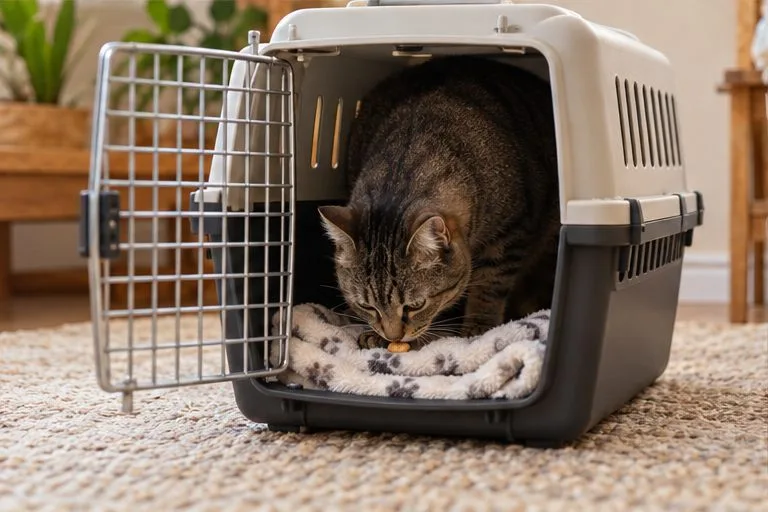
The gentlest way to introduce a new litter box is to give your cat a choice: keep the familiar box available, set the new one nearby with familiar litter, and let your cat investigate and use it voluntarily. Do not pick your cat up and place them inside, block the exit, or remove the old box before the new one is being used reliably. A cat who hesitates may be responding to a new smell, texture, shape, location, or a past uncomfortable experience—not being stubborn.
For example, if Alex needs to replace a cracked litter pan, Alex can place a clean, similar-sized box beside the old one and fill it with the same unscented litter. Miso can keep using the familiar pan while deciding whether to inspect the new one. This approach is most useful when the cat is otherwise urinating and defecating normally. If litter-box avoidance is sudden or the cat seems ill or uncomfortable, contact a veterinarian rather than treating the change as a training issue.
How do you introduce a new litter box without forcing your cat?
Set up the new box so it is easy to explore, then allow your cat to approach on their own schedule. Keep the old box accessible and clean. If your cat sniffs the new box and walks away, that is useful information: the cat has noticed it, and you can leave it available without making the interaction more intense.
- Choose a low-pressure location. Put the new box in a quiet, accessible spot where your cat can see and reach it without squeezing past a person, dog, or another cat. Avoid noisy appliances, sudden foot traffic, and places where the cat could feel cornered.
- Keep familiar details steady. Use the same litter, depth, and general setup at first. If you are changing both the box and the litter, introduce one change at a time when possible. Many cats prefer fine-textured, unscented litter, but an individual cat’s established preference matters.
- Offer both boxes side by side. The Ohio State University Indoor Pet Initiative recommends placing a new litter option beside the old one so the cat can choose. Keep the familiar box in place while you observe the transition.
- Make calm exploration easy. Let the cat sniff or walk around the new box without interruption. You can place a favorite toy or a small treat nearby, but do not lure the cat in and then shut them inside. If the cat is comfortable, reward voluntary investigation or use with gentle praise or a small food reward after the cat has exited.
- Wait for a reliable pattern. There is no fixed number of days that suits every cat. Once your cat is choosing the new box consistently and normal elimination continues, you can consider removing the old box. If the cat avoids the new one, leave the old box available and reassess what changed.
In Alex and Miso’s case, success is not measured by whether Miso enters the box on the first day. A better sign is that Miso can approach and leave calmly, then chooses the new pan for normal use while the familiar option remains available. If Miso only sniffs it, Alex should keep the setup predictable rather than placing Miso inside.
What makes a new box acceptable to a cat?
Think about the whole experience, not only the box itself. A box that is too small, difficult to enter, covered, unstable, or positioned where another pet can ambush the cat may be rejected even if it looks convenient to a person. Cats generally need room to stand, turn, dig, and cover waste. Kittens, older cats, and cats with mobility limitations may need a low entry. A covered design is not automatically wrong, but some cats dislike the trapped odor or limited view.
Place the box where it is accessible at all times and away from food and water. A quiet location is helpful, but a box should not be hidden behind a door that can close or tucked into a dead end. In a home with multiple cats, one cat should not be able to guard the only route in or out.
Keep the litter familiar during a box-only change. If you must change litter too, offer the new litter in a separate box next to the old litter rather than abruptly replacing everything. Ohio State advises that, after the cat starts using the new litter, the old option can be reduced gradually. The Cornell Feline Health Center likewise notes that box, litter, and location can all contribute to avoidance, and that sudden litter changes may be a problem.
What if the new box is replacing the old one or must go somewhere else?
If the old box is broken or unsafe, use the closest practical replacement: similar size and shape, the same litter, and the old box’s usual location if possible. If you can, set the replacement beside the old pan before retiring it. If the old box cannot remain, make the new setup as familiar as possible and watch closely for changes in elimination. Do not withhold all litter-box access to make the cat use the new box.
If the box must move, change the location gradually when circumstances allow. First establish use in the new box, then move it a short distance at a time and pause if your cat stops using it. Cornell describes moving a box only a few inches each day after the cat reliably uses the preferred location, and returning it to the last successful spot if use stops. A forced, rapid relocation may create a separate location problem even when the box itself is acceptable.
For a household with more than one cat, preserve enough options during the transition. A widely used guideline is one box per cat plus one extra, with boxes in separate, accessible locations. This is especially relevant if cats sometimes block one another or if a home has multiple floors. Extra boxes do not guarantee harmony, but they reduce the need for one cat to compete for a single toilet area.
How can you tell whether the transition is going well?
Look for ordinary, relaxed behavior: your cat approaches the box without crouching or retreating, enters and exits freely, and continues to urinate and defecate at their usual frequency and in their usual manner. Keep the box clean and note which box is being used. In a multi-cat home, a brief observation or camera may help identify who is using which box, provided it does not disturb the cats.
Pause the transition if your cat repeatedly avoids the new box, perches on the edge without touching the litter, eliminates immediately beside it, or starts choosing a different surface. Check for a wobbling pan, strong plastic or cleaning-product odor, a loud nearby machine, a difficult entry, or an exposed route where another animal can approach. Restore access to the familiar box and change one factor at a time. Avoid scolding, startling, or carrying the cat to the box; those responses can make the area more stressful.
When is litter-box avoidance a veterinary concern?
A new box may coincide with a health problem, and behavior alone cannot rule one out. Arrange veterinary advice for new or persistent house-soiling, painful-looking attempts, crying while urinating, blood in the urine, unusually frequent trips, genital licking, constipation, or a marked change in drinking or urination. Cats may have a medical problem even when they otherwise seem well. Cornell recommends veterinary evaluation when a cat is not using the litter box consistently.
Repeated straining with little or no urine is an emergency. Do not wait to see whether a different litter box solves it. The Cornell Feline Health Center explains that urethral obstruction can become life-threatening and requires immediate veterinary treatment. This is especially urgent if the cat is distressed, vocalizing, weak, or repeatedly trying to urinate without producing a normal amount.
A practical transition checklist
- Keep a clean, familiar box available while the new one is introduced whenever possible.
- Use familiar litter and avoid changing box, litter, and location all at once.
- Choose a quiet, easy-to-reach location with a clear approach and exit.
- Let your cat investigate voluntarily; never place the cat inside or block the exit.
- Reward relaxed, voluntary interest if your cat enjoys food rewards.
- Remove the old option only after the new box is being used reliably.
- Seek veterinary guidance for sudden avoidance or signs of discomfort; treat inability to pass urine as an emergency.
The goal is not to make a cat comply on command. It is to offer a clean, comfortable option and preserve enough choice for the cat to feel safe using it. Some cats accept a near-identical replacement quickly; others need more time or a different box, litter, or location. If a gentle setup does not restore normal use, a veterinarian can help distinguish environmental preferences from pain or illness.
Sources
Guidance checked October 1, 2026. The cited house-soiling guideline is from 2014; current university resources were also reviewed. Individual cats may need veterinary assessment, and no home transition method can diagnose the reason for avoidance.