Home
» Pets
»
Why Does My Pet Get Restless at the Same Time Every Evening?
Why Does My Pet Get Restless at the Same Time Every Evening?
If your pet starts pacing, vocalizing, prowling, or asking to go outside at nearly the same time each evening, the timing is a clue—but not a diagnosis. A familiar meal, walk, household sound, or change in daylight may cue activity. Species and age matter too, and a new pattern can sometimes be related to discomfort or illness. Notice what happens before and during the restless period, then choose a response that fits the evidence rather than assuming your pet is simply bored or “acting out.”
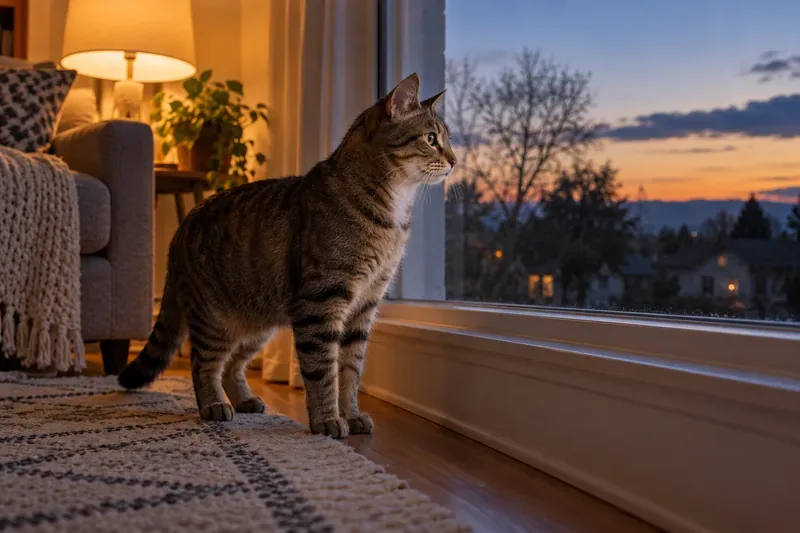
A cat watches the evening light from indoors; dusk can be an active period for many cats.
A repeatable evening pattern may have a repeatable cue
Pets can learn that familiar events predict what comes next. A person arriving home, opening a food container, picking up a leash, turning on the television, or beginning a bedtime routine can become a signal. The clock time may look like the cause even when a daily cue is doing the prompting. One controlled study found that feeding frequency can affect measured day-and-night activity rhythms in adult beagles, but it cannot tell you why one particular pet paces at home.
What varies: one pet may anticipate a walk or meal, another may react to a neighbor coming home, and another may have no obvious routine trigger. Restlessness at a fixed hour does not prove hunger, loneliness, or deliberate misbehavior. Try this: for several evenings, note the start time and what happened in the preceding hour—feeding, medication, exercise, visitors, lights, noises, and your own routine. Look for a pattern before changing the pet’s food or schedule. The dog-activity research is described in the original study of age and feeding schedule in dogs.
Species and natural activity rhythms make a difference
Cats are often more active around dawn and dusk, a pattern called crepuscular activity. If evening restlessness occurs as daylight fades, that timing may fit a cat’s usual activity pattern. It does not mean every cat will be energetic at dusk, or that nighttime disruption should be ignored. The Cornell Feline Health Center’s cat-care guidance describes cats as naturally more active during dawn and dusk.
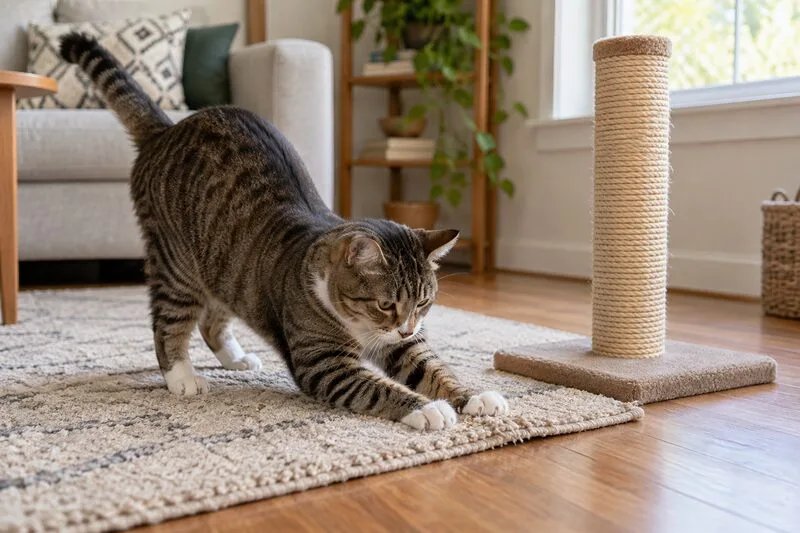
Try this: if your cat is otherwise well and the behavior looks like play or exploration, offer a short, interactive play session before the usual evening burst and provide safe toys or climbing space. Keep the routine predictable, and avoid rewarding loud nighttime demands with food every time; that can make the pattern harder to interpret. If the behavior is new, intense, or paired with other changes, check with a veterinarian instead of treating it as a normal cat quirk.
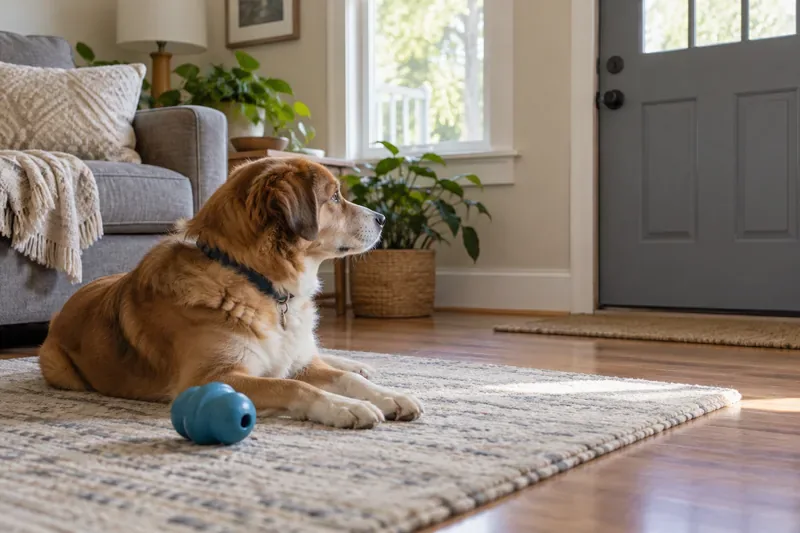
Dogs’ activity patterns depend on age, health, housing, feeding, exercise, and the household schedule. Some dogs may become lively when family members return or when a walk usually happens; others may be tired after a busy day. Try this: match activity to the individual dog. An age-appropriate sniff walk, gentle play, or a food puzzle earlier in the evening may help if the dog appears under-stimulated, but do not add strenuous exercise for a dog with pain, mobility problems, heat sensitivity, or a medical restriction.
Check basic needs and changes in the environment
A pet that is ready to eliminate, thirsty, hungry according to its established plan, or uncomfortable may have trouble settling. Evening changes can also matter: cooking smells, outdoor animals, hallway noise, deliveries, brighter screens, shadows, or a household that becomes busy after dinner. These possibilities depend on the animal and home; timing alone cannot distinguish them.
Try this: make sure fresh water is available, the litter box is clean and reachable, and a dog has a suitable chance to go outside before bed. Note whether pacing stops after a bathroom break, a calmer room, or a familiar activity. Do not keep adding food or treats unless the pet’s feeding plan supports it. If you suspect a new sound or outdoor trigger, briefly observe the room and close a curtain or reduce noise, then see whether the behavior changes.
When evening restlessness may be a health concern
Restlessness can be a sign of pain, urinary or digestive discomfort, increased thirst or urination, medication effects, anxiety, or another health issue. A pet may pace, repeatedly change position, pant, whine, hide, or resist being touched rather than show an obvious limp. The Merck Veterinary Manual’s overview of behavior problems lists pain and medical conditions among possible contributors to behavioral changes.
Try this: schedule a veterinary appointment if the restlessness is new, getting worse, happening most nights, or accompanied by changes in appetite, drinking, urination, bowel movements, mobility, sleep, or social behavior. Bring a short log or video, and note when the change began. Do not give human pain medicine or use a sedative without veterinary direction.
For an older pet, do not dismiss a sleep change as “just aging.” The 2023 AAHA Senior Care Guidelines describe nighttime restlessness and altered sleep-wake cycles among signs veterinarians consider when assessing canine cognitive dysfunction; pain, sensory changes, and other illnesses can overlap. In senior cats, nighttime waking or vocalizing can also be associated with sensory changes, pain, cognitive dysfunction, hyperthyroidism, or high blood pressure. These are possibilities for a veterinarian to evaluate, not diagnoses an owner can make from the clock. See AAHA’s senior-care guidance for cognitive and behavioral changes and its guidance on behavior and environmental needs in senior cats. If your pet is older and the change is recent, book a checkup and describe any other behavior shifts.
When to seek urgent veterinary help
Contact an emergency veterinary clinic now if restlessness comes with labored breathing, collapse, a seizure, severe pain, or rapid deterioration. In a cat, repeated straining to urinate with little or no urine can signal a urinary blockage, which is an emergency; do not wait overnight to see whether it passes. Cornell’s feline urinary-disease guidance explains why suspected urethral obstruction needs immediate veterinary attention.
Three assumptions worth checking
“It happens at the same time, so it must be the body clock.” A biological rhythm may play a role, but routines, light, sounds, and learned cues can also line up with the clock. Write down the preceding events before changing the schedule.
“A restless pet always needs more exercise.” Activity or enrichment may help some pets, but pain, bathroom needs, environmental triggers, and age-related changes can look similar. Check basic needs and the pet’s overall behavior first.
“Older pets naturally pace at night.” A shift in sleep or nighttime behavior can be a clinical sign, not an inevitable part of aging. Record the change and ask a veterinarian whether an exam is appropriate.
A simple way to assess the pattern
For the next several evenings, note the time, what the pet does, what happened beforehand, and whether there are changes in eating, drinking, elimination, breathing, movement, or responsiveness. Also record what helps the pet settle. A pattern that follows a walk, meal, dusk, or household sound may suggest a useful routine adjustment; a new pattern with physical or cognitive changes calls for veterinary advice. If urgent signs appear, skip the log and seek care.
There is no single explanation for a pet becoming restless at the same time every evening. Natural activity periods, learned anticipation, unmet needs, environmental cues, and health changes can overlap. Use the timing as one observation, not proof of a cause, and let the pet’s species, age, other symptoms, and recent changes guide your next step. This article reflects veterinary references reviewed on October 1, 2026; AAHA’s cited senior-care guidelines were published in 2023, with its feline life-stage guidance published in 2021.