Home
» Pets
»
Why Does a Cat Scratch Beside the Scratching Post?
Why Does a Cat Scratch Beside the Scratching Post?
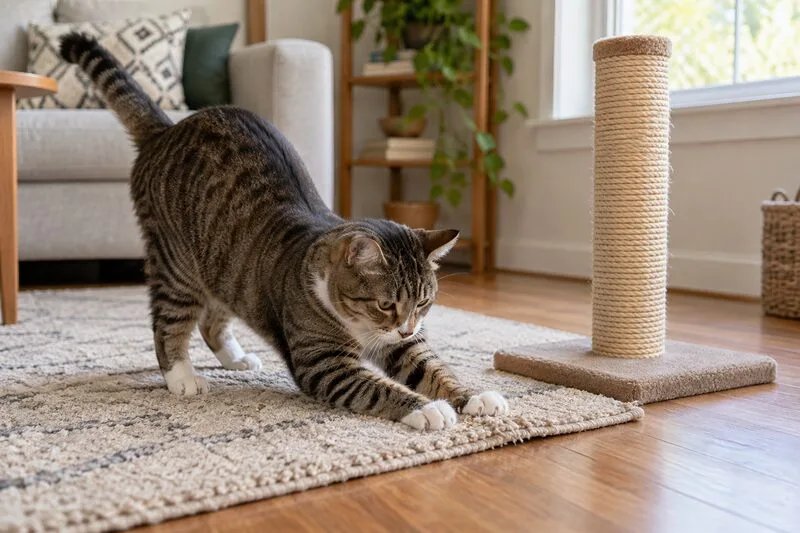
If a cat scratches the carpet beside a scratching post, the cat is still using a scratching surface—it simply prefers that spot, texture, angle, or feel over the post right now. The post may wobble, be too short, have an unfamiliar covering, or sit away from a favored route or resting place. Watch how the cat scratches before moving or replacing anything: the pattern often points to the adjustment to try first.
A cat scratches the carpet beside an unused upright post, illustrating how a familiar surface or preferred scratching angle can matter.
An illustrative example: Milo and the hallway runner
This is a hypothetical example for illustration, not a real customer story or a reported test. Imagine Milo, a cat who scratches the hallway runner after waking. His person has put a short sisal post near the food bowls. Milo uses the rug instead. That observation alone does not prove one cause, but it gives the person useful clues: Milo is choosing a horizontal, familiar carpet surface in a place he already visits, while the post is upright, short, and somewhere else.
For a real cat, start with the same kind of observation. Note where and when the scratching happens, whether the cat stands or stretches upward, which material the claws catch, and whether the post moves. Then change one feature at a time. If the cat starts using a horizontal cardboard scratcher beside the runner, angle or location was likely part of the mismatch. If it still chooses the rug, try another safe texture or check whether the post is stable. One cat’s preference does not predict another’s.
Why choose the spot beside the post?
The surface or angle may feel better
A vertical sisal post is not a universal favorite. Some cats prefer to rake a horizontal surface such as carpet or cardboard; others stretch up a vertical surface, or use a slanted board. A cat may also prefer the feel of carpet, upholstery, wood, corrugated cardboard, or rope. If a cat scratches a rug with both front paws while crouching, a flat scratcher may be a closer match than a narrow upright post. If the cat reaches high on a sofa or doorframe, consider a taller, sturdy vertical scratcher.
Observe the movement and material rather than shopping by appearance. Cornell’s feline health guidance recommends matching the scratcher’s orientation and substrate to what the cat already chooses, and says a post should stay steady and allow a full stretch. Cornell Feline Health Center: Destructive Behavior.
The post may wobble, tip, or be too short
Scratching involves pulling against a surface. If a post shifts, slides, or tips when a cat leans into it, the cat may abandon it. A post that does not let the cat extend its body and forelegs may also feel less satisfying than the broad, flat rug. Check the base on the floor and test it with a firm hand before inviting the cat to use it. Choose a scratcher tall enough for the cat’s natural full stretch, or a stable floor-level board if that is the posture the cat prefers.
The location may be wrong
People often place scratchers where they are unobtrusive. Cats may choose locations for their own reasons: a hallway, doorway, window, or route through the home can be a regular place to stretch and leave visible or scent marks. Scratching also happens during play and after resting. The spot beside the post can therefore be more familiar or more useful to the cat than the post’s current location.
In Milo’s example, a post beside the food bowls may not substitute for a preferred hallway spot. Try placing an appropriate scratcher directly next to the rug area first. Once Milo uses it reliably, his person could move it gradually if another location is preferred. If scratching happens in several rooms, more than one scratcher may be needed. The AAFP and ISFM Feline Environmental Needs Guidelines recommend providing scratching resources as part of a cat’s environment, rather than expecting one item in one location to suit every need.
Scratching is normal communication and maintenance
Scratching is not usually revenge or a deliberate attempt to ignore a person. It can help maintain claws, stretch the body, and leave visual marks and scent from glands in the paws. Cats may return to places they have scratched before. Cornell explains these marking and claw-sheath functions in its guidance on scratching. A favorite carpet may already be familiar and easy to grip, so an adjacent post does not automatically replace it.
A change in mobility can matter
If a cat that used a tall post begins choosing a flat surface, age or discomfort could be one possibility, especially if the change comes with stiffness, limping, difficulty jumping, or reluctance to climb. That pattern cannot diagnose pain. International Cat Care notes that stretching on a tall vertical post can cause pain for some cats and suggests trying a horizontal surface when appropriate. Ask a veterinarian to assess a new behavior change or signs of discomfort rather than assuming the cat is being stubborn. International Cat Care: Cat Caregiver Guide to Home Modifications.
Use the scratching pattern to choose what to try
What you notice
What it may suggest
Practical first test
The cat crouches and rakes a rug or mat
Preference for a horizontal surface or carpet-like feel
Place a flat cardboard or carpet scratcher at that spot
The cat reaches up a sofa or doorframe
Preference for vertical scratching and a full-body stretch
Try a tall, firmly anchored post with a grippy surface
The post shifts when the cat pulls
The scratcher may feel unstable
Secure it or switch to a heavier, wider-base design
The cat uses the rug near a doorway or after waking
The site may be an established route or post-rest stretch area
Put a scratcher beside the chosen spot or a resting place
The cat abruptly changes posture or avoids climbing
There may be a new comfort or mobility issue
Offer a low horizontal option and contact a veterinarian if other signs appear
How to make the post more appealing without forcing it
Match the shape and material. Offer a horizontal, vertical, or angled option based on how the cat already scratches. A small selection can help reveal a preference; the result is individual.
Put it at the chosen spot. Place the new scratcher next to the rug or furniture the cat selects. Later, move it a little at a time if you need to change its location.
Make it steady. Check that it does not rock, slide, or tip. Replace or secure it if it moves under pressure.
Reward voluntary interest. Praise, play, or a treat near the post can create a positive association. A toy or catnip may interest some cats, but neither works for every cat. Let the cat investigate rather than grabbing its paws or forcing its claws onto the surface.
Protect the target while the alternative becomes familiar. Use a temporary, safe cover on the rug or furniture if needed, while keeping the preferred scratcher accessible. Avoid punishment: yelling or startling can make the cat wary of the person or area without teaching which surface is acceptable.
The 2021 AAHA/AAFP feline life-stage guidance describes scratching as normal behavior and recommends multiple scratching surfaces in suitable locations, including near resting areas and high-traffic pathways. Its recommendations support offering choices, not expecting every cat to prefer one standard post. 2021 AAHA/AAFP Feline Life Stage Guidelines.
When to ask a veterinarian
Scratching objects is different from repeatedly scratching the skin, ears, or a wound. If the cat is scratching itself intensely, losing fur, developing sores or redness, or seems painful or suddenly less mobile, contact a veterinarian. If the change is limited to choosing the rug over a post and the cat otherwise moves and behaves normally, start by adjusting the scratcher’s location, stability, texture, or orientation. Seek professional behavior help if the pattern persists despite providing suitable choices or if tension between cats may be affecting access to resources.