Home
» Pets
»
How to Clean a Pet Bed Without a Strong Detergent Scent
How to Clean a Pet Bed Without a Strong Detergent Scent
To clean a pet bed without a strong detergent scent, follow the bed’s care label, use a measured amount of a fragrance-free detergent, rinse thoroughly, and let every layer dry completely before your pet uses it again. Avoid fabric softener, scented beads, dryer sheets, essential oils, and sprays meant to cover odors. The right method depends on whether the bed has a removable washable cover, what the filling is made of, and whether your pet has a known sensitivity.
A clean bed does not need to smell perfumed. If a scent remains after washing, it may come from fragrance ingredients, detergent left in the fabric, or odor still trapped in the bed. Those causes call for different fixes, so start with the label and the bed’s construction rather than adding another scent.
Choose a cleaning method that fits the bed
Bed design
Practical approach
Main trade-off
Removable, machine-washable cover
Wash the cover separately as directed; clean the insert only if its label allows it.
Usually the easiest to rinse, but the inner cushion may need spot cleaning and a longer drying time.
Non-removable fabric bed
Vacuum first, then hand-wash or spot-clean only if the care instructions permit it.
More control over water, but rinsing thick padding completely can be difficult.
Foam or orthopedic insert
Keep it out of the washer unless the manufacturer explicitly says it is washable; spot-clean or air it as directed.
Protects the shape and support, but a deep odor inside the foam may require manufacturer guidance or replacement.
Waterproof or specialty cover
Use the temperature and drying method on its label.
Heat or harsh products can damage coatings even when they clean other fabrics well.
Step 1: Check the care label and separate the parts
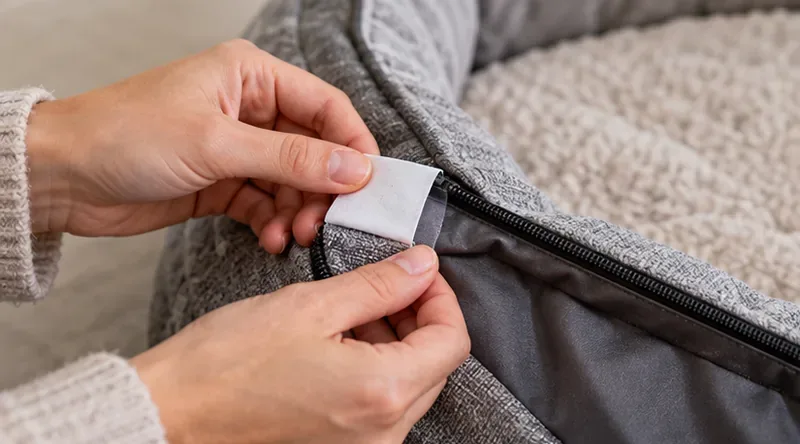
Check the sewn care tag and separate a removable cover before choosing a wash cycle.
Look for instructions on the bed, removable cover, and any insert. Confirm whether the cover is machine-washable, which water temperature it allows, and whether it can go in a dryer. A cover’s instructions may not apply to the foam or bolster inside it. Remove the insert if the design allows, and keep parts that cannot be washed away from the machine.
If the tag is missing, check the manufacturer’s care page or ask the manufacturer before soaking foam, memory foam, waterproof fabric, or a bed with a non-removable base. A washer can deform padding, damage a water-resistant layer, or leave the inside wet even when the outer fabric feels dry. When material is uncertain, gentle spot cleaning is usually less risky than immersing the entire bed, but it may not remove odor from deep inside.
Step 2: Remove loose hair and dirt before washing
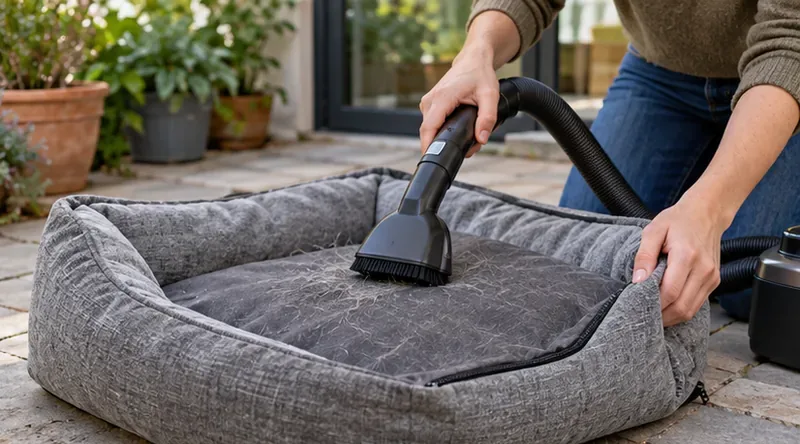
Vacuum loose fur and dirt from the bed before washing so the rinse has less debris to carry away.
Shake the cover outdoors if practical, then vacuum the sleeping surface, seams, and corners. Pull off clumps of hair by hand or use a lint tool that is safe for the fabric. Removing loose material first helps prevent it from collecting in seams or the washer filter.
For a visible spot, use only a pre-treatment product labeled for that fabric and follow its directions. Do not mix cleaners, and do not add perfume or essential oils to hide a urine or saliva odor. If the bed has a persistent accident stain or a suspected infection or parasite issue, ask your veterinarian about an appropriate cleaning routine; routine odor-removal advice may not be enough.
Step 3: Wash with a low-scent routine
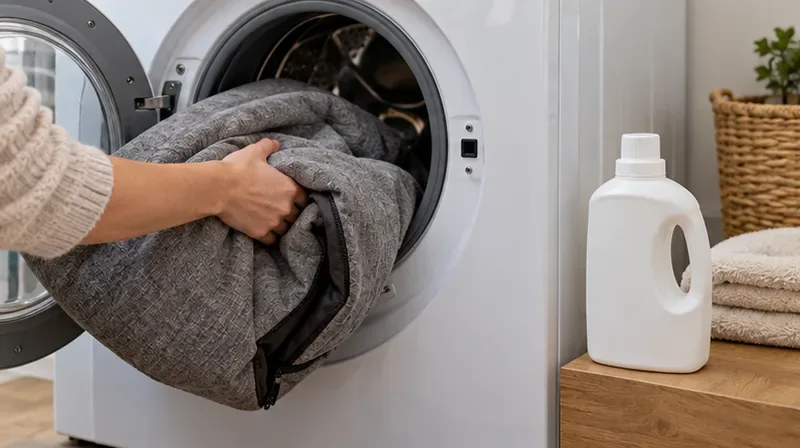
Use a measured dose of a fragrance-free detergent and the wash settings allowed by the bed’s care label.
Choose a detergent labeled fragrance-free if you want to avoid added scent. EPA explains that “unscented” products may use ingredients that mask or neutralize other odors, while its Fragrance-Free Safer Choice designation means the product has no fragrance ingredients. The Safer Choice label alone does not mean fragrance-free; look for the separate fragrance-free wording or verify the product in EPA’s fragrance-free list.
Measure detergent for the load size and water conditions according to the detergent label. More soap does not make a pet bed cleaner; excess can be harder to rinse from dense fabric and padding. Do not add fabric softener, scent beads, dryer sheets, or a scented booster. A plain, fragrance-free detergent may have less perfume, but it still needs to be kept away from pets and rinsed from the bedding.
Use the machine setting allowed by the care tag, and avoid stuffing a bulky bed cover into a machine so tightly that water cannot move through it. If the bed’s label permits, select an extra rinse—especially if the fabric still feels slick, the wash was heavily soiled, or you previously used too much detergent. VCA’s dog-bedding guidance recommends an extra rinse for removable covers to help remove detergent. Follow the detergent maker’s instructions too; do not assume every fabric needs the hottest cycle.
Step 4: Rinse and dry every layer completely
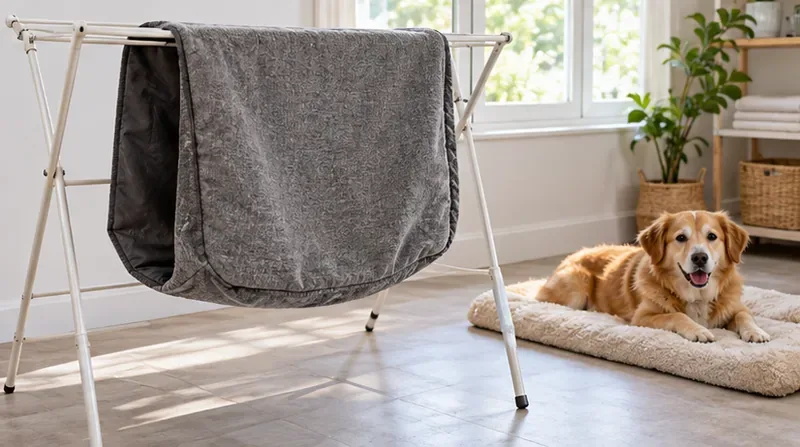
Let the washed cover dry fully on a rack before putting it back over the insert or allowing the dog to use the bed.
Use an extra rinse if the care label allows and detergent residue or scent remains. Then air-dry the cover or use the dryer’s low setting only if the manufacturer permits it. Dry the insert separately, and turn or reposition thick parts so air can reach all sides. Do not reassemble a bed while the foam, seams, or underside are damp; trapped moisture can create a musty odor and may damage the filling.
VCA recommends air-drying dog bedding or using the dryer on its lowest temperature setting for removable covers, and thorough rinsing for hand-washed beds. For a non-removable bed, its guidance suggests hand-washing with a non-toxic detergent and rinsing thoroughly, but the bed’s own care instructions should take priority. A sunny, ventilated spot can help drying, but avoid leaving a material in direct heat if its maker warns against it.
Fragrance-free, unscented, or odor remover: which is the better fit?
Fragrance-free detergent: A good match when the goal is to avoid a perfume smell. EPA’s fragrance-free label provides a verified option, though a certification is not a substitute for following the product label or a veterinarian’s advice for a specific pet.
Unscented detergent: May smell less noticeable, but “unscented” can still involve masking or odor-neutralizing ingredients. Check the label if avoiding fragrance materials is important.
Scented detergent or softener: May leave the strongest lingering smell. It is a poor fit for a household trying to avoid fragrance, and fabric softeners and dryer sheets also create ingestion risks if a pet chews or licks them.
Odor sprays, essential oils, or homemade mixtures: They can add another residue or scent rather than solve what is trapped in the fabric. EPA and veterinary guidance do not establish one universal home mixture for every bed material, so use a product only if its label allows that surface and follow its directions.
Fragrance-free does not mean odor-proof or allergen-proof, and a dog or cat may still react to a detergent ingredient or the bedding material itself. VCA lists scented laundry detergent among possible inhalant triggers for cats with asthma or bronchitis. If your pet coughs, wheezes, develops skin irritation, or seems uncomfortable around the freshly washed bed, remove the bed and contact your veterinarian for advice rather than testing more scented products.
If the bed still smells strongly after washing
First check whether the scent is actually in the cover or in the cushion beneath it. If the cover smells like perfume, run one additional rinse if its label allows, then dry it fully. If it smells sour or musty, check for damp padding and let each part dry separately. If the smell resembles the old detergent, clean any visible detergent residue from the dispenser according to the washer manufacturer’s instructions before the next wash.
For a bed that remains strongly scented after a careful rinse, repeat the wash with no added fragrance and an appropriate measured dose of fragrance-free detergent, provided the care label allows another cycle. If the smell persists inside non-washable foam, ask the bed’s manufacturer whether the insert can be cleaned; replacing an insert may be more practical than saturating it. Do not use bleach, disinfectant, vinegar, baking soda, or essential oils by default. A cleaner that is suitable for one fabric or pet does not automatically suit every bed, and the ASPCA advises using cleaning products according to their labels and contacting a veterinarian about suspected toxic exposure.
Quick checklist before your pet gets the bed back
The care label permits the cleaning and drying method used.
The cover and insert were cleaned separately when the design allows.
Detergent was measured, fragrance additives were skipped, and the bed was thoroughly rinsed.
The whole bed is dry to the touch, including seams, underside, and inner padding.
There is no strong detergent perfume, slick residue, or damp smell.
All detergents and cleaning products are stored where pets cannot reach them.
These steps reduce avoidable fragrance and residue, but they cannot guarantee that every pet will tolerate every detergent or fabric. If your pet has a known respiratory or skin condition, ask your veterinarian which laundry products and cleaning approach fit that animal.