Home
» Pets
»
How to Track Subtle Appetite and Behavior Changes for Your Veterinarian
How to Track Subtle Appetite and Behavior Changes for Your Veterinarian
The most useful thing you can bring a veterinarian is not a long list of guesses about what might be wrong. It is a short, consistent record of what changed, when it changed, and how often it happens. For subtle appetite or behavior changes, a daily log can turn “something seems off” into a timeline your veterinary team can actually use.
You do not need special equipment for most pets. Start with the same few observations each day: food offered and eaten, treats, water intake if you can measure it reliably, activity, sleep, social behavior, bathroom habits, medications, and anything unusual. Add photos or short videos only when they capture something that is difficult to describe, such as a change in gait, chewing, posture, breathing, or interaction.
This approach fits well with current veterinary nutrition guidance. The American Animal Hospital Association recommends that routine nutritional assessment consider a pet’s nutritional history, environment, activity level, body weight, body condition, and muscle condition; its screening guidance also specifically asks whether activity or weight has changed. See the AAHA nutritional screening guidance and the WSAVA Global Nutrition Guidelines.
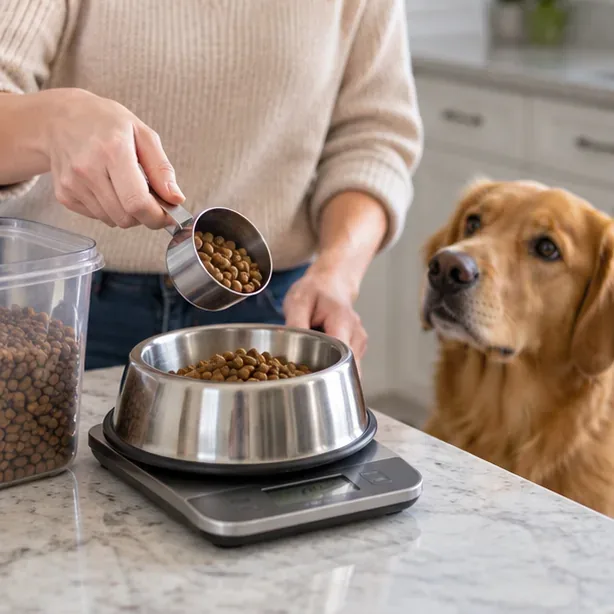
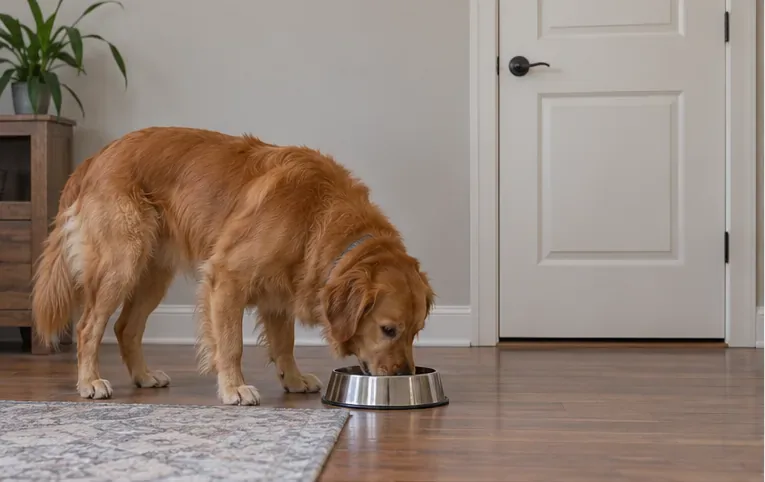
Measuring the amount offered makes “ate less than usual” more useful because you can compare actual portions from day to day.
Record amounts and patterns, not just “good” or “bad”
“Appetite normal” is easy to write, but it gives little detail if your pet later becomes ill. A better entry is: “Offered 1 cup at 7:00 a.m.; ate about three-quarters within 15 minutes; ignored usual dental chew.” If you feed wet food or a home-prepared ration, use a consistent household measure or a kitchen scale if your veterinarian has asked for more precise intake.
Track the whole feeding picture, not only the main meal. AAHA’s nutritional screening guidance says the history should include main meals as well as treats, table food, supplements, and foods used to give medication. That matters because a pet can appear to be eating less at meals while taking in more snacks, or can refuse food only when medication is mixed into it.
A simple daily entry can include
Food: what was offered, approximate amount eaten, eating speed, and whether favorite foods or treats were accepted.
Water: a measured amount when practical, or a clear observation such as “bowl emptied twice instead of once.”
Activity: willingness to walk, play, jump, climb stairs, or greet family members.
Elimination: changes in urination, stool frequency or appearance, vomiting, or accidents in the home.
Context: new food, house guests, travel, boarding, schedule changes, medication changes, hot weather, or another pet entering the home.
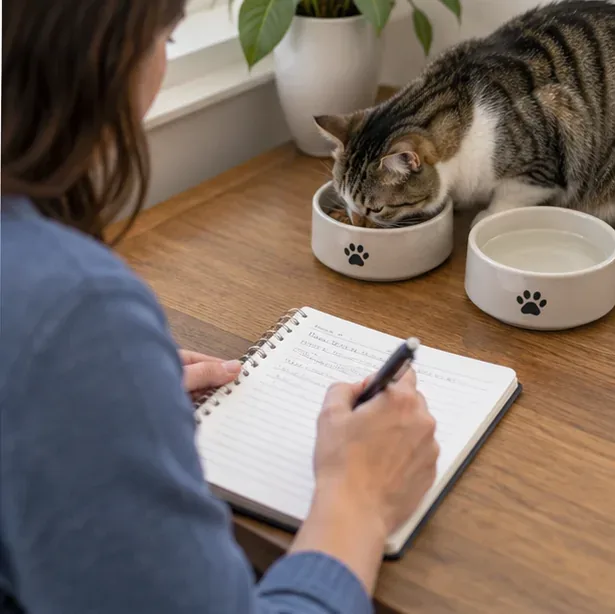
A short daily log works best when you record the same categories at roughly the same time each day.
Use your pet’s own baseline as the comparison
Small changes are easiest to recognize when you know what is normal for that individual animal. One dog may routinely skip breakfast and eat dinner enthusiastically; another may normally finish every meal within minutes. One cat may sleep in a quiet room most of the afternoon; another usually follows people around the house.
That is why a useful log compares today with the pet’s normal routine rather than with a generic standard. If your cat typically meets you in the kitchen at 6:00 p.m. but stays hidden for three evenings in a row, write that down. If your dog still eats but takes twice as long, drops kibble, or starts chewing on one side, those details are more informative than the single word “appetite.” Cornell’s Feline Health Center notes that dental problems can show up as changes in how a cat eats, including chewing on one side, swallowing kibble without chewing, or dropping food. See Cornell’s guidance on tooth resorption.
For multi-pet homes, separate records are especially helpful. Shared bowls make intake difficult to interpret. If one animal is being monitored for appetite change, ask your veterinarian whether temporarily feeding pets separately would make the record more reliable.
Write down when the change started and whether it is getting stronger
A veterinarian often needs the timeline as much as the symptom itself. Try to capture the earliest date you noticed the change, even if it seemed minor then. After that, note whether the pattern is stable, improving, intermittent, or progressively more obvious.
For example, “less playful” becomes much more useful when the record says: “Monday: skipped evening fetch. Tuesday: played for two minutes, then lay down. Wednesday: did not bring the toy and slept through usual playtime.” The log does not diagnose the cause, but it shows direction and duration.
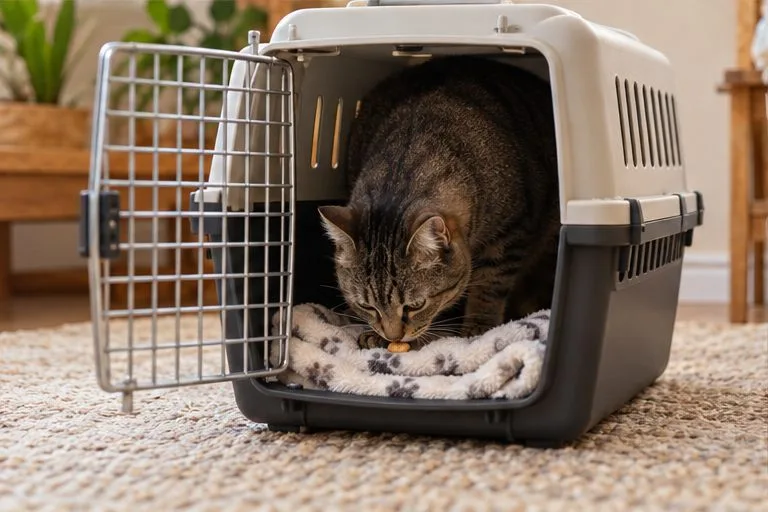
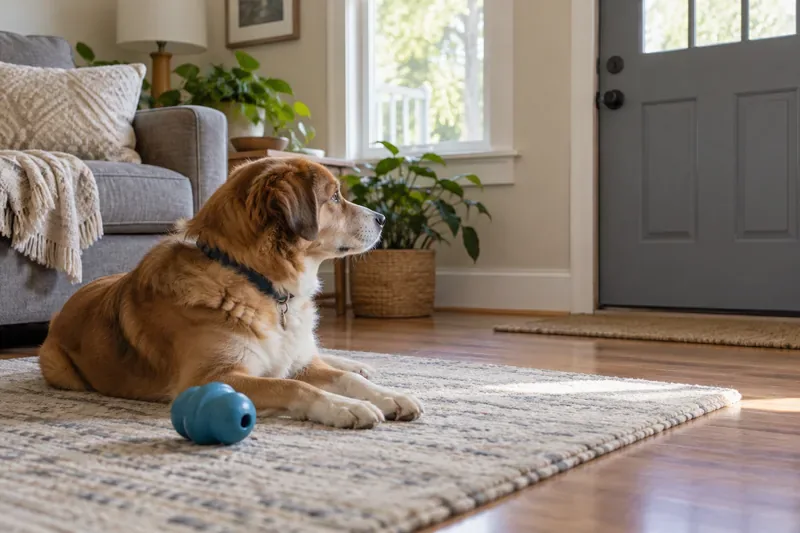
Changes such as hiding, reduced greeting, or choosing an unusual resting place are easier to interpret when you compare them with the pet’s normal routine.
Photos and video can document behaviors that are hard to describe
A brief video may help when the concern involves movement, posture, repeated coughing, unusual chewing, pacing, or a behavior that disappears at the clinic. Keep the clip focused on the behavior rather than trying to stage or provoke it. Do not delay urgent care in order to capture a recording.
Include one sentence of context with each file: the date, what happened immediately before it, how long the behavior lasted, and whether it has happened before. A 20-second clip labeled “after getting up from a two-hour nap; stiff for first five steps” is more useful than a long unlabeled video.
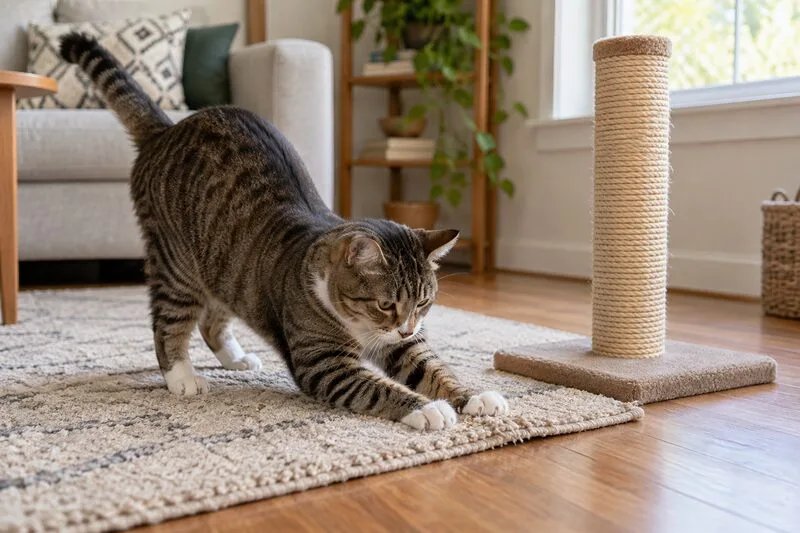
A short, well-labeled video can show gait, posture, or movement changes that may not appear during a veterinary appointment.
Track weight carefully, but do not overinterpret small home-scale changes
Unexplained weight change is one of the nutritional risk factors that can prompt a more detailed veterinary assessment. AAHA recommends considering body weight alongside body and muscle condition rather than relying on a single number. If you weigh your pet at home, use the same scale and similar conditions whenever possible. For small pets, a kitchen or infant scale may be more consistent than subtracting your own weight from a bathroom-scale reading.
Do not change a prescribed diet or medication dose based only on a home measurement unless your veterinarian has told you how to do so. A few ounces can matter for a small animal, but day-to-day differences can also reflect hydration, stomach or bladder contents, or scale variation.
What should you bring to the appointment?
Bring
Why it helps
Three to seven days of recent notes, or longer if the change is intermittent
Shows frequency, duration, and trend without burying the veterinarian in months of unrelated data.
Exact food names and approximate daily amounts
Supports a more complete nutrition history, including treats and supplements.
Medication and supplement list
Helps the veterinary team assess timing, side effects, interactions, and recent changes.
Relevant photos or short videos
Can document movement or behaviors that may not occur in the clinic.
Recent weight measurements, if reliable
Can show a trend when interpreted with the clinical exam.
If your veterinarian has given you a specific monitoring sheet, use that instead of creating a parallel system. The goal is not to collect the most data; it is to collect the information that can change a clinical decision.
When subtle change should become a prompt call
Do not wait for a perfect log if your pet is clearly unwell. Appetite loss can be clinically important, particularly in cats. Cornell’s Feline Health Center states that sustained loss of appetite in an adult cat can have serious health effects and advises prompt veterinary consultation when feline anorexia is noticed. Its current feeding guidance, updated April 30, 2026, also says a cat that refuses food and is losing weight should be examined by a veterinarian. See Cornell’s feline anorexia guidance and Feeding Your Cat.
Seek veterinary advice promptly for a sudden or persistent refusal to eat, repeated vomiting or diarrhea, marked lethargy, collapse, trouble breathing, obvious pain, significant weakness, jaundice, blood in vomit or stool, or a rapid change in drinking or urination. The U.S. Food and Drug Administration also advises owners to watch for decreased appetite and activity as possible adverse effects while pets are taking nonsteroidal anti-inflammatory drugs, and to contact the veterinarian if such signs appear. See the FDA’s pet pain-reliever safety guidance.
For pets with diabetes or other conditions where appetite changes can signal an urgent complication, follow the care plan your veterinarian has already given you. The American Veterinary Medical Association advises immediate veterinary contact for signs such as reluctance to eat or drink combined with vomiting, diarrhea, rapid or troubled breathing, weakness, or collapse in a diabetic pet. See AVMA guidance on diabetes in pets.
The most useful log is the one you can maintain
A notebook, phone note, spreadsheet, or clinic-provided form can all work. Consistency matters more than the format. Pick a method you can update in one or two minutes, use the same units when you measure food or weight, and mark unusual events rather than trying to document every minute of the day.
The goal is simple: give your veterinarian a reliable before-and-after picture. When you can say what changed, when it started, how often it occurs, and what else changed at the same time, subtle appetite and behavior shifts become much easier to evaluate in context.