Home
» Pets
»
Halloween Decorations and Pets: A Room-by-Room Safety Checklist
Halloween Decorations and Pets: A Room-by-Room Safety Checklist
Before you put out a jack-o’-lantern or hang a strand of lights, take one pass through the house at your pet’s eye level. The safest Halloween setup keeps flames, cords, candy, wrappers, and small decorations out of reach, while giving pets a quiet place away from the front door. What counts as “out of reach” depends on whether your dog jumps, your cat climbs, or your pet chews, so check each room for your own animal’s habits.
This checklist focuses mainly on cats and dogs. Birds, rabbits, reptiles, and other companion animals may have different sensitivities and escape risks; ask your veterinarian about species-specific concerns. A decoration that looks harmless to a person can still be a chewing, swallowing, entanglement, or stress hazard.
What should you check before guests arrive?
Replace open flames with battery-operated lights, and keep electrical cords secured where paws and teeth cannot reach.
Put candy, treat bags, wrappers, costume accessories, and small decorations in closed containers or cabinets.
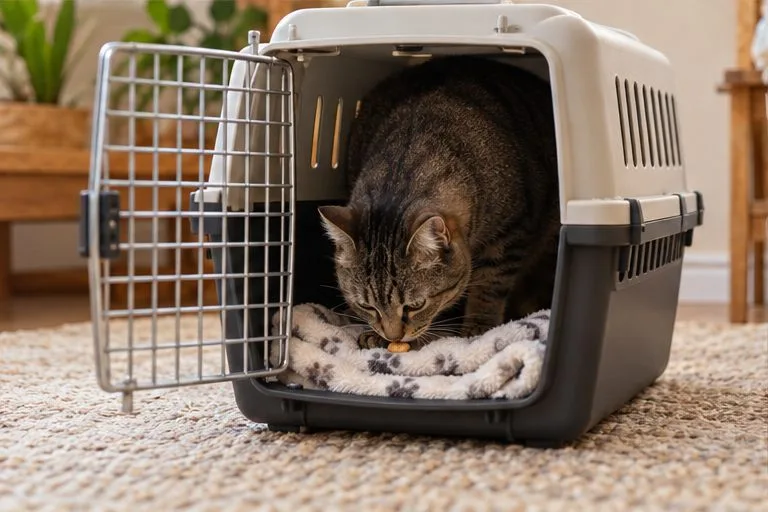
Decide where your pet will stay while the door is opening repeatedly. For many pets, a familiar closed room is calmer than the entryway.
Check that the pet’s collar ID is current; make sure microchip registration details are up to date if your pet has a chip.
The ASPCA advises keeping most pets in a comfortable separate room during busy trick-or-treat hours, securing wires, and avoiding lit pumpkins that an animal could knock over. Its Halloween safety guidance is a useful baseline; the room-by-room checks below help you apply it to your home.
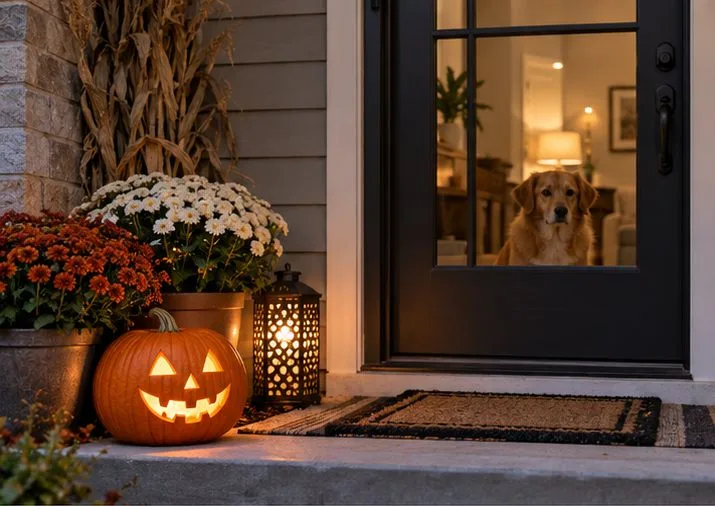
Porch check: keep pumpkins stable and choose a flameless light so a curious pet cannot knock over an open flame.
Front porch and yard: can a pet reach a flame or cord?
Place pumpkins, lanterns, and seasonal displays on a stable surface where a dog cannot bump them and a cat cannot jump onto them. A carved pumpkin can be festive, but a lit candle inside it can burn a curious animal or start a fire if it tips. Use a battery-operated light instead, and check the product instructions for safe outdoor use. Keep extension cords and light strings routed out of paw and chew range; do not stretch them across a walkway where a person or leash could catch.
Keep the path to the door clear. If your pet goes outdoors during the evening, use a leash and current identification rather than relying on a decorated yard or an open gate to contain them. A costume or reflective accessory should not replace a properly fitted collar and leash.
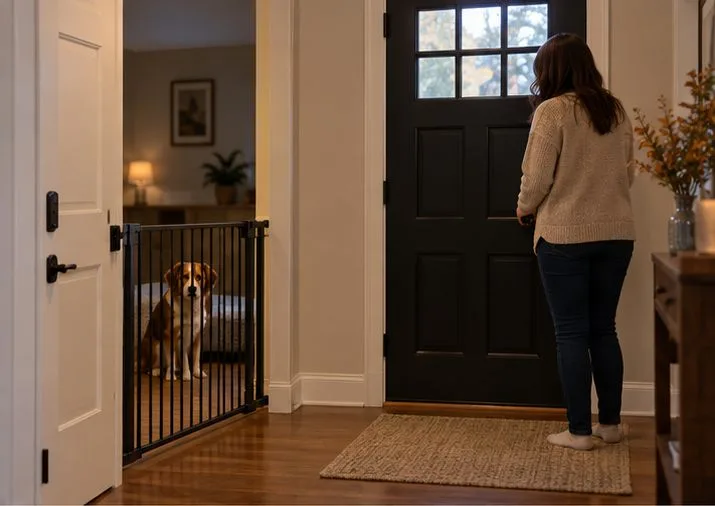
Entryway check: set up a barrier or closed room before opening the front door to visitors.
Entryway: what happens when the doorbell rings?
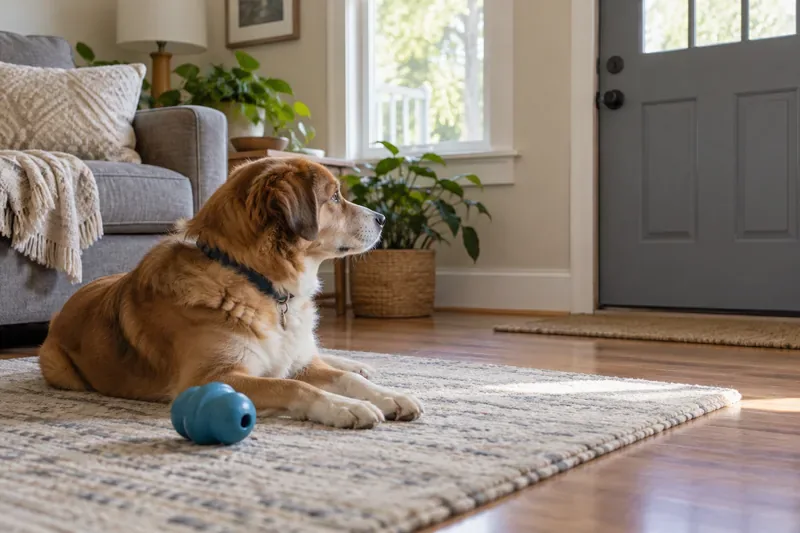
The front door is the most obvious escape route. Repeated doorbell sounds, unfamiliar visitors, and costumes can startle a pet that normally seems relaxed. Before the first trick-or-treater arrives, move your pet to a comfortable room with water, bedding, and a familiar toy. Close the door and let household members know not to open it casually. A gate can provide an extra layer if your pet cannot jump or push through it, but a closed interior door is a better choice for an animal that bolts.
If guests need to enter the home, ask them to leave the pet’s room closed. Do not let a child carry a nervous cat or dog to the doorway for greetings. A pet that chooses to approach visitors can do so later, once the door traffic has stopped.
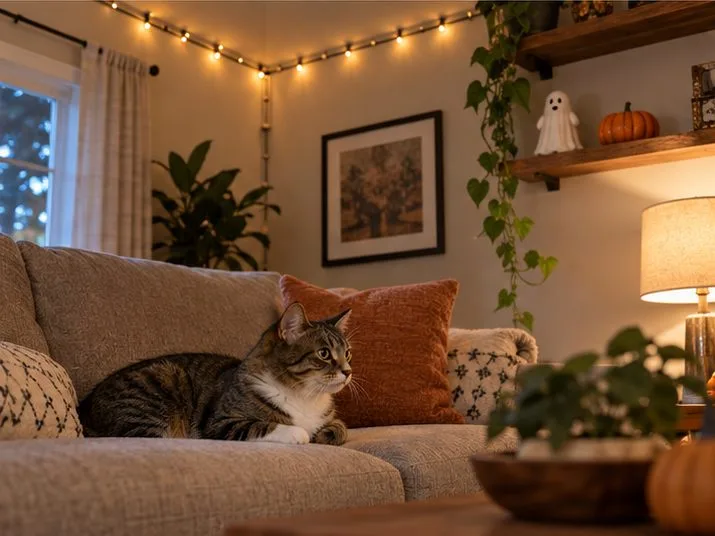
Living-room check: keep light strings and small decorations secured above a pet’s chewing and pawing range.
Living room: are lights, webs, or props within reach?
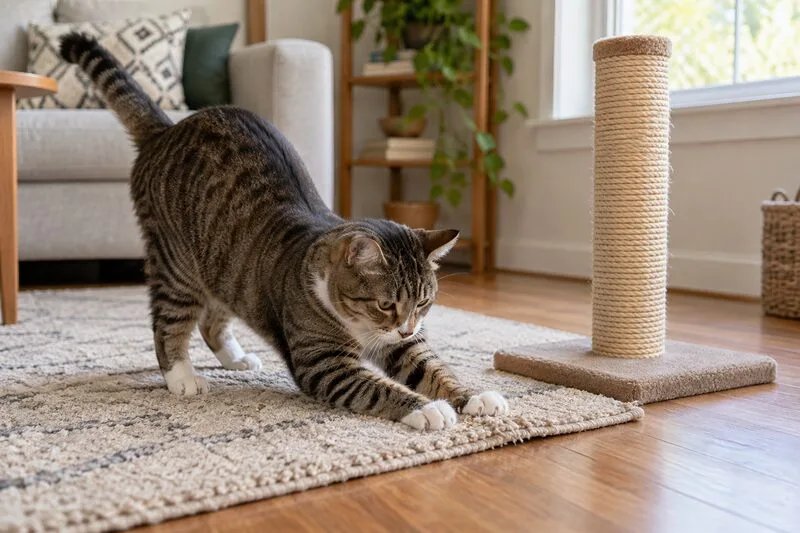
Secure cords along a wall or behind furniture rather than leaving loops beside a couch, scratching post, or favorite perch. Cats may climb shelves and furniture, while dogs may chew anything dangling near the floor. Check faux cobwebs, garlands, hanging spiders, and small plastic props for strands or pieces that could be pulled down. Keep breakable decorations on a stable high shelf, not on a narrow table that a wagging tail or jumping pet can knock over.
After decorating, watch your pet move through the room once. If they stare at, paw, mouth, or repeatedly try to reach an item, move the decoration or block access. A display is not pet-safe just because it is above the floor.
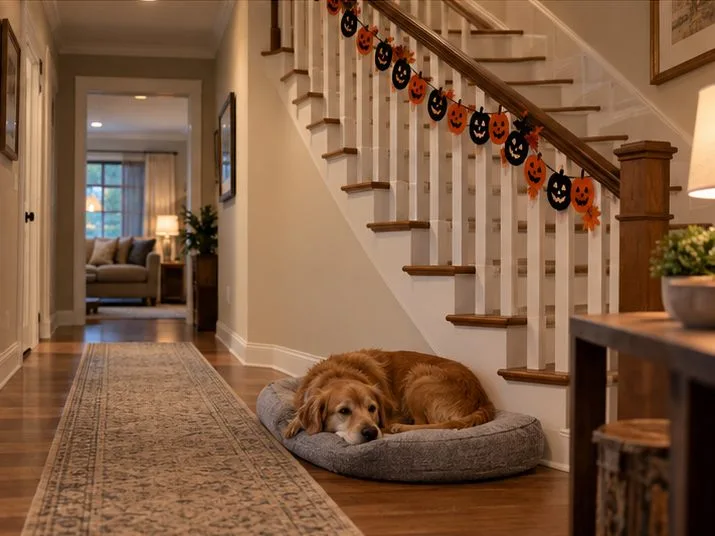
Hallway and stairs check: keep the walking path clear and attach garlands firmly above the floor.
Hallway and stairs: is the route clear?
Keep steps, landings, and the route to your pet’s water or resting place free of pumpkins, baskets, loose fabric, and electrical leads. A frightened animal may move quickly when a doorbell rings; a person carrying a bowl of candy may not see a low decoration in the dark. Attach garlands and paper decorations to the railing or wall so they cannot trail over a stair or snag a collar. Use ordinary room lighting after dark so pets and people can see the floor.
Walk the route yourself before the evening begins. If you can trip over a cord or catch a sleeve on a hanging decoration, move it. The same check helps prevent a leash from tangling when you take a dog outside.
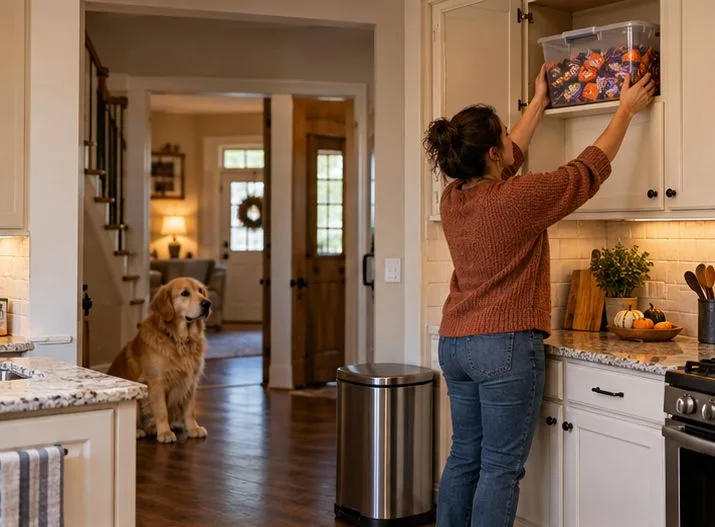
Kitchen check: store chocolate and sugar-free candy in a closed cabinet rather than on the counter.
Kitchen: where are candy, wrappers, and trash?
Keep Halloween candy in a closed cabinet or sealed container, not on a counter edge or in a child’s open backpack. Chocolate can be dangerous to cats and dogs, and sugar-free candy containing xylitol can be life-threatening to dogs if eaten. Wrappers can also attract a pet that likes crinkling sounds. Put empty foil and plastic wrappers directly in a lidded trash can, and check the floor after baking, sorting treats, or handing out candy. The ASPCA’s current Halloween pet-hazard advice highlights chocolate and xylitol; its Animal Poison Control article on candy and wrappers also explains why wrappers should stay out of paws’ reach.
Do not offer a pet candy as a holiday treat. If you want to include them, use a familiar pet treat that is appropriate for that animal and give it in the quiet room, away from the door and party food.
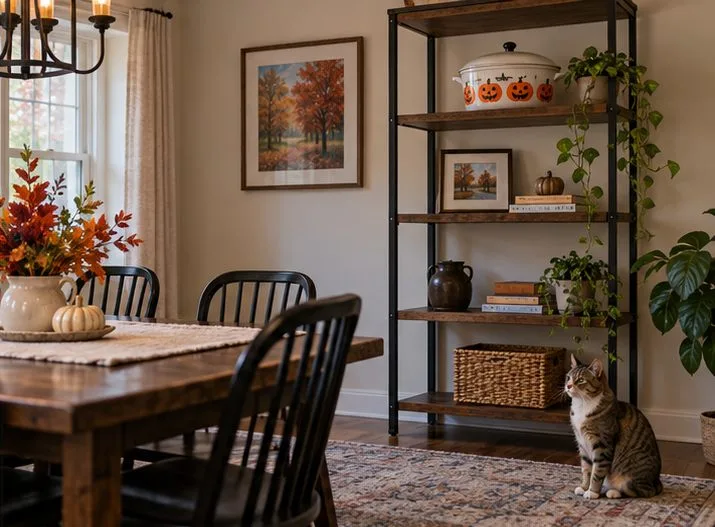
Dining-area check: keep treat bowls and party food on a stable surface pets cannot reach.
Dining room and party area: can pets reach the table display?
Move candy bowls, snack plates, napkins, toothpicks, and small decorative pieces away from the table edge. A chair can give a cat or small dog a step up, so check access from the floor and from nearby furniture. If children bring home treat bags, designate one closed cupboard or high shelf for them rather than letting bags sit on chairs or the floor. After guests leave, sweep up dropped candy and wrappers and secure the trash before letting your pet back into the room.
Keep human costume accessories—such as masks, loose plastic pieces, and small props—off the floor and out of pet beds. The ASPCA notes that small costume accessories can present choking hazards, so store them with the costume when they are not being worn.
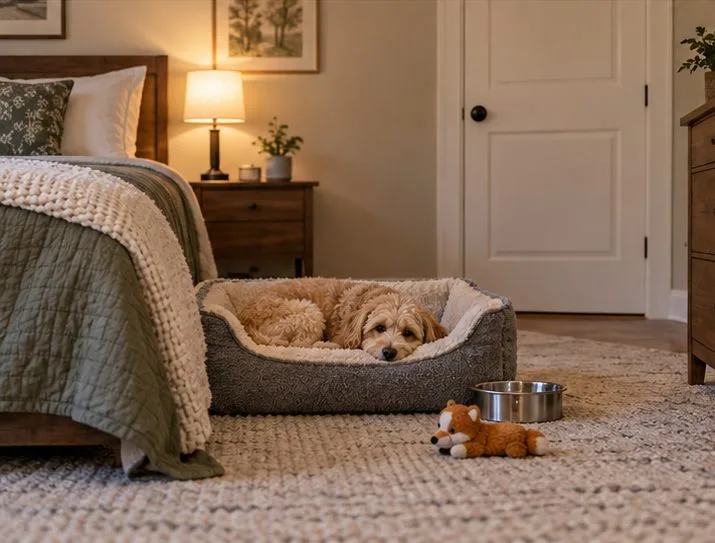
Bedroom retreat check: make a calm room available with familiar bedding, water, and a toy.
Bedroom or quiet room: where can your pet decompress?
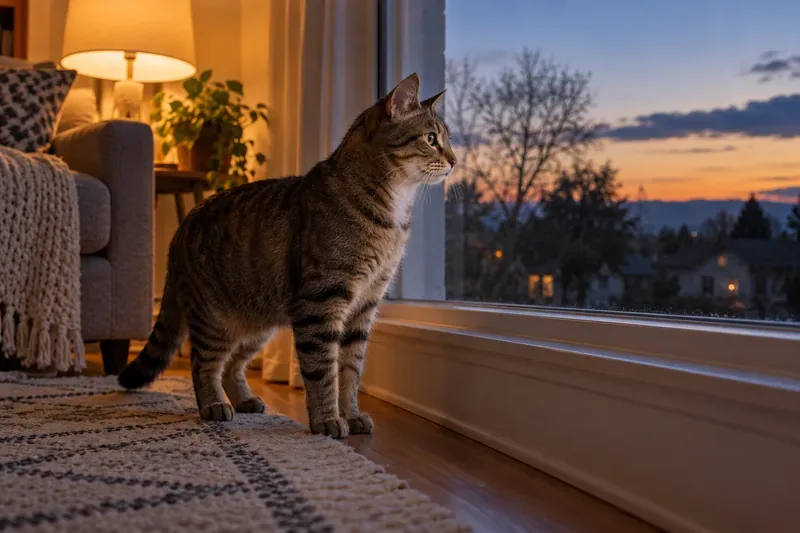
A closed bedroom can be the simplest safe room during a busy evening. Put out water, a familiar bed, and a toy or food puzzle your pet already uses safely. Keep candy, treat bags, and costume accessories out of the room, especially if children are likely to leave belongings behind. Check that windows and screens are secure if your pet may become restless around unfamiliar noises.
Do not force a pet to stay in a costume or interact with guests. If you choose a costume, the ASPCA recommends making sure it does not restrict movement, vision, or breathing and that it has no small, dangling, or chewable pieces. Try it briefly before Halloween; if the animal seems distressed, remove it. See the ASPCA’s costume safety advice.
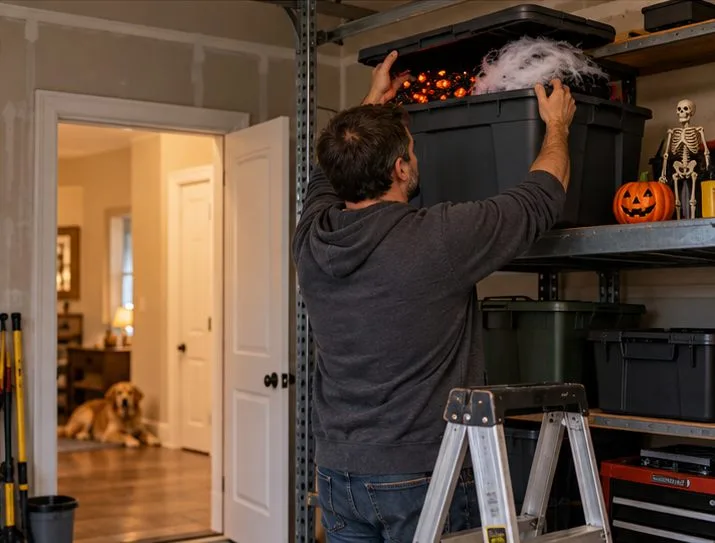
Garage and storage check: pack small, stringy, or electrical decorations away where pets cannot investigate them.
Garage and storage: what happens before and after decorating?
Keep pets away while opening boxes, sorting string lights, and assembling decorations. Packaging, twist ties, small batteries, plastic hooks, and long strands can be tempting to chew or bat around. Put unused items back in a lidded tote and store it where a pet cannot pull it down. After Halloween, unplug decorations before taking them apart, gather loose pieces from the floor, and store them before letting a curious pet inspect the cleared area.
How can you tell whether the setup is working?
A good setup keeps your pet away from flames, cords, candy, and open doors while letting them rest normally. Check for practical signs: the pet can reach water and bedding, the room stays comfortably quiet, the doorway can open without the animal rushing out, and no decoration is being pawed, chewed, or pulled down. If your pet is pacing, hiding, panting, or repeatedly trying to escape, reduce the noise and activity around them and use the quiet room. Every animal responds differently, so adjust the plan to what you observe.
If you think your pet swallowed candy, a wrapper, a battery, or part of a decoration, contact your veterinarian promptly. The ASPCA advises calling a veterinarian or ASPCA Poison Control at (888) 426-4435 if you suspect a toxic ingestion. Keep the package or a photo of the item and note when it may have happened. Do not wait for a symptom to decide whether to seek advice.
Safety information and ASPCA resources checked September 28, 2026. This checklist is general guidance for household setup; it cannot determine whether a specific item is safe for every species or individual pet.