Home
» Food & Drink
»
What Can Replace Eggs in Different Baking Recipes?
What Can Replace Eggs in Different Baking Recipes?
The best egg substitute depends on the recipe. For muffins and quick breads, applesauce, mashed banana, or pumpkin can add moisture and softness. For cookies and brownies, a flaxseed gel can help hold ingredients together. For meringue-style recipes that rely on whipped egg whites, aquafaba—the liquid from cooked or canned chickpeas—can form a foam. For cakes where rise and structure matter, a commercial egg replacer or a recipe developed without eggs is often a more reliable place to start.
No single swap does everything an egg does. Eggs can add moisture, bind ingredients, help a batter hold air, emulsify fat and water, set into structure as they cook, and contribute color. A substitute may do one or two of those jobs, so a recipe can still bake through but turn out denser, softer, flatter, or differently flavored. Use the guide below to choose by recipe, and treat untested swaps as experiments rather than guaranteed one-for-one replacements.
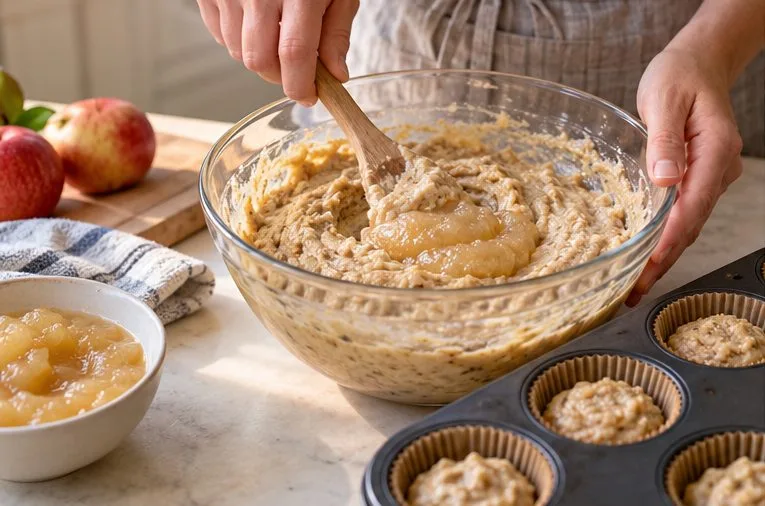
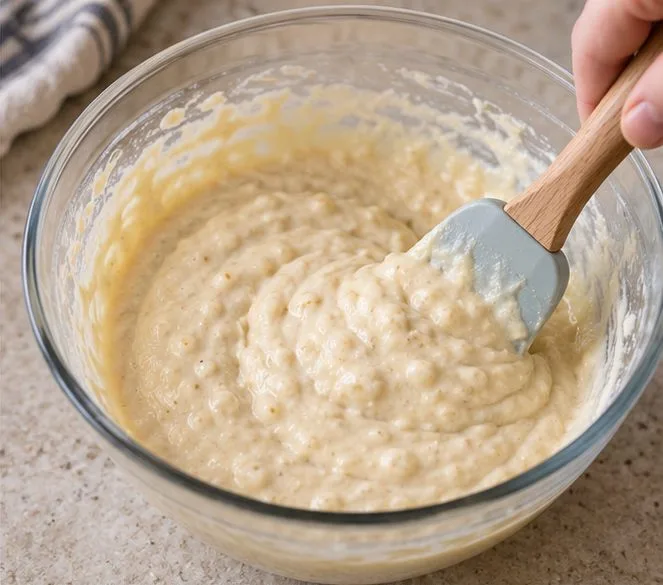
Fruit purée can add moisture to a muffin or quick-bread batter; the flavor and texture may shift.
Choose by the kind of baked good
Recipe type
Good starting point
Expected trade-off
Muffins, banana bread, and other quick breads
Unsweetened applesauce, mashed banana, or pumpkin purée in a recipe that allows a fruit-purée swap
Moisture and tenderness; the crumb may be heavier, and banana or pumpkin can change flavor and color.
Oatmeal or other sturdy cookies; brownies
Ground flaxseed mixed with water, or a commercial egg replacer labeled for baking
Flax gel binds, but can make the result denser and add visible flecks or a mild nutty taste.
Everyday pancakes and waffles
A commercial replacer for a neutral result, or a tested recipe using flax or fruit purée
Some recipes remain tender but may brown or rise differently. Batter thickness matters.
Layer cakes and cupcakes
A formula written for egg-free baking, or a commercial replacer specifically labeled for cakes
Structure and lift are harder to match; one-for-one kitchen swaps can produce a squat or gummy crumb.
Meringues or recipes that use whipped egg whites
A recipe written for aquafaba
It can foam, but the chickpea liquid varies by brand and preparation, so results can vary.
Custards, flan, soufflés, and egg-heavy sponge cakes
Choose a recipe designed without eggs rather than improvising a simple swap
Eggs supply much of the set or lift; a moisture-only substitute will not recreate that structure.
What the common substitutes actually do
Fruit purées: moisture for soft, sturdy bakes
Applesauce, mashed banana, and pumpkin purée work best when a recipe already has a moist, forgiving crumb, such as a quick bread or muffin. They provide water and solids, but not the same protein structure or foaming action as an egg. Banana has a clear flavor; pumpkin can add earthiness and color; applesauce is usually less noticeable. Check whether the recipe is already sweetened and adjust only with a tested formula. If the recipe calls for several eggs, replacing all of them with purée may make the center heavy or damp.
Useful action: choose a recipe that already includes fruit purée or gives an egg-free variation. If adapting a favorite, replace only one egg at first and note the bake, height, and texture before changing the rest.
Flax or chia gel: binding, with a denser result
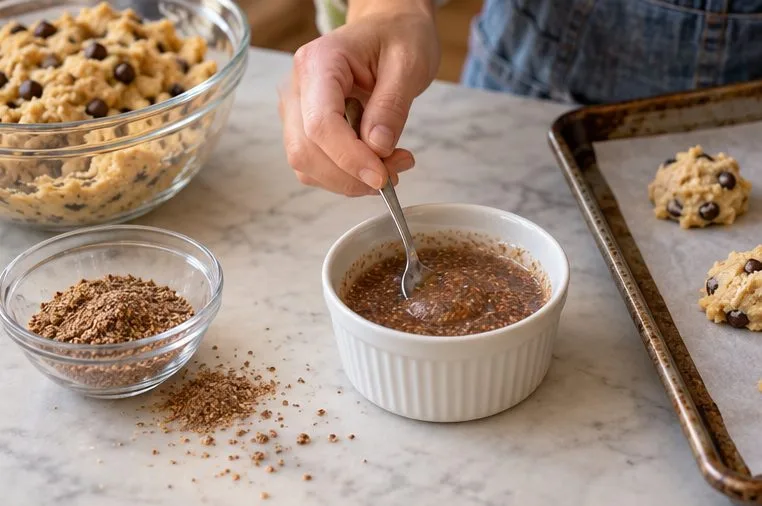
A “flax egg” is ground flaxseed mixed with water until it thickens into a gel. A Utah State University Extension oatmeal-cookie handout gives a tested substitution of 1 tablespoon ground flaxseed mixed with 3 tablespoons warm water in place of one egg; see the Extension handout. Let the mixture thicken before adding it. This is a useful binder in hearty cookies and some brownies, but it does not whip like egg whites or add much lift by itself. Ground chia can also gel, though the texture and flavor can be more noticeable; follow a recipe that specifically uses it.
Ground flax and water thicken into a gel that can bind a sturdy cookie dough.
Aquafaba: most useful when the recipe needs foam
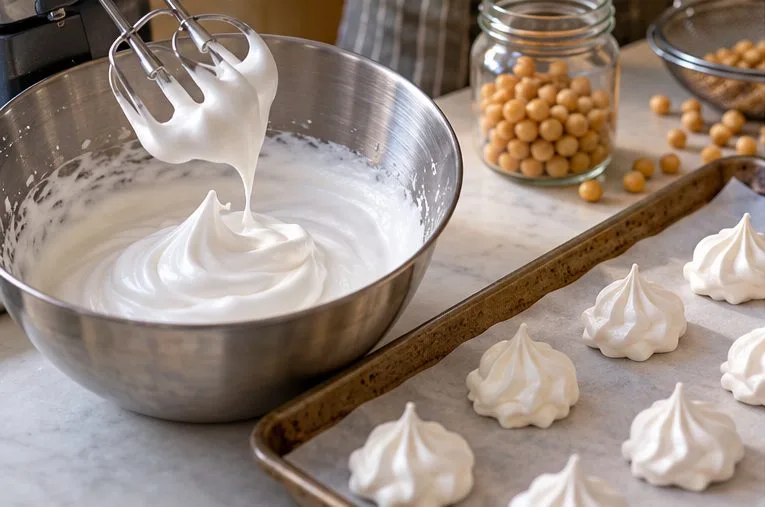
Aquafaba is the cooking liquid from chickpeas, including the liquid in many canned chickpeas. It can be whipped and is used in egg-free meringue recipes. A peer-reviewed 2018 study compared chickpea aquafaba from different cans and found variation in composition and foaming behavior; the researchers also noted that aquafaba sponge cake could have stability issues. That evidence supports using a recipe developed for aquafaba rather than assuming it behaves exactly like egg whites in every formula. The study is one investigation, not a universal performance guarantee. See the aquafaba sponge-cake study in the International Journal of Food Science and Technology.
Useful action: use aquafaba for recipes that explicitly call for it, especially whipped-white applications. If using canned chickpeas, choose an unsalted or lower-salt product when the recipe is sweet, and do not assume homemade bean liquid will have the same thickness.
Aquafaba can be whipped for meringue-style recipes, although the result depends on the liquid and formula.
Packaged egg replacers: follow the product and recipe
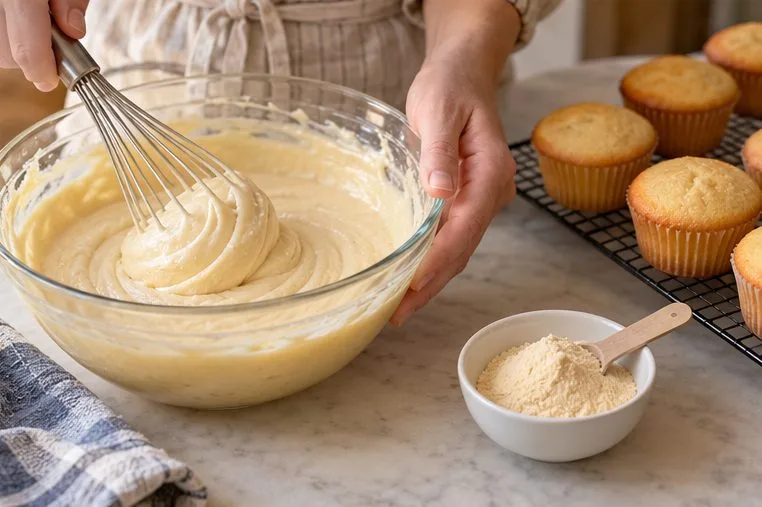
Commercial egg replacers are not all the same. Some are designed mainly to bind; others are formulated for cakes or other specific uses. Read the package instructions for how to mix and how much equals one egg, then check that the product is intended for the recipe type. A replacer may not reproduce the taste or nutritional role of an egg, and a product designed for baking may not be suitable for scrambled eggs or custards.
Useful action: keep the package directions with the product, and use the exact amount and hydration time listed. Avoid adding extra powder “for more structure”; too much can leave a dry, pasty, or gummy result.
For cakes, match a packaged replacer to its labeled use and expect the recipe’s texture to matter.
Common claims: what is verified, and what depends on the recipe?
“Any egg substitute works one-for-one in any bake.” Not established. A flax gel, fruit purée, aquafaba, and a packaged replacer do different jobs. Choose by the recipe’s structure and test one change at a time.
“Applesauce makes a cake rise just like an egg.” Not generally true. Purée adds moisture, but does not whip air into a batter the way beaten eggs can. Use it where a moist, compact crumb is acceptable, or select a recipe formulated for it.
“A flax egg works for meringue.” No. The gel can bind, but it does not create the same whipped foam. Choose an aquafaba meringue recipe for that task.
“A vegan replacer is automatically safe for an egg allergy.” Not necessarily. Products can contain other allergens, and labels and manufacturing conditions matter. The FDA advises people with food allergies to read the full ingredient list every time; precautionary “may contain” statements are voluntary. See the FDA’s guidance on reading food-allergy labels. Check with the manufacturer if the label does not answer a safety question.
How to test a substitution without wasting a batch
Identify the egg’s job. Is it mainly adding moisture, binding a cookie, or providing whipped volume and structure?
Pick the closest substitute. Use a purée for a moist quick bread, flax gel for a sturdy cookie, aquafaba for a recipe that needs foam, or a labeled commercial product for a compatible cake.
Change one variable. Keep the pan size, ingredient amounts, oven temperature, and mixing method the same. Follow the recipe’s timing, but check doneness because texture may change.
Record the result. Note whether the baked item rose, set in the middle, held together, and tasted right. Adjust only after it cools; warm bakes can seem softer than they will once set.
If the recipe depends on a large number of eggs, whipped whites, or a custard-like set, the most reliable substitute is often a recipe designed without eggs. For a forgiving muffin, cookie, or quick bread, a modest swap can work well. The right choice is the one that matches what the egg is doing in that specific batter—not simply the ingredient that looks most like an egg before baking.