Home
» Food & Drink
»
How to Tell Whether Baking Powder Is Still Active
How to Tell Whether Baking Powder Is Still Active
The quickest way to check baking powder is to stir a small amount into warm water and look for prompt bubbling or foaming. Baking powder that bubbles readily still has some leavening activity; powder that shows little or no reaction may be too weak to raise a recipe reliably. This simple check is useful before baking, especially if the container has been open for a while.
Baking powder is a chemical leavener: a dry mixture that releases carbon dioxide gas to lift batter or dough. It contains baking soda plus one or more dry acids and usually a starch that helps keep the ingredients dry. A bubble test is only a practical check, not a laboratory measurement or guarantee that a cake will rise perfectly. The ratio and instructions below follow guidance from Utah State University Extension and Clabber Girl, a baking-powder manufacturer.
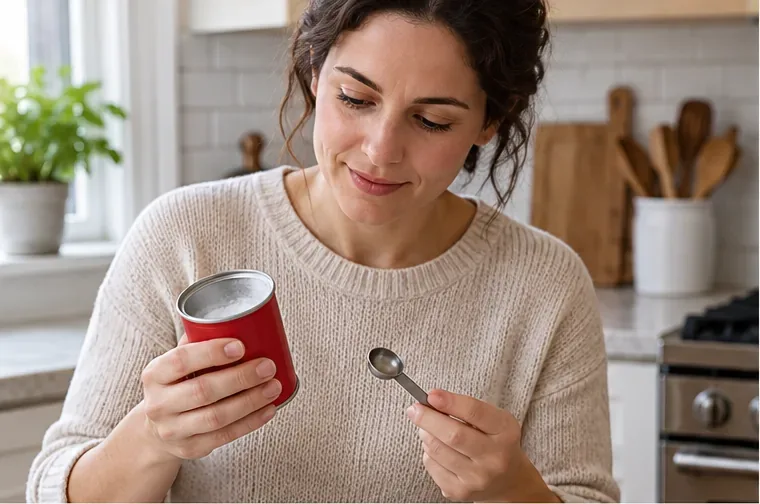
Before testing, check the container’s date and whether the powder has been kept dry.
What you need
1 teaspoon baking powder
1/3 cup warm water
A clean, dry teaspoon and a small bowl or clear cup
Use warm water, not boiling water, and a clean utensil. No vinegar, lemon juice, or other acid is needed: unlike baking soda on its own, baking powder already contains an acid ingredient. Adding vinegar can make even weak powder fizz and muddy the result.
How to test baking powder, step by step
1. Check the container and the powder
Read the package’s best-by date and note when you opened it, if you know. Look for signs that moisture got inside, such as a damp container, hard lumps, or powder stuck together. Baking powder can react prematurely when exposed to moisture, so a container that was left open or stored near steam deserves extra scrutiny. A date is a useful quality guide, but it does not tell you by itself how much leavening power remains.
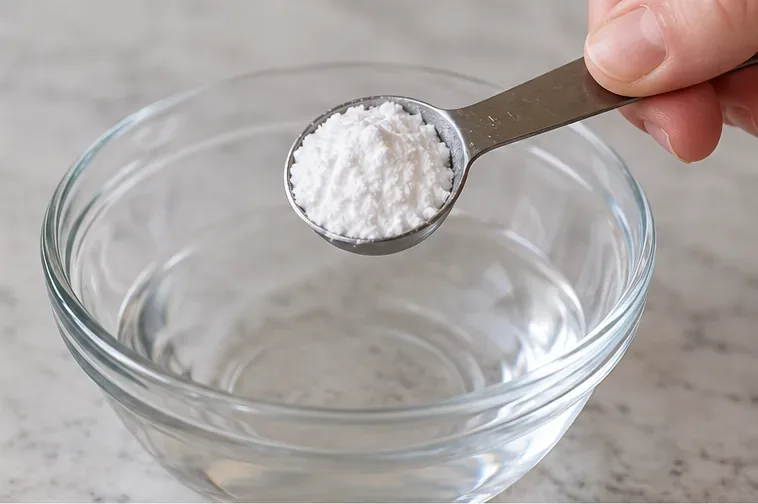
Measure one level teaspoon for the test; do not scoop from a wet spoon.
2. Measure a small sample
Place 1 teaspoon of baking powder into a clean bowl or cup. Keep the rest of the container away from spills and steam. Do not return the tested powder to the can, and do not test with a spoon that has touched wet ingredients.
3. Add warm water and stir
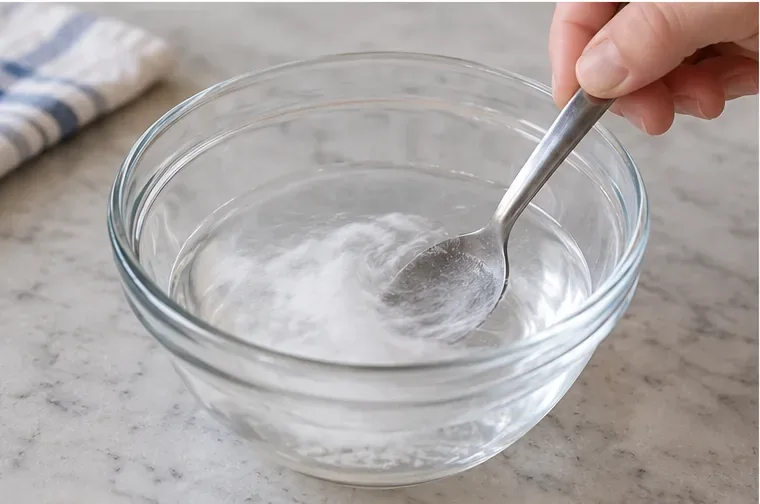
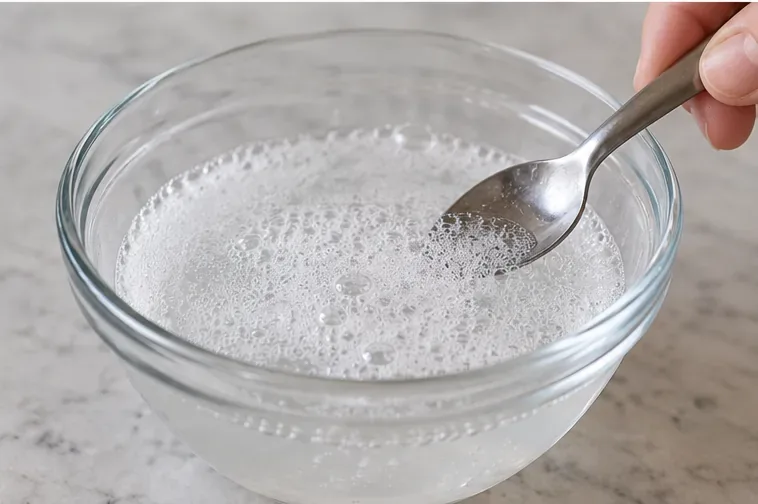
Pour in 1/3 cup warm water and stir briefly. Watch the mixture right away. A useful result is a visible, prompt fizz or a layer of bubbles and light foam. Baking powder does not have to erupt dramatically; it generally reacts less vigorously in this test than baking soda mixed with vinegar. A few bubbles can indicate some activity, but a faint or delayed reaction is not reassuring if you need a dependable rise.
Stirring briefly disperses the powder so you can see whether bubbles form throughout the mixture.
4. Decide whether to keep or replace it
If bubbles or foam appear promptly, the powder is active enough to produce gas in the test. That does not guarantee the exact lift a recipe needs: baked results also depend on the recipe, measuring, mixing, oven temperature, and how quickly the batter is baked. If there is little or no bubbling, replace the baking powder before making an important batch. If the reaction is borderline, repeat once with a fresh measured sample and warm water in a clean bowl. If the second test is still weak, replacing it is the more reliable choice.
Prompt visible bubbling indicates that the sample still has leavening activity.
What the bubbles mean
When water dissolves the ingredients, the acid and baking soda react and release carbon dioxide. Gas bubbles trapped in batter expand and help create a lighter texture. Many supermarket baking powders are double-acting, meaning they release some gas when moistened and more when heated in the oven. The countertop test mainly shows that the first reaction can happen; it cannot fully measure the later oven lift.
This is why timing still matters after a successful test. Once baking powder is mixed into a recipe’s wet ingredients, follow the recipe and get the batter into the oven without unnecessary delay. The test checks the powder; it does not remove the need for accurate measuring or proper baking technique.
Common mistakes that give confusing results
Using vinegar as the test liquid: baking powder has its own acid, so warm water is the appropriate simple check. Vinegar is commonly used to test baking soda.
Expecting a violent fizz: the goal is clear, prompt bubbling or light foam, not a specific amount of foam. No standard home test defines a precise pass threshold.
Using cold water or a damp measuring spoon: either can make a small test harder to interpret. Use warm water and dry utensils.
Testing baking soda by mistake: baking soda is a different ingredient and generally needs an acid to fizz. Check the label before testing.
Judging only by smell or appearance: fresh-looking powder can have lost strength, and the reaction test is more informative. Conversely, damp clumps are a warning that it may have been exposed to moisture.
Assuming the package date is a safety deadline: for a dry pantry leavener, the main concern is usually performance. Follow the manufacturer’s date and storage advice, and discard powder that has become wet or contaminated.
How to keep baking powder active longer
Close the container tightly after each use. Store it in a cool, dry cupboard away from the kettle, dishwasher, sink, oven, and other sources of steam or heat. Use a dry measuring spoon, and avoid shaking powder directly over a steaming pot. Moisture can cause the ingredients to react before they reach the batter.
Storage guidance can differ by product and package. For example, Clabber Girl advises using its opened baking powder within six months for best rise, while Utah State University Extension gives approximately six months after opening and notes a best-if-used-by period of 18 to 24 months. Treat those periods as general quality guidance, not a universal promise for every brand. Follow the date and directions on your own container, especially if it has been stored in humid conditions.
Quick decision guide
Test result
What it suggests
Practical next step
Prompt visible bubbles or light foam
Some leavening activity remains
Use it if the powder was stored dry and the package is in good condition
Few bubbles or a delayed, weak reaction
Activity may be reduced, or the test conditions may be off
Repeat once with fresh sample and warm water; replace it if still weak
No visible reaction
It may no longer raise baked goods reliably
Replace it before baking
Wet or hard clumps
Moisture may have reached the powder
Discard and use a dry, fresh container
For a quick pre-baking check, remember: one teaspoon of baking powder, one-third cup of warm water, then look for prompt bubbles. That small test can help avoid a flat batch, while careful storage and the package’s own guidance help you decide when it is time to replace the can.