Home
» Food & Drink
»
What Makes Pancakes Tough Instead of Fluffy? Causes and Fixes
What Makes Pancakes Tough Instead of Fluffy? Causes and Fixes
Tough, chewy pancakes usually come from batter that has been mixed too much or cooked too long. Stirring flour into liquid develops gluten, the stretchy protein network that gives bread its structure. A little gluten helps a pancake hold together, but vigorous mixing can make the crumb chewy and can knock air bubbles out of the batter. Fluffy pancakes need enough structure to rise, but a light hand when mixing and steady, moderate heat while cooking.
If you are new to making pancakes, start with a tested recipe and follow its ingredient amounts. Flour, liquid, eggs, fat, and a leavener (such as baking powder or baking soda) work together; changing several at once makes it difficult to find the cause of a tough batch. The steps below help you spot the likely issue and make one adjustment at a time.
Before you start: what gives pancakes a soft, fluffy texture?
Fluffiness comes from gas bubbles trapped in the batter and set by heat. Chemical leaveners release gas when mixed with liquid and heated, while eggs can also help give structure. The batter needs to be mixed enough to combine the ingredients, but not until perfectly smooth. Small lumps are normal in many pancake recipes; dry flour pockets are not.
A thick batter can make a taller pancake, but “thicker” does not always mean “fluffier.” Too much flour or too little liquid can make pancakes heavy and close-textured. A worn-out leavener can leave them flat or dense. These problems may feel like toughness, but the first clue is often the shape: overmixed pancakes tend to be chewy, while pancakes with weak leavening tend to rise poorly.
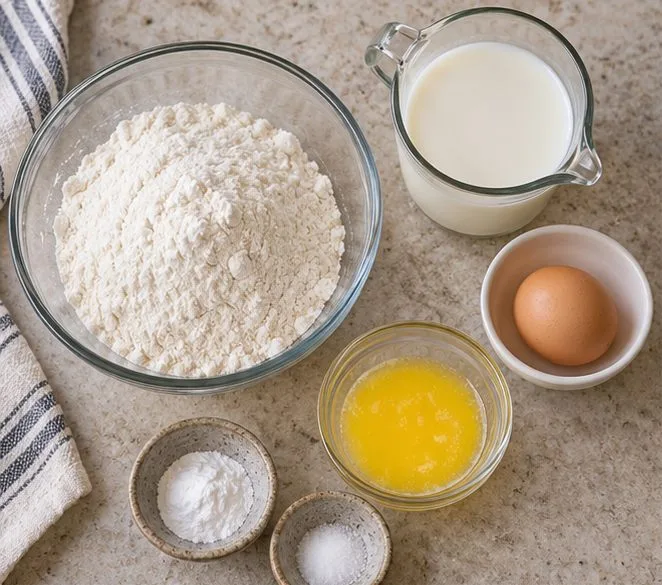
Measure the recipe ingredients before mixing: flour, liquid, egg, fat, and leavener all affect the final texture.
What should you prepare?
A tested pancake recipe, with its stated measurements and leavener.
Measuring cups and spoons, or a kitchen scale if the recipe gives weights.
Two bowls: one for dry ingredients and one for wet ingredients.
A whisk or fork for the wet ingredients and a spoon or spatula for gently combining the batter.
A nonstick skillet or griddle, a thin spatula, and a plate for the cooked pancakes.
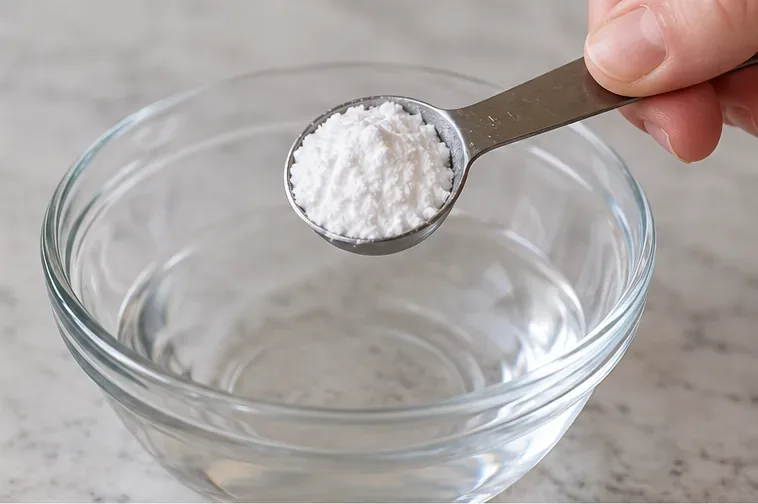
Measure flour the way your recipe recommends. Scooping a measuring cup directly into flour can pack in more than intended; if the recipe provides a weight, weighing it is a useful way to repeat the same amount. Check that the baking powder or baking soda is fresh and that you have not confused one for the other. Do not add extra leavener to compensate for a recipe that seems dense; too much can affect flavor and rise unevenly.
How do you mix pancake batter without making it tough?
Combine dry ingredients in one bowl. Whisk the flour, salt, sugar, and the recipe’s leavener so it is distributed through the flour.
Combine wet ingredients separately. Whisk the milk or buttermilk with the egg and melted butter or oil. If the butter is hot, let it cool a little so it does not cook the egg when combined.
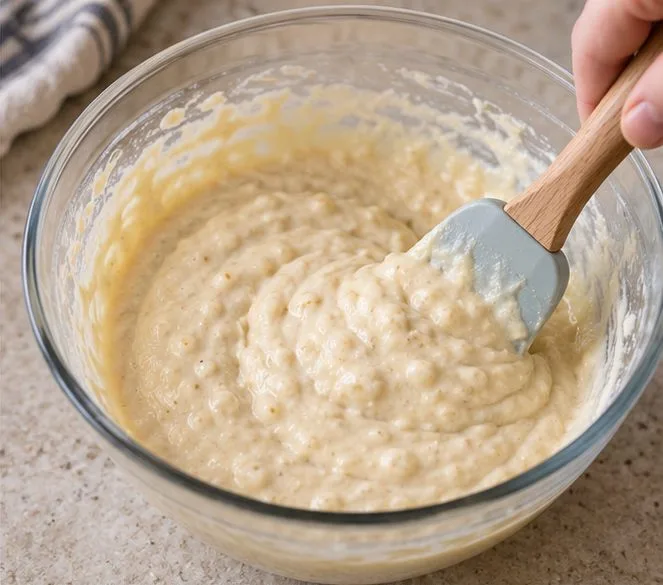
Add wet to dry and stir gently. Use a spatula or spoon and stop when you no longer see dry streaks of flour. A few small lumps are fine. Avoid beating the batter until glossy and completely smooth.
Rest only as directed by the recipe. Some tested recipes call for a short rest; others do not. Follow the recipe instead of leaving batter out for an arbitrary length of time. Leaveners begin reacting after they meet liquid, so prolonged waiting can change how much lift remains when the batter hits the pan.
Stop stirring once the ingredients are combined and no dry flour remains; small lumps can stay.
How should you cook the first pancake?
Heat the skillet or griddle before adding batter. A pan that is too cool can make the pancake take longer to set and dry out; a pan that is too hot can brown the outside before the center cooks through. Many recipes begin around medium heat, but cookware and burners vary. Use the temperature or heat cue in your recipe when it gives one. For example, King Arthur Baking’s buttermilk pancake recipe specifies a 350°F griddle, while its self-rising flour pancake recipe uses a higher range; that difference is a reason to follow the recipe you chose rather than assume one temperature works for every batter.
Lightly grease the surface, then cook a small test pancake. If the bottom darkens very quickly while the top is still wet, lower the heat. If it sits pale and barely begins to set, raise the heat a little. A test pancake helps you adjust the pan before using the rest of the batter.
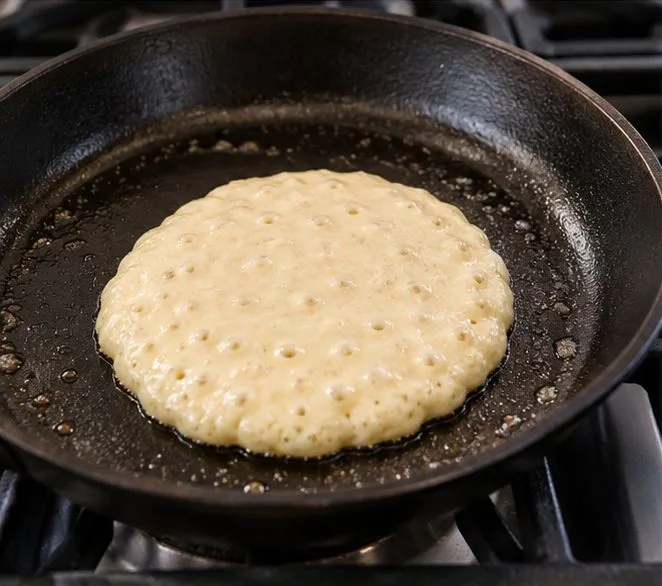
Look for bubbles on top and edges that are beginning to set before turning the pancake.
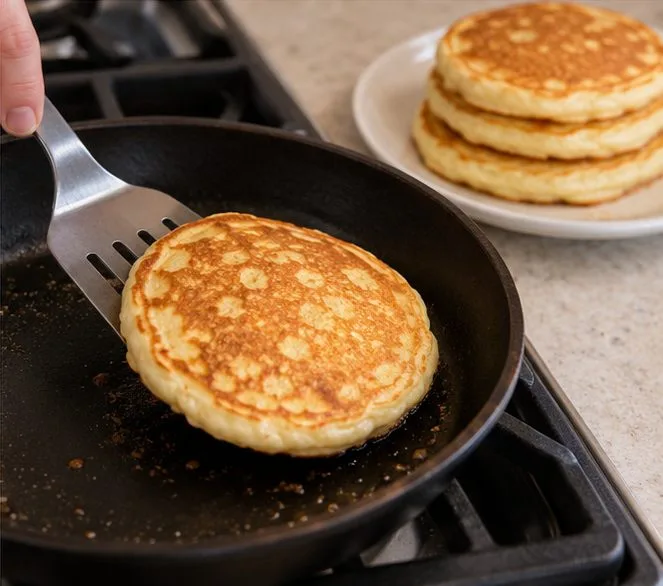
Flip once when bubbles have formed on the surface and the edges look less wet. Slide the spatula under the pancake and turn it in one motion. Cook the second side until it is golden and the center is cooked through. Repeated flipping or pressing down with the spatula can make the pancake flatter and denser, and leaving it on the pan long after it is done can dry it out.
Turn the pancake once, cook the second side until golden, and take it off the heat when done.
What clues point to the cause?
Result
Likely thing to check next
Chewy, rubbery texture
Was the batter stirred vigorously or until smooth? Next time, combine only until the dry flour disappears.
Flat, heavy pancakes
Check leavener freshness, exact ingredient amounts, and whether the batter sat much longer than the recipe instructed.
Thick but gummy centers
The pan may be too hot, or the pancake may have been flipped before the center began to set. Lower the heat and cook the next one longer on the first side.
Dry, firm pancakes
Check for overcooking, too much flour, or too little liquid. Measure carefully and remove each pancake when cooked through.
Different results across one batch
The pan may be heating unevenly. Adjust the burner between batches and avoid crowding the cooking surface.
Common mistakes to avoid
Chasing a perfectly smooth batter. A few lumps are preferable to overmixing; flour streaks should disappear, but every lump does not need to.
Adding flour by feel before cooking a test pancake. Batter thickness varies by recipe and flour. If a test pancake spreads too much, make a small adjustment and follow the recipe’s consistency cues.
Using high heat to speed things up. This can create a dark exterior and an undercooked middle. Moderate heat gives the center time to set.
Pressing the pancake flat. Let the rising batter stay airy; a spatula is for turning, not compressing.
Tasting raw batter. Raw flour and eggs can carry harmful bacteria. The FDA advises not to eat or taste raw flour, dough, or batter; cook pancakes fully and wash hands, utensils, and surfaces after handling batter.
A simple reset for your next batch
Keep the recipe constant, measure carefully, check the leavener, and stir only until no dry flour remains. Heat the pan to the recipe’s setting, cook one small test pancake, and adjust the burner before making the rest. If the pancakes are still tough, change one variable at a time: gentler mixing first, then pan heat or ingredient measuring. This makes it easier to identify what is affecting the texture without changing the whole recipe at once.
Cooking references checked October 1, 2026. Pan temperatures and resting times vary by recipe, so follow the directions for the specific batter you are making.