Home
» Food & Drink
»
How to Fix Soup That Tastes Too Salty Without Doubling the Recipe
How to Fix Soup That Tastes Too Salty Without Doubling the Recipe
The reliable fix is to lower the soup’s salt concentration. Stop reducing it, then stir in a little unsalted water or sodium-free broth, taste, and repeat only as needed. If you do not want more volume in the pot, remove some of the salty liquid and replace it with unsalted liquid, or adjust one bowl at a time. Potatoes, sugar, lemon, and cream may change how the soup tastes, but none removes sodium from the pot.
The best method depends on whether the soup is brothy, creamy, chunky, or only slightly over-seasoned. Use the quick reference first, then make small changes and taste between them.
Quick reference: choose a fix by soup type
Soup or situation
First choice
Trade-off
Clear broth or noodle soup
Add unsalted water or no-sodium broth gradually.
Water thins flavor; broth can add flavor, but check its sodium label.
Cream soup or chowder
Stir in unsalted milk, cream, or another liquid that suits the recipe.
It changes richness and texture; it does not remove salt.
Chunky soup, stew, or chili
Add unsalted vegetables, beans, grains, or protein, plus liquid if the broth remains too salty.
The pot gets larger, and solids alone may not fix salty broth.
One serving is too salty
Thin that bowl with a splash of water or unsalted broth; serve with plain rice, noodles, or bread.
Fast and controlled, but each bowl may taste slightly different.
Only mildly too salty
Try herbs, a little fat, or a tiny amount of sweetness if it fits the soup.
These adjust flavor perception, not sodium; results depend on the recipe.
What actually lowers the saltiness
Dilute the broth in measured stages
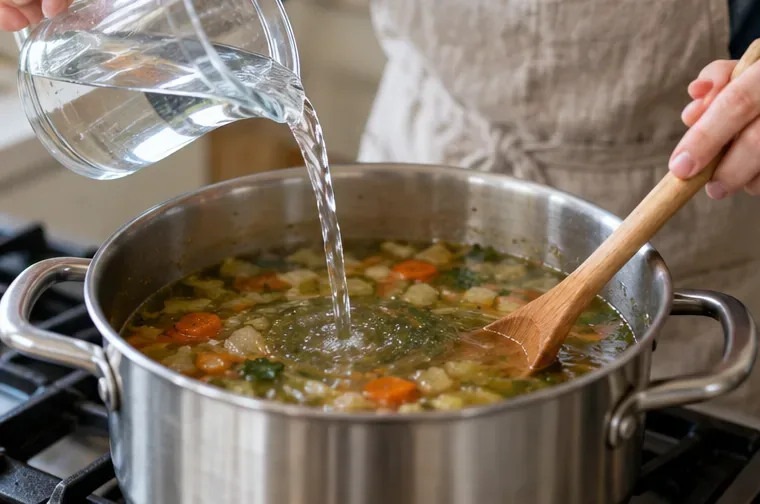
Salt dissolved in the liquid is spread through a larger amount of liquid when you add unsalted water or broth. That lowers the concentration in each spoonful, though it does not erase the sodium already in the pot. Start with a small splash, stir thoroughly, let the soup return to serving temperature, and taste a spoonful that includes broth and solids. Repeat until the salt level is comfortable. There is no universal amount: a pot of concentrated lentil soup and a large pot of thin chicken broth need different adjustments.
A cook tastes a spoonful of vegetable soup before making any further adjustment.
Use water when the soup already has enough flavor and can tolerate a little thinning. Choose unsalted or no-sodium broth when you want to preserve a savory base; “low sodium” broth still contains some sodium, so read the package and add it cautiously. If the soup was made with bouillon, miso, soy sauce, cured meat, or salty cheese, stop adding those ingredients while you fix it.
Exchange some liquid when you want to limit the final volume
Ladle out a portion of the salty broth and replace it with an equal amount of unsalted liquid. This keeps the pot from growing as much as it would with a straight addition. It works best for broth-heavy soups. If the soup is thick or full of pieces, first set aside a portion of soup, then add unsalted liquid to the remaining pot and stir. You can dilute the reserved portion separately, freeze it for a later unsalted batch, or discard it if you cannot use it safely.
A ladle removes some salty broth from a pot into a glass measuring cup.
Build the batch with unsalted ingredients
For a chunky soup, additional unsalted vegetables, beans, cooked grains, or protein can spread the existing seasoning across more food. Add liquid too if the broth itself still tastes sharply salty. This is not the same as pulling salt out: the total sodium in the pot remains, and the benefit comes from making a larger batch or more servings. Keep new ingredients unseasoned until the soup is balanced, or the extra salt can cancel the gain.
A small amount of clear liquid is poured into soup while it is stirred.
Small-batch rescue checklist
Stop reducing. Evaporation concentrates the liquid and can make the salt taste stronger. Turn the heat low or off.
Check what is salty. Taste broth and a complete bite with solids. Remove an obvious salty garnish or cured-meat piece if practical.
Choose a matching unsalted addition. Use water or broth for thin soups, suitable dairy or non-dairy liquid for creamy soups, and liquid plus unseasoned bulk for chunky soups.
Add a little, stir well, and taste again. Make adjustments in small pours rather than committing to a large volume. If you are cooking for several people, taste from a clean spoon after the soup has mixed evenly.
Finish only after the salt is balanced. Add herbs, pepper, or other seasonings without salt, then check the soup once more before serving.
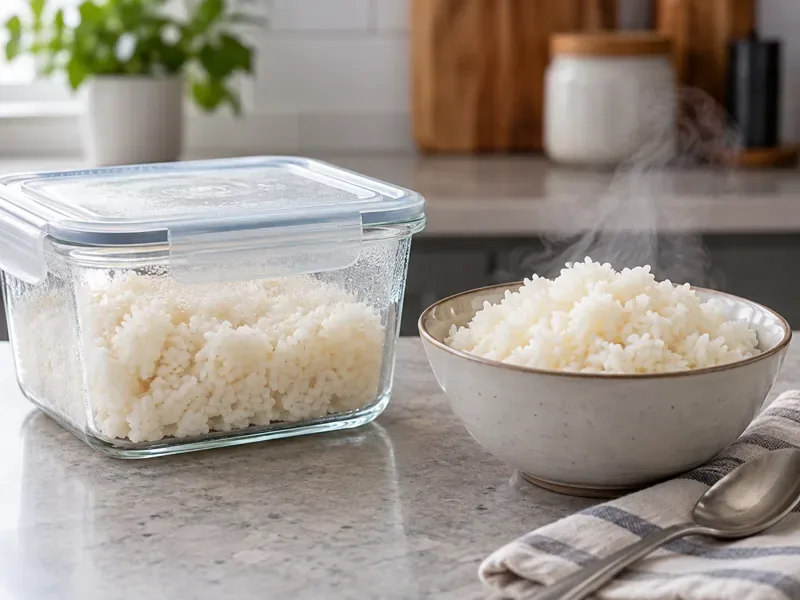
For a single bowl, make the correction in the bowl instead of changing the whole pot. A splash of unsalted broth or water is easy to control; plain rice, noodles, or bread can make the meal feel more balanced alongside the soup. Those sides do not absorb salt out of the pot, so do not use them as a substitute for diluting salty broth.
A bowl of vegetable soup is served with plain rice and bread on the side.
Popular fixes: what they can and cannot do
Does a potato absorb excess salt?
A potato can soak up salty liquid, but that is not selective salt removal. If you remove the potato, you also remove the liquid it absorbed; there is no dependable kitchen rule that says it will draw out enough dissolved salt to rescue the soup. The Exploratorium’s educational cooking page says it found no scientific evidence supporting the trick and also notes that it found no studies disproving it. Because that page does not provide a date or a comprehensive review of later research, treat the potato trick as unproven rather than as a guaranteed fix. Add potato if it belongs in the dish, not as your main salt-removal plan.
Will lemon, vinegar, sugar, or cream neutralize salt?
No. They do not chemically remove sodium. A little sugar may make some soups seem less salty, but sensory effects depend on the mixture and can make a dish taste sweet or oddly balanced. A controlled taste study found that combinations of sweet, sour, salty, and bitter tastes can suppress or reinforce perceived qualities; it was a lab study with taste solutions, not a test of home soup recipes. That is why these ingredients are optional flavor adjustments, not reliable repairs.
Acid is especially easy to overuse: lemon or vinegar can brighten a heavy soup, but sourness may make the salt seem more vivid in some combinations. Add only a few drops after dilution if the recipe suits it, then taste. A small amount of cream, butter, or coconut milk may round a compatible soup and soften the impression of salt, but it changes the mouthfeel and calories and leaves the sodium amount unchanged. Skip it if it clashes with the recipe or dietary needs.
The Exploratorium discusses sugar and fat as possible ways to shift perception, while explicitly describing the balance as tricky and clarifying that fat does not reduce the amount of salt. Those are secondary tools for fine-tuning, not substitutes for adding unsalted liquid.
When dilution is not enough
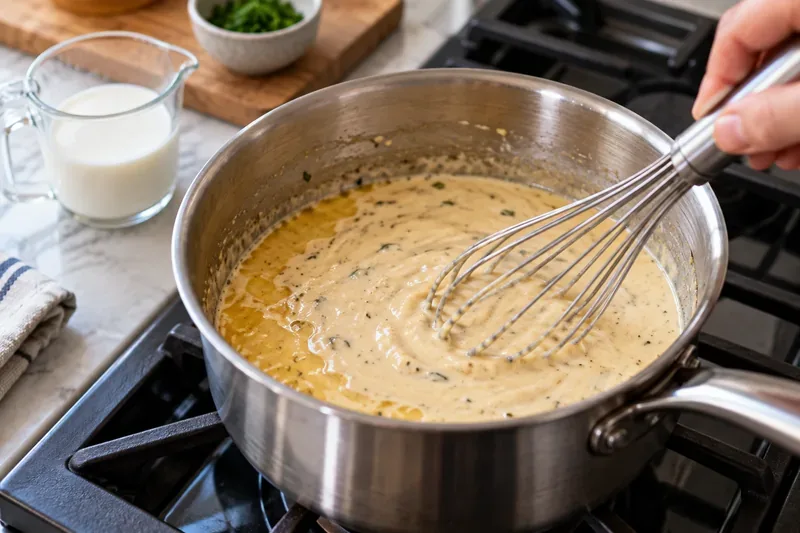
If the soup remains unpleasant after a few gradual adjustments, do not keep pouring in liquid until it loses all character. Set aside part of the batch and use it as a salty base for a larger amount of unsalted soup later, or serve smaller portions with plain grains or bread and a fresh, unsalted side. For a creamy soup, thinning can alter texture; warm it gently and add dairy or a compatible alternative little by little. Avoid a hard boil if the recipe’s dairy is prone to separating.
Keep salt out of the finishing step until everyone has tasted the corrected soup. Canned beans, stock, sausage, bacon, parmesan, seasoning blends, and bouillon can each add sodium even when you did not add table salt. For next time, season lightly at the start, taste after salty ingredients go in, and make the final salt adjustment near the end—especially before reducing a broth.
Sources and limits
The practical dilution advice follows the basic concentration change that occurs when unsalted liquid is added; the exact amount depends on the recipe and personal taste, so use staged tasting rather than a fixed ratio. For context on taste balancing, see the Exploratorium’s Science of Cooking page and the original sensory study, “Taste mixture interactions: suppression, additivity, and the predominance of sweetness”. The study used controlled taste mixtures; it does not establish a guaranteed formula for soup.