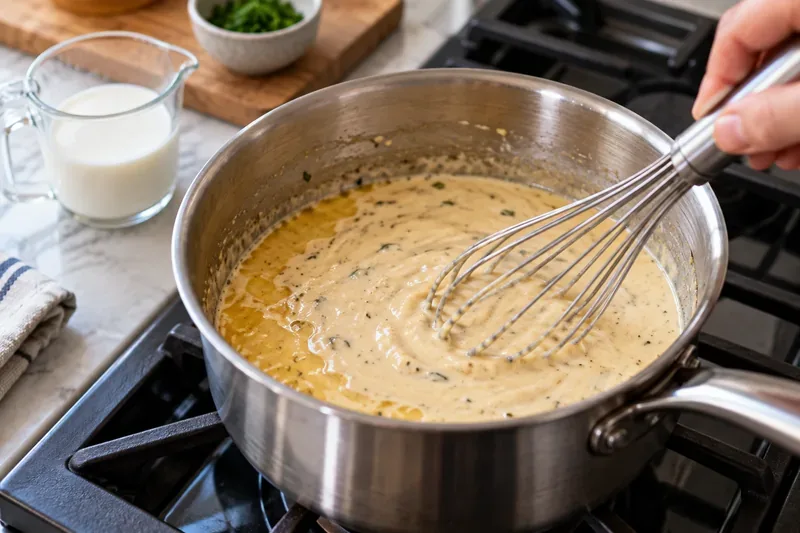
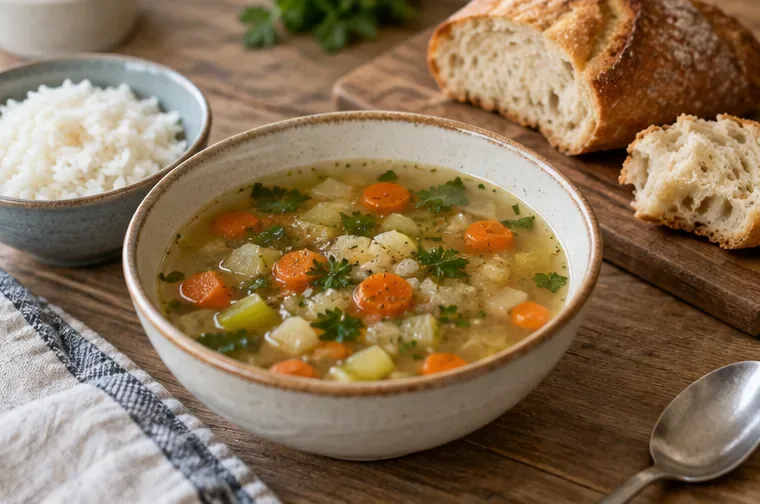
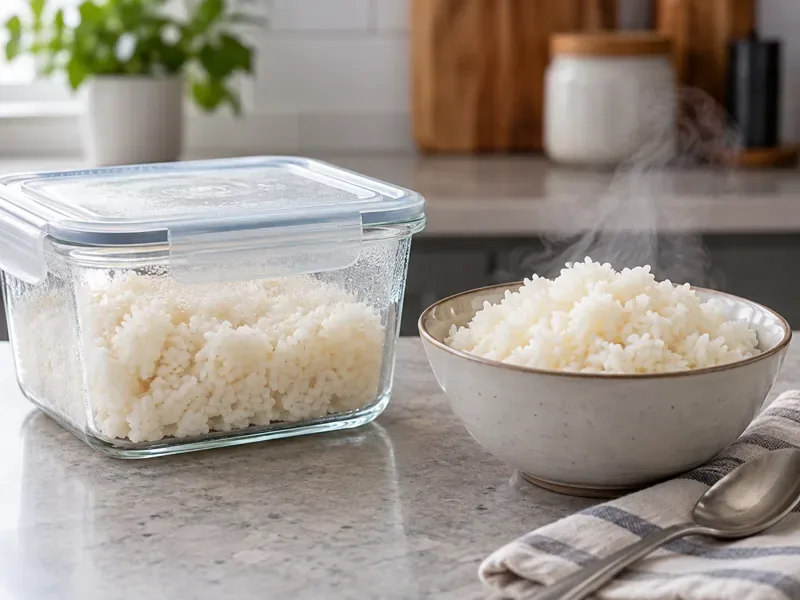
A full pot of soup, chili, curry, or stew can stay hot in the middle long after the surface feels cooler. Leaving the whole pot on the counter until it reaches room temperature is not a safe shortcut: the center cools slowly, and perishable food spends more time at temperatures where harmful bacteria can multiply. You can refrigerate hot food safely, but a large, deep pot is difficult to cool evenly. The practical fix is to reduce the amount of heat each portion must lose, then chill it promptly.
For home leftovers, U.S. food-safety guidance says to refrigerate perishable food within 2 hours of cooking (within 1 hour if the surrounding temperature is above 90°F). Keep the refrigerator at 40°F or below. Divide a large batch into shallow containers and put them in the refrigerator promptly; do not wait for the food to become room temperature. See the USDA FSIS steps for keeping food safe and FoodSafety.gov’s four food-safety steps.
Why a large pot cools slowly
A deep pot holds a large volume of food, and heat from its center has to travel outward before it can escape. The metal pot may feel cooler at the sides while the thickest part remains hot. A refrigerator can cool food, but placing one very large, hot pot inside may warm nearby foods and chill the pot’s center slowly. Dividing food into smaller, shallower portions exposes more surface area to cooler air and shortens the distance heat must travel.
Cooling matters because many disease-causing microorganisms can grow when food sits too long at temperatures between hot holding and refrigeration. Smell, appearance, and taste cannot reliably tell you whether food has been held safely. Use time, temperature, clean handling, and portion size instead of judging by how cool the outside of the pot feels.
What to do, from simplest to fastest
1. Set up before you start
Clear enough refrigerator space for the containers, wash your hands, and prepare clean, shallow, food-safe containers. If the refrigerator is crowded, rearrange it first so the containers can sit in a single layer with some space around them. Avoid stacking warm containers or tightly packing them together, since restricted airflow slows cooling.
2. Divide the food into shallow portions
Use a clean ladle to transfer the food from the stockpot into several small, wide containers. Keep the food layer shallow—about 2 inches deep is a useful home target for soups and stews, though the ideal depth depends on the food and container. Split especially thick dishes into more containers, and separate large pieces of meat or vegetables so they are not insulated inside a dense mass.
If you cannot transfer the whole batch at once, portion it in stages while keeping the remaining food protected and moving promptly. Do not leave the full pot sitting out while you wait for each container to cool. Use containers made for food contact and suitable for hot food; follow the manufacturer’s temperature limits, especially with plastic.
3. Refrigerate the shallow containers promptly
Place the shallow portions in the refrigerator as soon as practical, within the two-hour limit—or one hour when the room or outdoor temperature is above 90°F. Hot food can go directly into the refrigerator in small, shallow portions. A brief period of steam release is not a reason to wait on the counter for the food to become room temperature. Keep containers separated so cold air can circulate. During active cooling, lids can be set loosely or left slightly ajar only if the food is protected from spills and other contamination; cover them securely once cooled.
Check that the refrigerator is at 40°F or below with an appliance thermometer. If it is already crowded, hot containers are stacked, or the fridge is not cooling properly, use an ice-water bath to remove heat before refrigeration, while still keeping within the time limit.
4. Use an ice-water bath for a very large or dense batch
For a stockpot that is too large to divide immediately, place it in a clean sink or basin and add ice and cold water around the outside of the pot. Keep the water level below the rim so it cannot splash into the food. Stir the food regularly with a clean utensil, scraping the bottom and sides so the warmer center moves outward. Replace melted ice as needed to keep the bath cold. Once the food is cooler, transfer it into shallow containers and refrigerate promptly.
Do not use a bathtub, an unclean basin, or standing water that can enter the food. Keep raw foods and dirty utensils away from the cooling area. An ice bath is an aid, not a reason to leave the pot out indefinitely; keep track of elapsed time from when cooking ends or hot holding stops.
5. Stir or add ice only when the recipe allows
Stirring in an ice bath helps distribute heat. For a soup or sauce where a thinner consistency is acceptable, some of the recipe’s measured water or broth can be frozen in food-safe containers and added as ice. This is optional: adding ice changes the amount of liquid and may dilute seasoning. Do not add loose ice that has been handled or stored in an unclean container. If keeping the recipe’s exact texture matters, cool in an ice bath and stir instead.
Quick method comparison
| Method | Best use | What to watch |
|---|
| Shallow portions in the refrigerator | Most home leftovers | Leave space between containers; avoid deep, tightly packed portions. |
| Ice-water bath, then shallow portions | Very large, dense, or especially hot batches | Keep bath water out of the food and stir with a clean utensil. |
| Adding recipe ice | Soups or sauces that can tolerate dilution | Account for the added water and keep the ice clean. |
How the commercial cooling rule differs
The FDA Food Code is a model used by regulators for retail food establishments and food service; local jurisdictions decide how to adopt and enforce it. It sets a two-stage cooling standard for covered foods: from 135°F to 70°F within 2 hours, then to 41°F or below within a total of 6 hours. Its recommended methods include shallow pans, smaller portions, stirring in an ice-water bath, and containers that transfer heat well. These are useful techniques at home, but the Food Code’s timed temperature limits are written for food-service operations and should not be confused with the simpler household advice to refrigerate perishable food within 2 hours. Read the FDA cooling fact sheet for food employees and the FDA Food Code page for their scope and cooling methods.
Common mistakes to avoid
- Waiting for the whole pot to reach room temperature: This keeps the center warm for longer. Portion it, refrigerate it, or use an ice bath promptly.
- Putting away one deep, full stockpot: Its center may cool slowly. Divide it into shallow containers.
- Leaving food out overnight: Reheating does not reliably make food safe after improper time and temperature handling. If perishable food has been above refrigeration temperature longer than the recommended limit, discard it.
- Sealing and stacking steaming containers immediately: Trapped heat and blocked airflow can slow cooling. Keep the containers separated and protect food from contamination while it cools.
- Relying on a cold lid or pot exterior: The center may still be warm. Check the food itself when using a thermometer.
Check the result
Before you finish, confirm that the food was divided into shallow portions, placed in the refrigerator within the safe time window, and stored in a refrigerator at 40°F or below. If you are monitoring a large batch, use a clean food thermometer to check the center of the thickest portion rather than touching the container. For food-service settings, follow the applicable local code and use the FDA cooling schedule where adopted. At home, the simplest dependable routine is: portion, chill promptly, keep containers spaced, and cover securely after cooling.
Source note: Consumer timing in this guide follows USDA FSIS and FoodSafety.gov household recommendations. The two-stage temperature schedule is identified separately as the FDA Food Code model for retail and food-service operations. This guide does not replace local food-service requirements.