Home
» Food & Drink
»
How to Pack Crisp Vegetables So They Stay Fresh Until Lunch
How to Pack Crisp Vegetables So They Stay Fresh Until Lunch
Cut vegetables can leave the kitchen crisp and arrive at lunch wet, limp, or packed in a puddle. The fix is usually not a special container: remove surface water, separate dry vegetables from wet ingredients, and keep cut produce cold. A paper towel can catch a little condensation, but it cannot rescue vegetables that were packed wet or left warm for hours.
For the most reliable result, wash and dry the vegetables before cutting, chill them, then pack them in a clean, leak-resistant container with any dip or juicy produce in its own compartment. Carry cut vegetables in an insulated lunch bag with cold sources. You are aiming for vegetables that still feel firm, have no standing liquid in the container, and have stayed safely cold until lunchtime.
What makes lunch vegetables soggy?
“Soggy” can describe two different problems. Surface water from washing or condensation can collect around the pieces and soften their outside. Meanwhile, the vegetable itself can lose its crisp bite after cutting, bruising, or sitting for too long. A tight container may reduce drying, but if it traps water on the vegetables, the moisture has nowhere to go.
Wet ingredients add more liquid. Tomatoes, citrus, dressing, salsa, and dips can leak or release juice into crisp items. Salt can also draw water out of cut vegetables, so season close to eating rather than while packing. These steps slow down avoidable softening; they do not make every vegetable stay crisp indefinitely. Delicate lettuce, thin cucumber slices, and ripe tomatoes soften sooner than sturdy carrot sticks, snap peas, or bell pepper strips.
Pack crisp vegetables in four steps
1. Wash safely, then dry completely
Wash whole produce under cool, running water before cutting or eating it. Scrub firm-skinned produce such as cucumbers and carrots with a clean produce brush. Do not use soap, detergent, or bleach on food. The University of Minnesota Extension recommends air-drying produce or using a disposable towel, and notes that washing shortly before preparation can help preserve quality and shelf life. Follow package directions for produce marked “prewashed” or “ready to eat.”
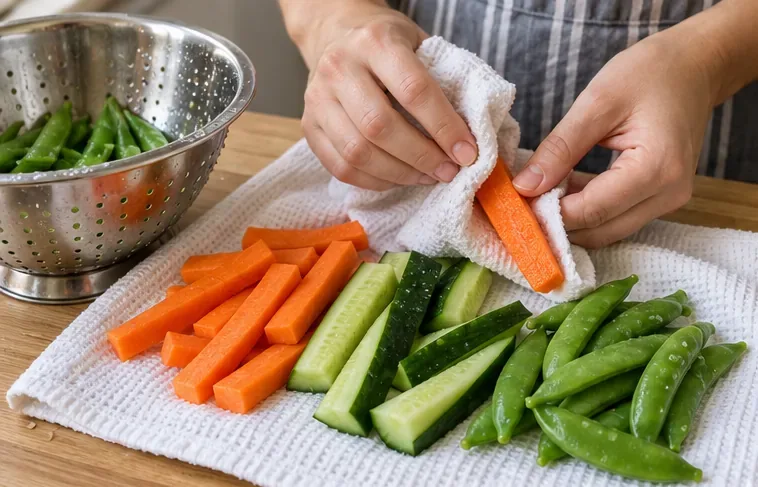
Pat washed carrot, cucumber, and snap pea pieces dry before packing them.
After washing, shake off water in a colander. Spread the vegetables on a clean towel or use a salad spinner for sturdy greens, then blot visible droplets. Let them air-dry briefly if needed. The surface should feel dry rather than slick, and a paper towel placed underneath should not become wet right away. Drying matters especially when you cut produce yourself, because water left on cut surfaces can pool in the container.
2. Choose sturdy cuts and pack them loosely
For a lunch that will sit for several hours, start with vegetables that naturally hold their shape: carrot sticks, celery, bell pepper strips, radishes, snap peas, or firm cucumber spears. Cut pieces into similar, easy-to-grab sizes. Avoid crushing them into a small container or filling it so tightly that the lid presses on the pieces. A rigid food-safe container protects them from getting bruised in a backpack.
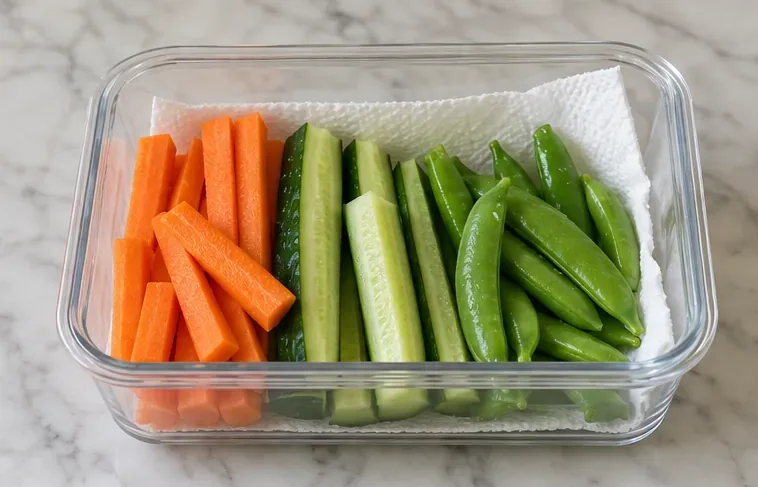
Use a container that is just large enough to keep the vegetables from being compressed, with a secure lid. If you often see droplets inside, place a clean, dry paper towel along one side or beneath the vegetables as a moisture buffer. Replace it if it is wet. This is a backup for small amounts of condensation, not a substitute for drying the produce first. Do not wrap food in a used towel or reuse a damp liner.
A dry paper towel in the container can absorb a small amount of condensation.
3. Keep juicy items and dips separate
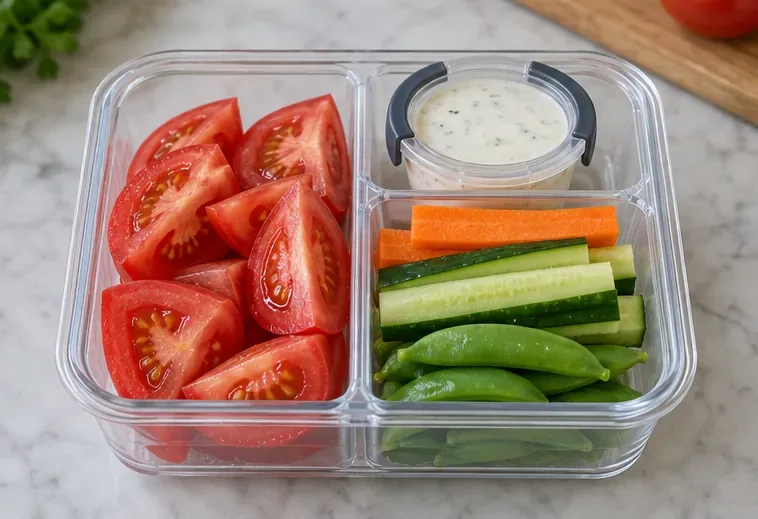
Pack dressing, hummus, yogurt dip, salsa, and other sauces in a small leakproof cup. Keep tomatoes, cut fruit, pickles, or other juicy ingredients in another compartment, away from the dry vegetables. If your lunch container has no dividers, use two small containers or a sealed cup inside the lunch bag. Add salt, dressing, lemon juice, or seasoning at lunch, not in the morning.
Separate tomatoes and dip from crisp vegetable sticks so their liquid cannot spread.
Some vegetables, especially cucumber and leafy greens, can release moisture as they sit after cutting. If a particular item repeatedly turns soft, pack it whole and cut it at lunch if practical, choose a sturdier substitute, or store it separately. This is a useful adjustment when the container is dry but one ingredient still becomes watery.
4. Chill the lunch and protect it on the way
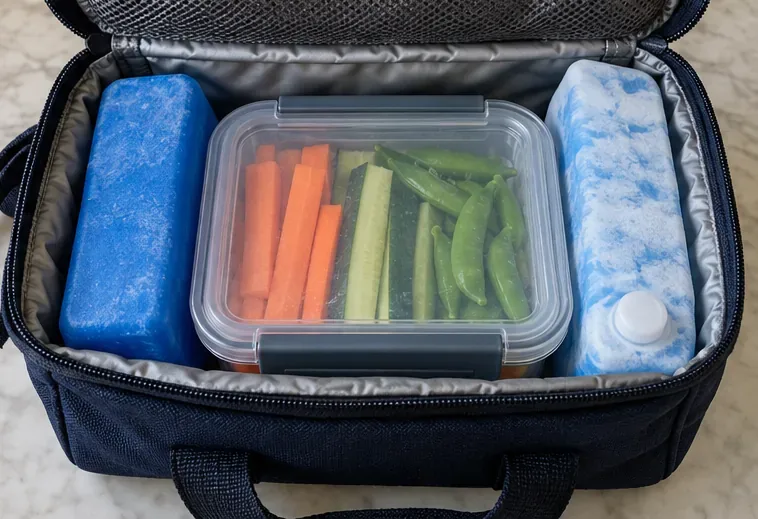
Refrigerate cut vegetables in a covered container until you leave. Pack them straight from the refrigerator into an insulated lunch bag with cold sources. USDA Food Safety and Inspection Service guidance says to use at least two cold sources for perishable food in a lunch bag; placing cold sources above and below the food helps keep it cold. Keep the bag out of direct sun and away from a hot car, and refrigerate the lunch at work or school if a refrigerator is available.
Carry cut vegetables in an insulated bag with cold sources above and below the container.
Cut vegetables count as perishable food. FoodSafety.gov advises keeping perishable food at 40°F (4°C) or below; if it is left above that temperature, the general limit is two hours, or one hour when the surrounding temperature is above 90°F (32°C). For a hot commute or a lunch that will sit in a warm room, use a well-insulated bag and enough frozen packs, or put the food in a refrigerator. A cold pack helps with food safety as well as texture; it does not guarantee a safe temperature in every bag or for every trip.
How can you tell whether the method is working?
At lunch, check three things: the vegetables still have a firm bite, there is little or no free liquid at the bottom, and the container or lunch bag still feels cold. A towel that is damp only in one small spot may mean the vegetables need a little more drying. A puddle suggests that the produce was wet, a juicy ingredient leaked, or the towel/container combination could not manage the moisture.
Vegetables are crisp but the container is wet: dry them longer, separate wet ingredients, and check that dip cups and lids do not leak.
One vegetable is soft while the rest are firm: pack that item separately, cut it closer to lunch, or swap it for a sturdier vegetable.
Everything is limp but there is no pooled water: the pieces may have been bruised, cut too far ahead, compressed, or held too warm. Use a sturdier cut, a rigid container, and reliable refrigeration.
The lunch no longer feels cold: improve the insulated bag and cold-source placement, or use a refrigerator. Do not judge food safety by smell, taste, or appearance alone.
What this method cannot do
Good packing preserves the texture vegetables already have; it cannot restore produce that was old, bruised, or wilted before packing. Some water release is natural after cutting, and no paper towel can absorb unlimited liquid. If you need vegetables to stay crunchy through a long, warm day, take them whole and cut them just before eating, or choose whole produce that does not need chilling. Keep food-safety temperature limits separate from the texture check: vegetables can look and smell normal even when they have been held too warm for too long.