Home
» Crafts
»
World Children’s Day on November 20: A Family Craft That Helps Kids Share Their Views
World Children’s Day on November 20: A Family Craft That Helps Kids Share Their Views
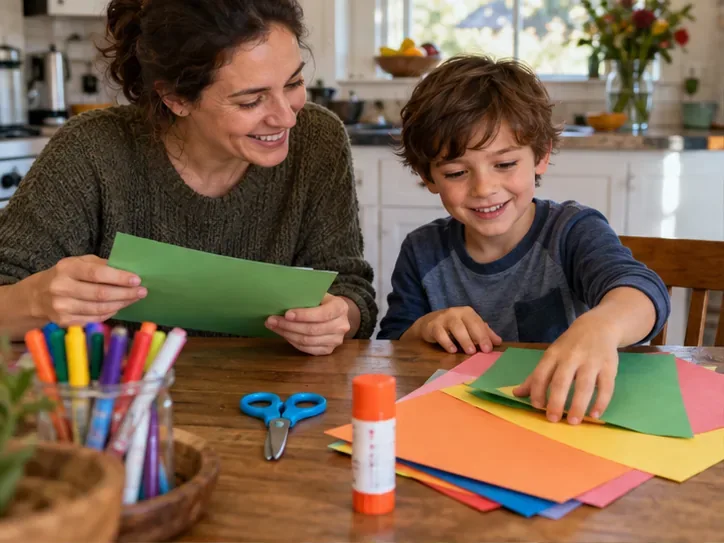
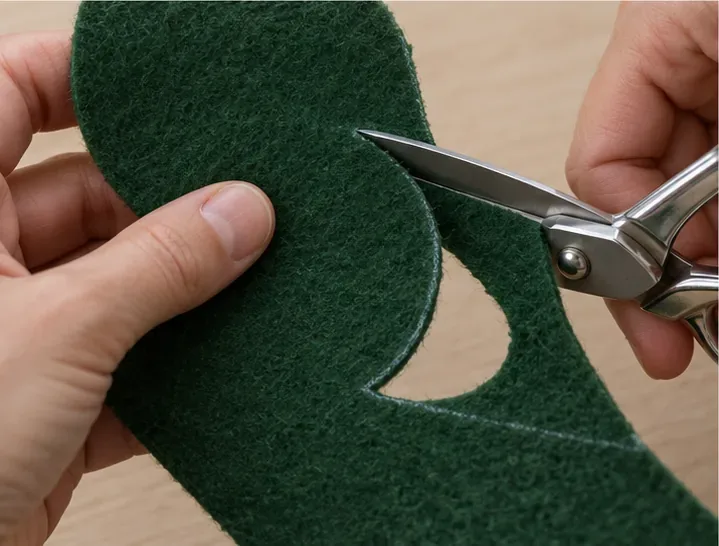
Step 1: Set out a few simple supplies and let the child choose the colors and tools they want to use.
World Children’s Day is observed on November 20. It is a useful moment for families to make space for children’s ideas—not only to plan a celebration, but to listen to what children say about everyday life. A simple “Listening Tree” craft can give a child a low-pressure way to share a thought, preference, worry, or idea. The tree is a conversation prompt, not a test, counseling tool, or guarantee that a child will open up.
Illustrative example: Imagine Jordan, a fictional 9-year-old who often says that weekday mornings feel rushed. Jordan’s family makes a paper tree together. This example is invented to show how a family might use the activity; it is not a real family’s story or a tested outcome. Your child may want to share something entirely different—or may prefer to make the craft without discussing a personal topic.
Why a craft can make room for a child’s point of view
The United Nations marks November 20 as World Children’s Day. The date connects to the adoption of the Declaration of the Rights of the Child in 1959 and the Convention on the Rights of the Child in 1989. Article 12 of the Convention recognizes children’s right to express views freely in matters that affect them, with those views given due weight in light of the child’s age and maturity. A paper activity does not fulfill every part of that right, but it can help a family practice listening in a small, concrete setting.
The goal is not to get a “good answer” or fill every leaf. The goal is to offer a choice: talk, draw, write, point, or pass. A child should not have to explain private feelings in front of everyone, and adults should not promise that every request can be granted. You can promise to listen, explain what can change, and be honest about what cannot.
What you’ll need
One large sheet of poster paper or cardboard for the tree trunk and branches
Colored paper cut into simple leaf shapes, or pre-cut paper leaves
Washable markers, crayons, or colored pencils
A glue stick or removable tape
Child-safe scissors, if the child is ready to use them with supervision
Keep the materials flexible and age-appropriate. Adults should read product labels, follow directions, and supervise children using craft supplies. Choose ordinary school glue or a glue stick rather than a strong adhesive. The U.S. Consumer Product Safety Commission’s art and craft safety guide recommends selecting materials with care and supervising children during use. If a child would rather not use scissors, an adult can prepare the leaves ahead of time.
Make the Listening Tree in four steps
1. Set up the invitation, not an assignment
Put a few supplies on the table and explain the idea in plain language: “We’re making a tree with things you want our family to hear. You can write, draw, ask me to write, or leave a leaf blank.” Let the child choose the paper and where to sit. Avoid saying that they must share something important. If Jordan wants to start by choosing green and orange paper rather than talking about mornings, that is a perfectly good beginning.
2. Make leaves that fit the child
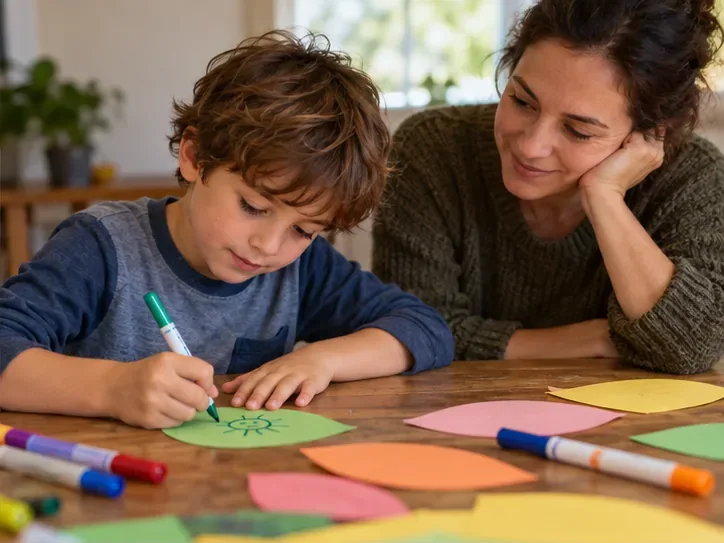
Cut or tear paper into leaf shapes. The shapes do not need to match. Invite the child to draw one idea on a leaf or dictate a sentence while an adult writes it down. A prompt can help, but keep it open-ended: “What is one thing you wish adults understood about your day?” Other options include “What helps you feel comfortable at home?” or “What would you like us to do more often?”
For Jordan, the first leaf might show a clock and a backpack to represent rushed mornings. Another child might draw a favorite quiet place, a household rule they find confusing, or a fun activity they want more time for. Do not interpret a picture as proof of a hidden problem; ask the child what it means to them.
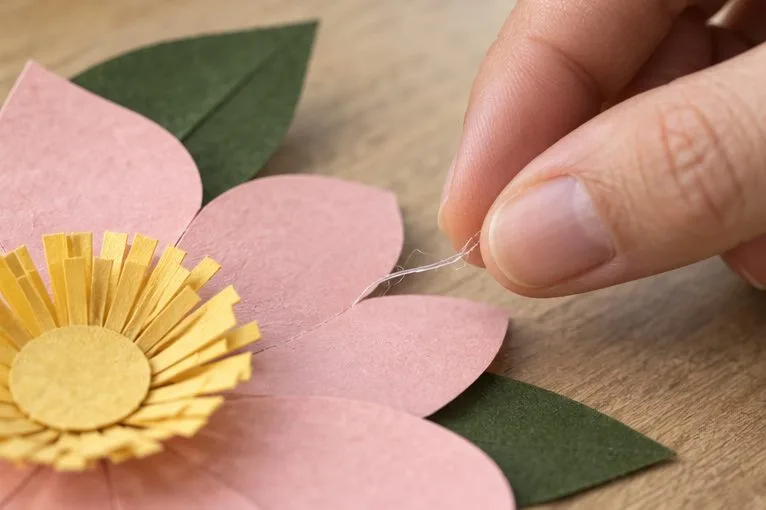
Step 2: Make a paper leaf and invite the child to draw or write one thing they want grown-ups to understand.
3. Put the child in charge of the tree
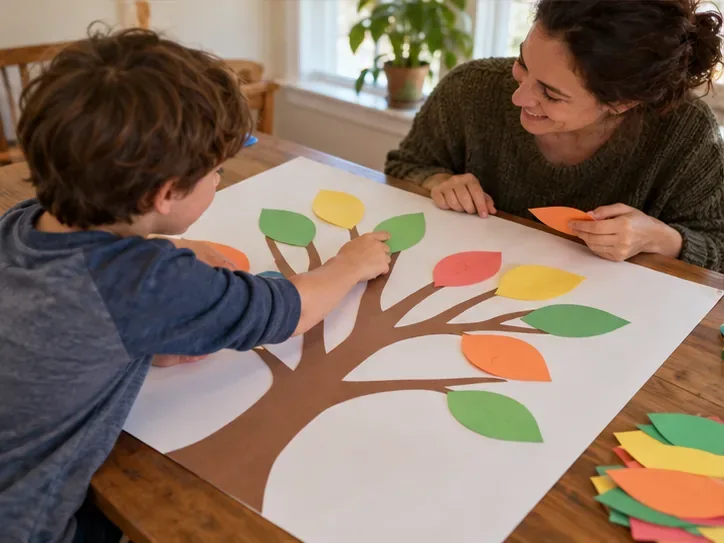
Draw a simple trunk and branches on the poster, or let the child make the design. Ask where each leaf should go and whether they want their name on it. The child can add more leaves later, move them, or leave some blank. For a younger child or a child who communicates differently, offer alternatives such as pointing to a picture, choosing between two colors, using stickers, or telling an adult privately. Adapt the activity to the child; there is no single correct way to participate.
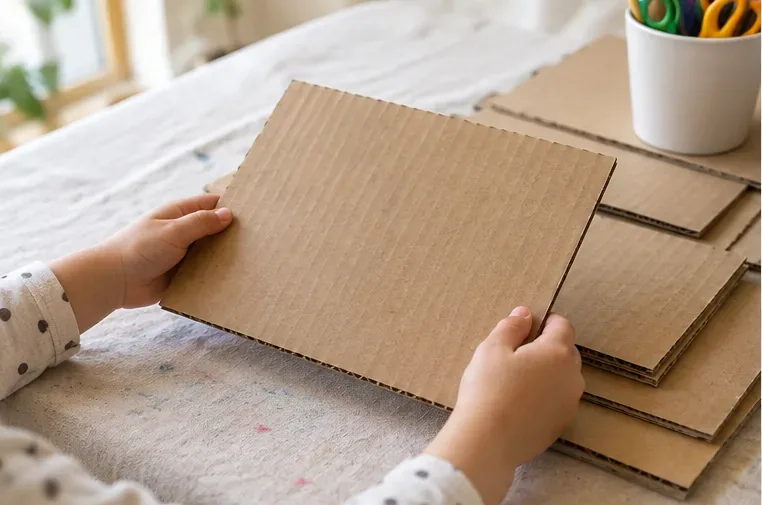
Step 3: Add the leaves to the Listening Tree, letting the child decide where each one belongs.
4. Listen, reflect, and agree on one next step
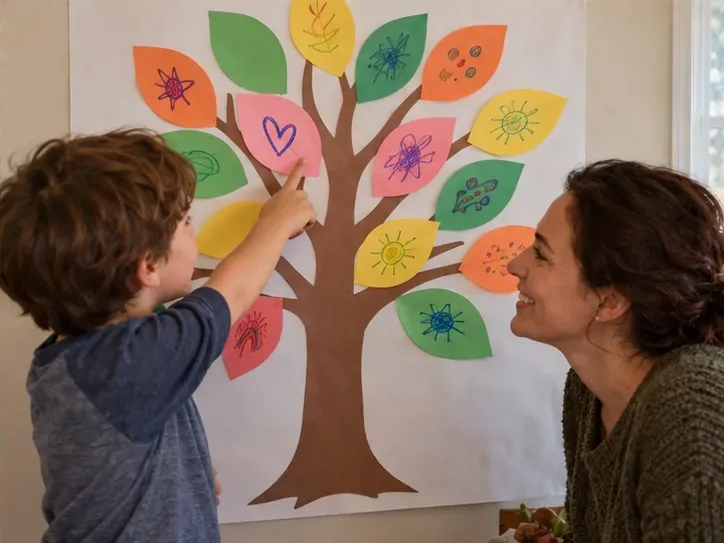
Choose a calm time to look at the leaves together. Ask which one the child wants to talk about first. Listen without correcting details, jumping immediately to advice, or turning the conversation into a lecture. Try reflecting what you heard: “It sounds like mornings feel hurried when you’re looking for your things. Did I get that right?” Then ask, “Would you like help solving it, or did you mainly want me to hear it?”
With Jordan’s fictional example, the family might agree to try packing the backpack before bedtime for a week. That is only one possible response, not a promised result. The adult can later ask whether the change helped and adjust if it did not. If the child raises an issue that involves safety, health, or a serious concern, respond calmly and take the appropriate next step rather than leaving it on the poster.
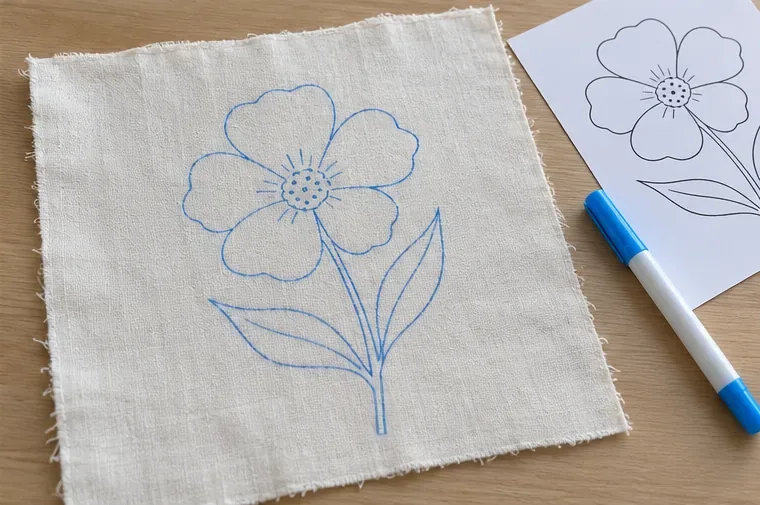
Step 4: Talk about one leaf at a time, listen without correcting, and choose a realistic next step together.
Keep the conversation respectful after the craft
Do not make the child perform. Let them skip a turn, make art without explaining it, or share with one trusted adult instead of the whole family.
Protect privacy. Ask before displaying the tree, photographing it, or sharing a child’s words with relatives or online. A private thought should not become family décor without the child’s agreement.
Separate listening from decision-making. Adults remain responsible for safety and necessary limits. Explain your decision in a way the child can understand, and name where their input did affect the plan.
Return to the issue. If you agree to try a change, say when you will check in. A simple “Let’s see how this feels next Friday” is more useful than a vague promise.
Jordan’s family might put the tree in a private spot and check the morning routine after several school days. Another family might keep the leaves in a folder or take the poster down as soon as the conversation ends. The craft’s success is not measured by how full or attractive the tree looks. More practical signs are whether the child had a real choice about participating, could communicate in their own way, and saw the adults take at least one concern seriously—even if the answer was that a request could not be met.
What this activity can—and cannot—do
A family craft can open a conversation, make a child’s ideas visible, and help adults notice what they need to follow up on. It cannot diagnose distress, settle a serious disagreement, or replace ongoing communication. A child may communicate more easily by talking during a walk, sending a note, or speaking one-on-one. If the activity becomes tense, pause it. Listening works better when a child feels they can stop without being punished or pressured.
World Children’s Day is a reminder to respect children’s views throughout the year, not only on November 20. A Listening Tree is one small way to practice that respect: offer an invitation, let the child choose how to respond, reflect what you heard, and follow through on what you can. For Jordan, the fictional morning-routine leaf is simply a starting point for a family conversation—not proof that the craft works for every child.