Home
» Crafts
»
Which Household Materials Make Safe, Reusable Craft Stencils?
Which Household Materials Make Safe, Reusable Craft Stencils?
A clean, flexible plastic report cover or binder divider with a known source is usually the best household material for a reusable craft stencil. It is smooth, can lie flat, and is easier to wipe than paper. For a one-time design or a child-safe cutting project, sturdy cardstock is simpler, but it will soften or fray sooner when paint gets wet.
One verified safety update is relevant for context: the U.S. Consumer Product Safety Commission (CPSC) published supplemental guidance on chronic-hazard assessment methods on April 23, 2024. The notice says the supplements do not change the Commission’s substantive policies. They also do not certify repurposed household plastics as craft materials. For a homemade stencil, the practical checks remain the item’s known prior use, condition, edges, age-appropriate cutting tools, and the label on any paint or glue.
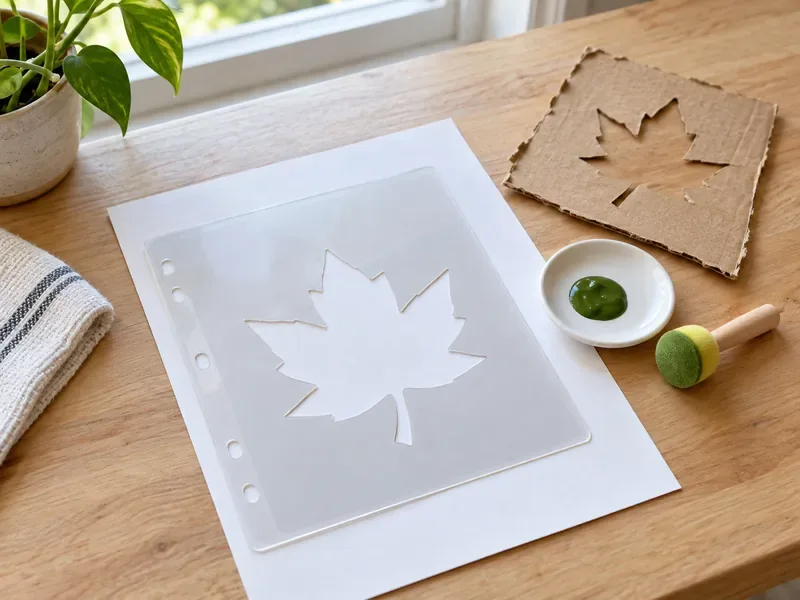
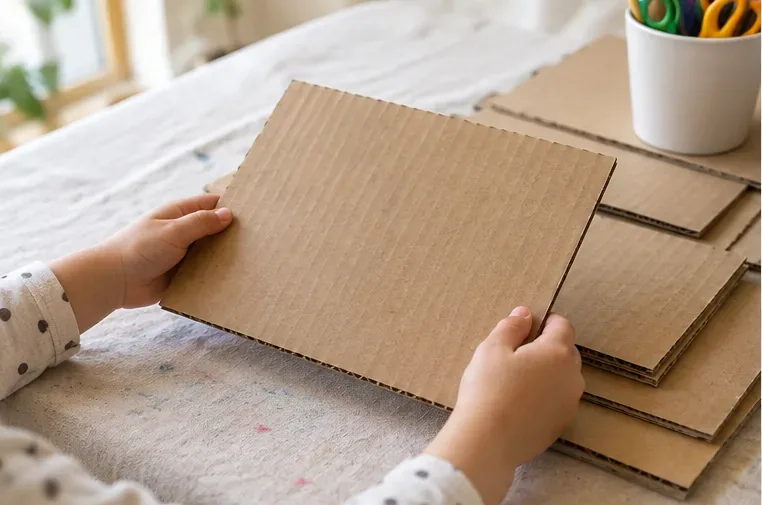
A clear plastic divider and a cardboard cutout show two different stencil options; the smooth plastic can be wiped for repeat use, while the cardboard is better for limited use.
Which household materials work best?
Material
Reuse and finish
Best fit
Limit to watch
Clear plastic report cover or binder divider
Usually the strongest household option for repeat use; smooth and easy to see through.
Repeated paper crafts with water-based paint and a simple or medium-sized shape.
Choose a known, clean, flexible sheet that lies flat. Skip pieces that crack, curl, or have sharp edges.
Clean, flat plastic packaging from a known stationery or household item
May be reusable if it is sturdy and remains flat.
A quick custom shape when the source and previous use are clear.
Curved, ridged, brittle, greasy, or mystery plastic can be hard to cut and may not sit flat.
Laminated cardstock
Can handle several light uses if the laminate stays sealed.
A drawing or printed shape that needs more support than plain paper.
Paint can seep into peeling seams; do not soak it or use it if the layers are separating.
Single-layer cardstock or a cereal-box panel
Easy to cut, but usually short-lived with wet paint.
Testing a design, one project, or a child using blunt-tip scissors with adult supervision.
Moisture can soften the cut edge, making the outline less crisp after repeated passes.
Waxed paper, parchment, or thin paper
Generally a temporary pattern or mask, not a dependable washable stencil.
Trying a shape once or protecting part of a craft surface.
It can wrinkle, shift, or tear; do not count on it for repeated use.
Why is a plastic folder divider the best all-around choice?
A reusable stencil needs to stay flat while paint is applied and still be easy to lift without bending the design. A translucent divider helps you line up a shape over a drawing, card, or fabric. It is also less absorbent than paper, so water-based paint can usually be wiped from a smooth surface before it dries completely. The sheet should feel flexible without flopping over the page.
Choose a part of the cover or divider without seams, pockets, adhesive labels, or deep ridges. Avoid a piece that has been stored near heat, turned yellow and brittle, or developed cracks. A plastic item’s original purpose matters: a clean stationery divider is a more predictable starting point than a random piece of packaging that may have held cleaner, oil, medicine, or another substance. Wash and dry a suitable item before tracing a design on it.
Do not heat plastic to make it easier to cut, melt the edges, or clean paint off with solvents. This article does not chemically test household plastics, and no single household material can be guaranteed appropriate for every paint, surface, or user. If you cannot identify the material or rule out residue from its former contents, use new paper or a labeled craft product instead.
When is cardboard the better choice?
Cardboard is cheap, opaque, and easy to trace. A flat cereal-box panel works for a bold, uncomplicated outline or a stencil that only needs to last through one project. It is often easier for children to cut than plastic, provided an adult selects age-appropriate scissors and supervises. Keep the piece dry and avoid corrugated cardboard for crisp painted edges: its ridges and uneven cut can leave gaps where paint may pass underneath.
Cardstock is a useful “test stencil.” You can check whether the pattern is the right size and whether narrow sections will stay connected before spending time cutting a reusable plastic version. If the design has small floating details—such as the center of a letter or a gap between petals—leave a narrow bridge of material to hold each island in place. Once a cardboard stencil starts to curl, soften, or release fibers, replace it instead of pressing it harder against the project.
What does “safe” mean for a homemade stencil?
Safety depends on more than the sheet itself. A homemade stencil is not the same as an art material that has been manufactured and evaluated for a stated use. The CPSC’s art-material guidance focuses on products marketed for art, including toxicological review and warning labels. Its art-material guidance is a useful reminder to read the label on paints, markers, and adhesives rather than assuming a “craft” label makes every use safe.
For children’s paint and other art supplies, look for products intended for their age group and follow the directions. The Art and Creative Materials Institute explains that its AP seal applies to materials evaluated as non-injurious when used as intended; it is a guide to the art supply, not a certification of a reused plastic divider. CPSC’s Art and Craft Safety Guide recommends close adult supervision for children using art materials and warns that children under 12 can have more difficulty following complex safety steps.
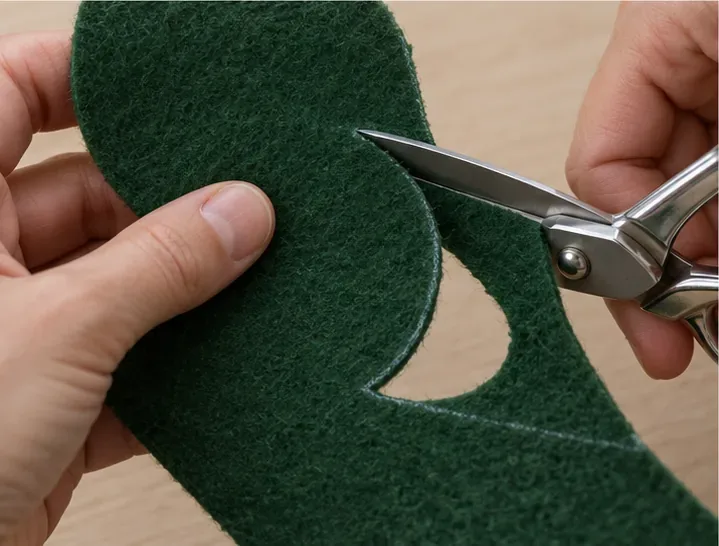
Use scissors appropriate to the maker’s age for simple cuts. An adult should handle a craft knife for interior details, on a cutting mat, with the cutting directed away from hands and body. Put knives away as soon as the stencil is cut. Inspect both the outside edge and every cutout: if a plastic edge feels sharp, ragged, or cracked, smooth it safely or discard the piece rather than asking a child to handle it.
Paint and glue should stay on the intended craft surface. Poison Control advises reading labels and not using ordinary art products for skin painting or food decoration unless the product is specifically labeled for that use. See its guidance on safe use of art products. Water-based paint is usually easier to clean from a stencil than solvent-based paint, but the product label still controls ventilation, cleanup, and age restrictions.
How to choose for the project
For repeat use and clean outlines: Choose a known, smooth, clear report cover or binder divider. Use light dabs with a sponge or pouncer so paint is less likely to creep beneath the edge.
For a fast trial or one project: Use sturdy single-layer cardstock. It is easy to replace if the design changes or the stencil gets damp.
For a tracing that must keep its shape: Use laminated cardstock only while the laminate is intact and sealed around the edges.
For a child-led craft: Let the child choose and trace a simple shape; have an adult decide whether the material and cutting tool suit the child’s age and coordination.
For fabric, walls, or other surfaces: Check that the paint is labeled for that surface and can be cleaned from the stencil as directed. A material that works on paper may not work well with a different paint or finish.
Bottom line
For a reusable household stencil, start with a clean plastic report cover or binder divider whose source is clear, whose surface lies flat, and whose cut edges are smooth. Use cardboard when easy cutting and low cost matter more than repeated washing. Treat unknown, damaged, or residue-bearing packaging as unsuitable, and remember that paint labels, age-appropriate tools, and adult supervision are part of a safe craft setup. These are practical material-selection recommendations, not a chemical safety certification for every reused plastic item.