Home
» Crafts
»
No-Sew Halloween Costume for a Toddler: A Simple Materials and Safety Checklist
No-Sew Halloween Costume for a Toddler: A Simple Materials and Safety Checklist
A toddler’s Halloween costume has to do more than look festive: it needs to stay comfortable while a small child walks, bends, sits, and reaches for a treat bag. A no-sew outfit can be as simple as familiar clothes plus one large decoration. The key safety step is checking the finished costume on the child before Halloween and again before going out.
This guide uses a pumpkin outfit as an example, but the same checklist works for a cat, bee, or other simple look. Current guidance from the U.S. Consumer Product Safety Commission (CPSC) and the American Academy of Pediatrics (AAP) emphasizes good fit, clear vision, visibility, and avoiding detachable choking hazards. I did not find a new costume-safety rule that changes these basic steps; this article focuses on durable advice rather than a supposed new trend.
What materials do I need for a simple no-sew costume?
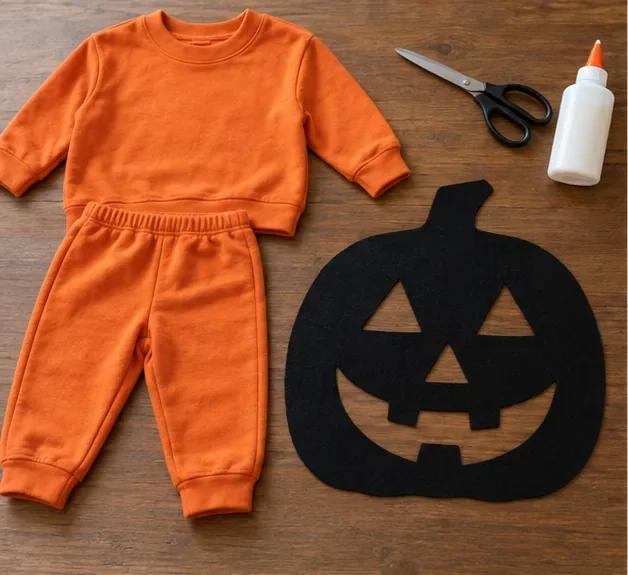
Start with clothes your toddler already tolerates. For a pumpkin, use an orange sweatshirt or long-sleeve shirt, comfortable pants or leggings, and sturdy shoes. A single broad felt or fabric panel can create the pumpkin design. Choose a fabric-safe adhesive only if its label says it is suitable for those materials and for the way you plan to use it. Follow the product directions, including any ventilation and drying time. The child should not be present while an adult handles adhesive, scissors, or other craft tools.
Comfortable, familiar base clothes in the costume color
One large, continuous fabric decoration, such as a pumpkin silhouette with face openings cut into it
Fabric-safe adhesive with readable directions, if needed
Reflective tape for a treat bag or outer layer if the family will be outside near dusk
A backup shirt or outfit in case of spills, drool, or a bathroom accident
Skip beads, sequins, buttons added as decoration, tiny felt shapes, loose glitter, wire, staples, pins, and small clip-on accessories. Pieces that detach may end up in a toddler’s mouth. CPSC guidance specifically warns caregivers to keep small, separable items away from children under three because they can present a choking hazard. A simple design with fewer pieces is easier to inspect and more comfortable to wear.
Lay out familiar orange clothes and one broad pumpkin panel; keep scissors and adhesive out of the toddler’s reach.
How can I make the costume without sewing?
1. Choose a comfortable base
Pick clothes that fit the child now, with enough room to move but no extra length that drags. If Halloween weather is cold, plan a warm layer underneath rather than making the outer costume oversized. Avoid a hood, scarf, or added neck tie that could slide across the face or catch on something. Put the shoes on during the fitting, since a costume that seems short while barefoot can cover the shoes and cause a trip.
2. Keep the decoration large and simple
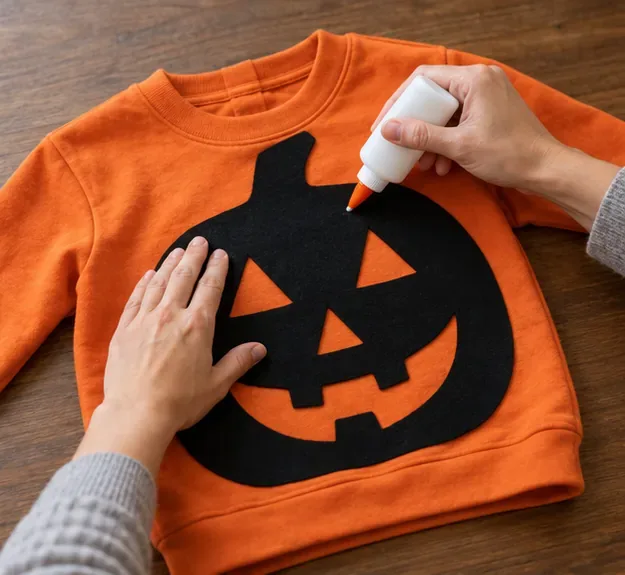
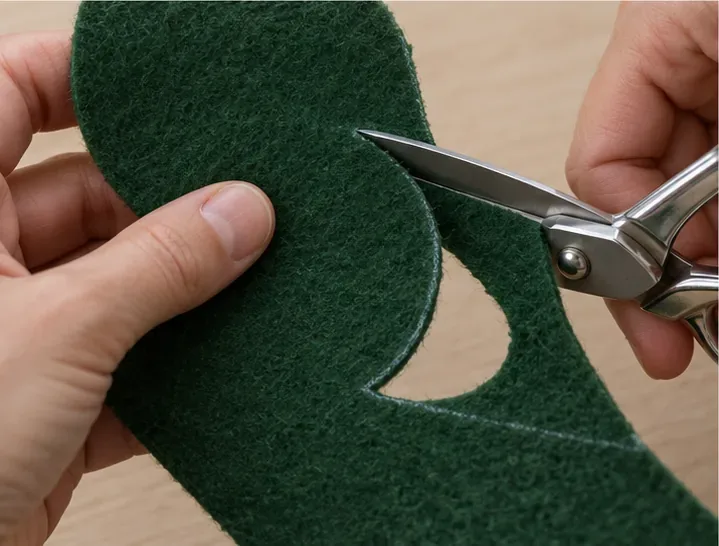
Place a single, broad pumpkin-shaped panel on the front of the shirt. Cut the eyes and smile out of the panel so the design remains one continuous piece. This avoids several separate appliqués that could loosen one by one. Keep the decoration away from the collar, cuffs, and any area that rubs against the child’s mouth. Do not attach anything directly to skin, hair, or a pacifier.
3. Apply the adhesive before the child gets dressed
Lay the shirt flat on a protected work surface. An adult should apply the adhesive exactly as its label directs, press the panel into place, and leave the garment undisturbed for the full drying or curing period listed by the manufacturer. There is no universal wait time for every adhesive, so follow the product instructions rather than guessing. Do not use hot glue on a garment the child is wearing, and do not let a toddler handle craft adhesives or scissors.
Attach the one-piece felt decoration while the sweatshirt is flat, then let it dry fully before the child wears it.
4. Add visibility, then test the fit
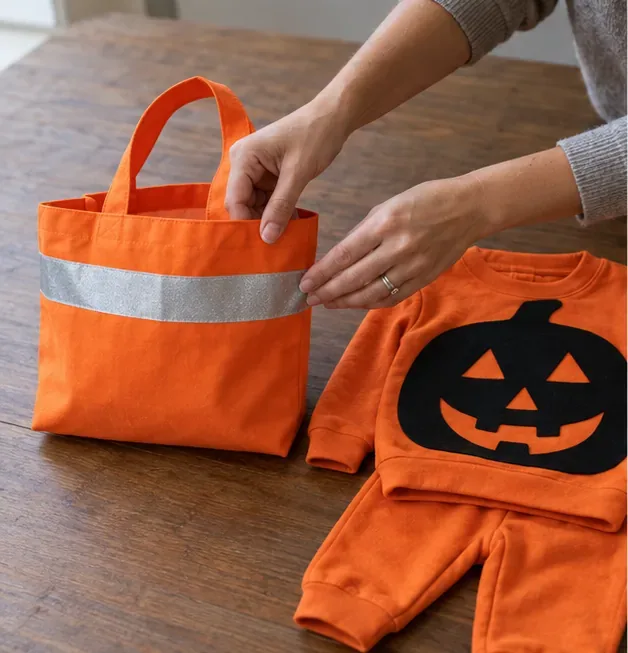
If you will be outdoors near dusk, add a flat strip of reflective tape to the treat bag or another visible outer surface. CPSC recommends bright colors and reflective material to help children be seen; reflective tape is an extra visibility aid, not a substitute for an adult staying with a toddler. Avoid dangling ribbons or straps. Have your child try the costume with the planned layers and shoes. Let them walk, bend, sit, and raise both arms while you check that the decoration stays flat and nothing blocks their movement.
A securely attached reflective strip on a treat bag adds a visible detail for an outdoor evening walk.
What should I check before Halloween night?
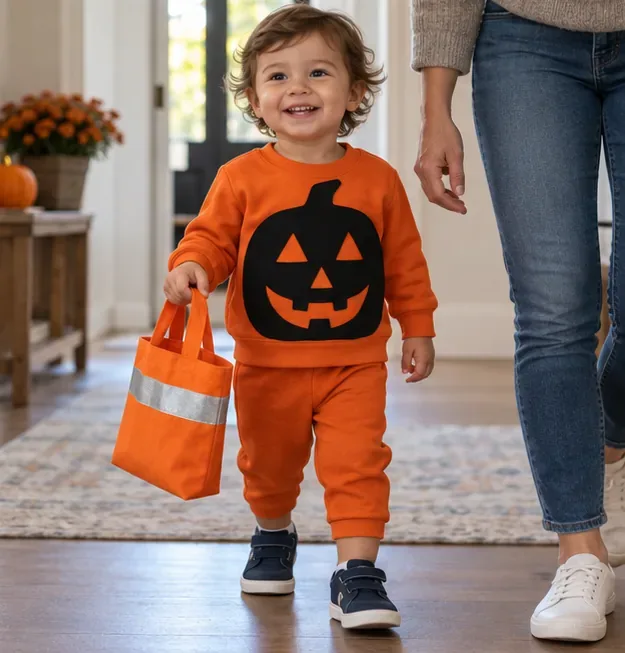
Fit: The hem does not drag, sleeves do not cover the hands, and the clothes are not so loose or bulky that the toddler trips or catches them on objects. CPSC and AAP both recommend a good fit.
Comfort: The child can move freely, breathe easily, and tolerate the clothes. Choose familiar shoes with a stable sole. Bring a regular layer if the costume becomes uncomfortable.
Face and vision: Keep the face uncovered when possible. A costume mask can limit vision or ventilation, so it is usually simpler to avoid one for a toddler. If you use a hat, confirm it stays in place and does not slip over the eyes.
Small parts: Gently check the decoration and bag for peeling edges, loose pieces, broken fasteners, or anything the child can pull off and mouth. Remove a decoration that is loosening; do not simply press it back on while the child wears it.
Fire awareness: Check garment labels and follow CPSC advice to choose flame-resistant costume materials where possible. “Flame resistant” does not mean fireproof. Keep the outfit away from candles, lit jack-o’-lanterns, and other open flames; battery-operated lights are a safer choice around children.
Outdoor visibility: Use bright or reflective details and stay close to the toddler. CPSC recommends a flashlight for children who are out after dark, but an adult should carry or manage the light for a toddler.
Exit plan: Practice wearing the outfit briefly at home. If the child pulls at it, seems distressed, or wants it off, switch to a comfortable themed shirt or take a break. A toddler does not need to finish a long trick-or-treat route.
During the final fit check, look for clear vision, secure shoes, a short hem, and an adult close by.
Should I use face paint instead of a mask?
An uncovered face avoids the visibility and ventilation concerns of a mask, but face paint is optional. If you choose makeup, use a product intended for skin and follow its label. The AAP advises testing a small amount on the child’s skin several days beforehand and stopping if irritation appears. Do not use craft paint, markers, or products with no ingredient information on the face. For a very young child, a costume that works without paint is often the easiest option.
Quick parent checklist
Before leaving home, confirm that the child can move comfortably, the outfit does not drag, the face is clear, and the decoration is firmly attached with no small loose parts. Check the planned route and weather, add a warm layer if needed, and stay with your toddler near streets and steps. Pack a spare top. CPSC and AAP guidance is general: individual needs vary, and a child who has sensory sensitivities, skin conditions, or a history of adhesive reactions may do best in plain themed clothing.