How to Find a Hidden Water Leak Under a Sink: A Simple, Safe Check
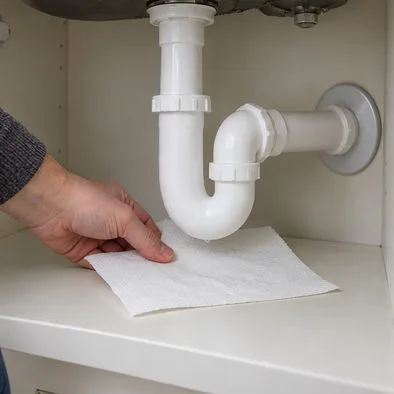
Use dry paper towels and four focused checks to find a hidden sink leak, tell supply leaks from drain leaks, and know when to call a plumber.
Many wind generator inventors, manufacturers, and installers make claims about how much energy you can get from their idea or product, but how can you know whether those energy claims are realistic, ambitious, or outright scams? In all cases, you should seek real-world confirmation of estimates and check your wind power professional’s numbers.
To test for “enthusiastic” estimates from inventors, manufacturers, or installers, do the following:
Verify the average wind speed the professional or manufacturer is using as the basis of the claim.
Without an accurate average wind speed from your actual tower height, you can’t get an accurate prediction of wind energy on your site.
Verify the swept area (the area that the blades sweep) of the wind generator.
For horizontal-axis machines, the swept area equals the rotor radius (half of the diameter) squared times Pi (3.14 if your calculator doesn’t have a Pi button). For vertical-axis wind generators, take height times width for swept area; multiply that total by 0.65 for Darrieus-style vertical-axis turbines.
Multiply the swept area (in square feet) by the average wind speed cubed (in miles per hour), and divide that total by 32,000 for an estimate of average daily kWh production from a typical machine.
Multiply your final total by 30 to get your average monthly energy in kWh and 365 for annual energy in kWh.
Check this prediction against manufacturer claims or installer production estimates.
If the manufacturer or installer claim is 50 percent or more above your estimate, the machine may possibly be very efficient, but you’re probably looking at an exaggerated claim.
Use dry paper towels and four focused checks to find a hidden sink leak, tell supply leaks from drain leaks, and know when to call a plumber.
Bathroom mirror streaks often come from residue, dirty cloths, excess cleaner, or dried water. Find the likely cause and a gentle way to fix it.
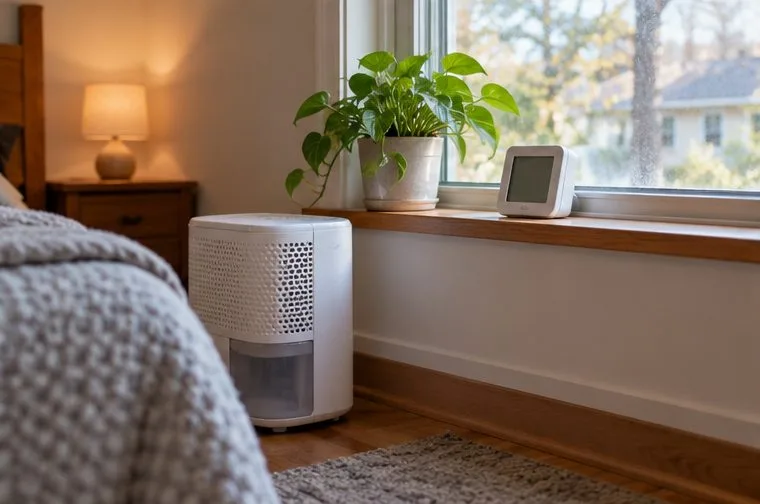
Reduce overnight window condensation by controlling indoor moisture, improving airflow, monitoring humidity, and knowing when the window itself needs attention.
Reduce cooking and kitchen odors without fragrance by improving ventilation, cleaning grease and food residue, managing waste, and finding persistent odor sources.
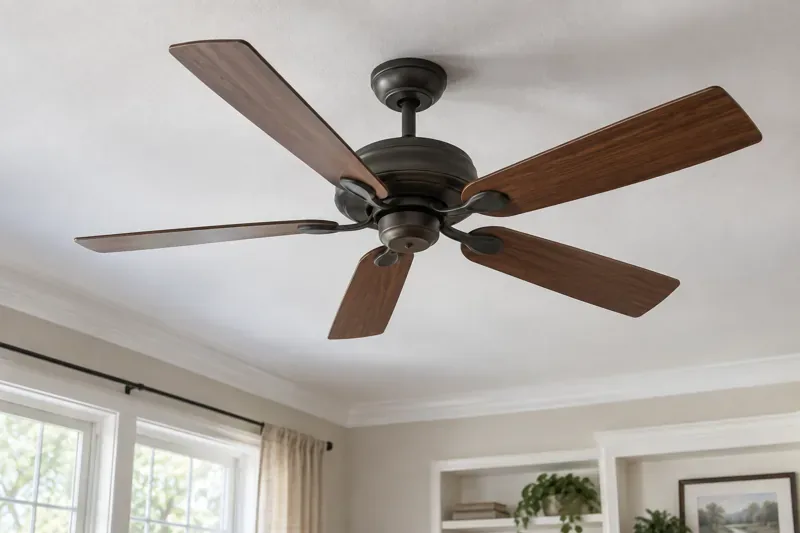
Learn why ceiling fans wobble, which warning signs mean turn it off, and what you can safely check before calling an electrician.
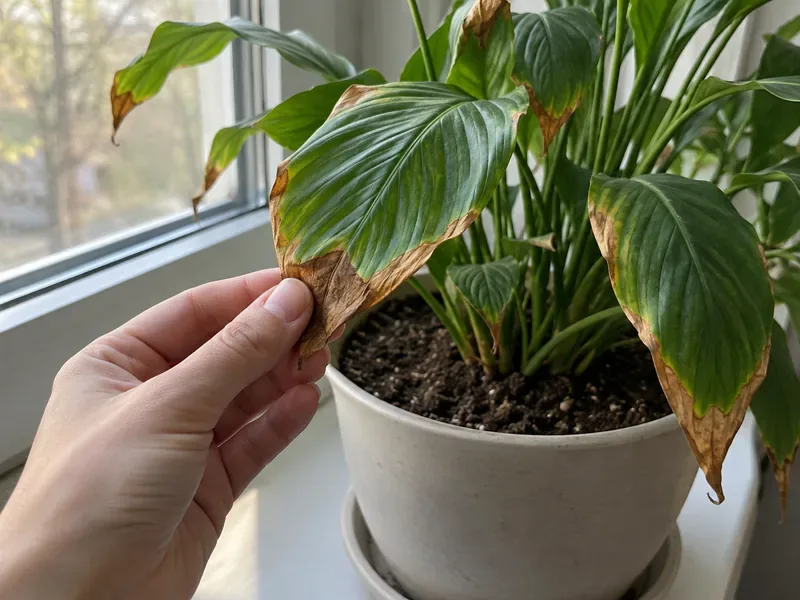
Learn why indoor plant leaves turn brown at the edges, how to read clues about watering, humidity, salts, and light, and when to seek expert help.
Keep stored clothes dry without mothballs: measure closet humidity, reduce moisture at the source, dry garments fully, choose suitable storage, and inspect for mold.
Musty towels often point to lingering moisture, washer residue, or slow drying. Learn how a hypothetical laundry example helps narrow the cause and what to change first.
Keep balcony plants hydrated during a short trip with a plan based on pot size, plant needs, sun, and wind. Compare wicks, self-watering pots, and plant sitters.
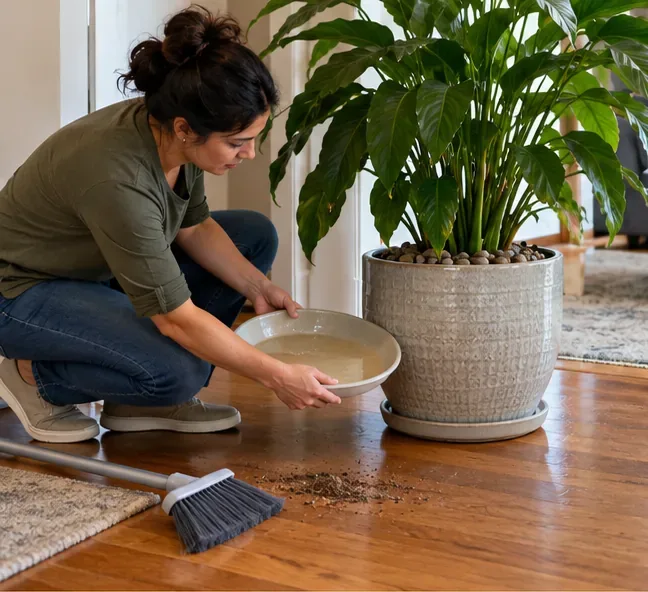
Move a heavy houseplant safely without scratching hardwood, denting flooring, spilling soil, or straining your back. Use a protected path, a dolly, and a controlled team lift.