How to Find a Hidden Water Leak Under a Sink: A Simple, Safe Check
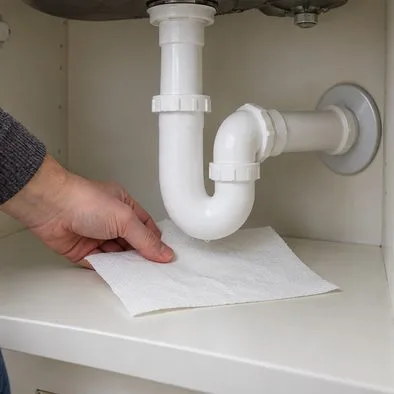
Use dry paper towels and four focused checks to find a hidden sink leak, tell supply leaks from drain leaks, and know when to call a plumber.
If you’ll be away for several days, match your watering plan to the plants, pots, balcony exposure, and forecast. There is no reliable “one reservoir lasts X days” rule: a small hanging basket in hot wind may dry much faster than a large glazed pot in a sheltered spot. For a short trip, thorough pre-trip watering plus a cooler location may be enough for some plants. For thirsty plants, hot weather, or a longer absence, use a tested wick or self-watering container—or ask someone to check them.
Illustrative example: Imagine Maya is leaving her apartment for a four-day work trip. Her balcony has a small basil pot, a larger flowering planter, and a succulent. This example is a planning tool, not a report of a real trip or a guarantee of what any plant will need.
Containers hold much less growing medium than garden beds, so their moisture reserve is limited. Sun, heat, and wind speed evaporation; hanging baskets and small pots are especially exposed. Porous terracotta and fabric can lose moisture through their sides, while a larger pot generally dries more slowly than a smaller one planted with the same kind of plant. These factors matter more than a fixed number of days. Illinois Extension notes that watering needs vary with season, location, pot material, pot size, and plant type in its Illinois Extension’s container watering guidance and container size guidance.
Plant needs differ, too. Basil and many flowering annuals prefer evenly moist, well-drained potting mix. Succulents generally need the mix to dry between waterings, so leaving them in a continuously wet reservoir is a poor default. A pot that stays saturated can deprive roots of oxygen; an attached saucer that cannot be emptied can create the same problem. See the container drainage guidance for drainage principles.
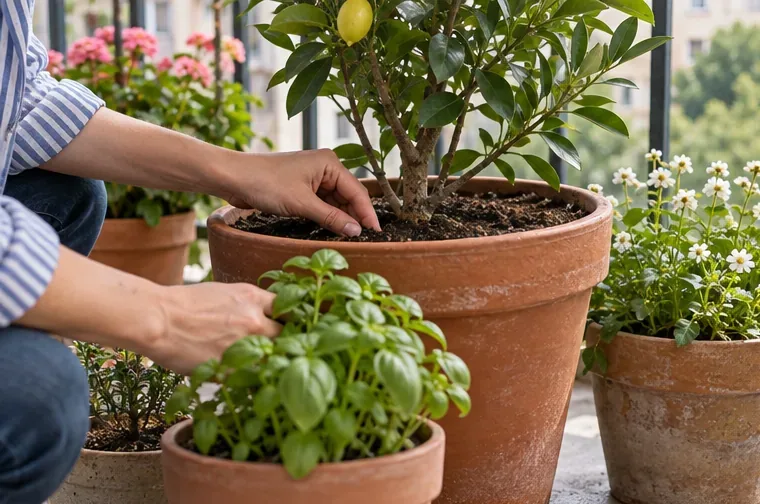
Check the weather forecast and note which containers get afternoon sun or strong wind. Feel the potting mix rather than watering every pot on the same schedule. For many plants, the top inch of mix is a useful quick check, but follow the care needs of the specific species. Small pots, hanging baskets, seedlings, thirsty herbs, and porous containers deserve closer attention. Keep succulents in their own group so a moisture-loving plant’s schedule does not lead to overwatering them.
Maya would put the basil and flowering planter in a “check first” group, while keeping the succulent separate. Grouping plants with similar water needs makes it easier to choose one suitable method for each cluster.
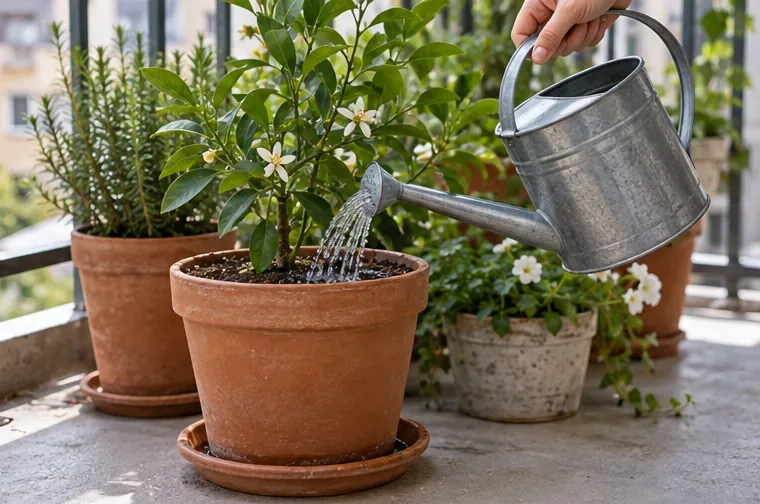
Before leaving, water the root zone slowly until the whole root ball is moist and water begins to leave the drainage holes. If very dry potting mix repels water, apply it in stages so it has time to absorb. Then allow the pot to drain and empty its saucer. The goal is moist soil with working drainage—not a permanently flooded pot. Illinois Extension recommends watering deeply enough to moisten the soil mass and letting excess drain.
Do not try to compensate for an untested setup by flooding every container. Roots need both moisture and air. If a decorative outer pot has collected water, pour it off before you go. A layer of gravel placed inside the bottom of a pot is not a fix for poor drainage; Illinois Extension explains why in its drainage guidance.
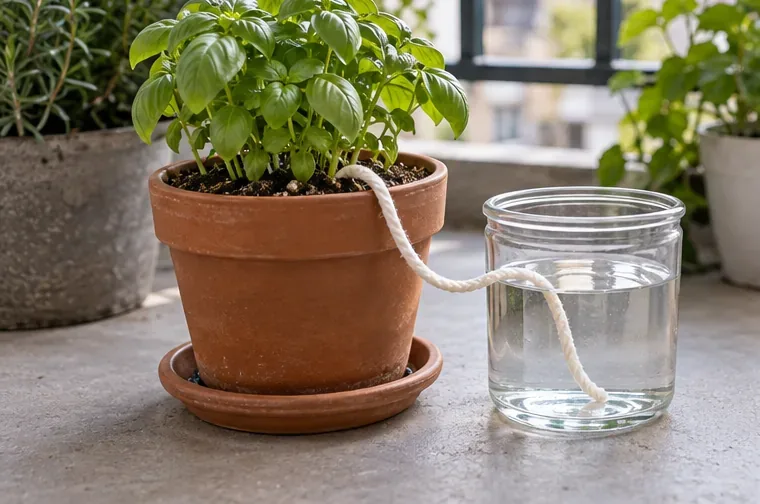
A self-watering planter uses a reservoir and a way to move water into the growing medium, often by wicking. A simple wick can also be placed with one end securely in the root zone and the other in a water container. These methods can extend the time between hand-waterings, but delivery depends on the wick, contact with the mix, potting medium, plant demand, and reservoir size. Follow the planter or wick kit’s instructions, and check that any overflow outlet works.
A bottle spike or upside-down bottle may release water too quickly, too slowly, or unevenly depending on the soil and device. Treat it as an option to test, not a guaranteed multi-day system. University of Maryland Extension describes self-watering containers as useful for keeping containers going for a few days, while noting that a sunny container may still need frequent replenishment in summer. Read its University of Maryland Extension’s self-watering container guide for how a reservoir and overflow are arranged.
For Maya, a tested wick could help the basil, while the succulent stays out of the reservoir. If she cannot test the wick before departure, asking a neighbor to check the basil is more dependable than assuming it will work.
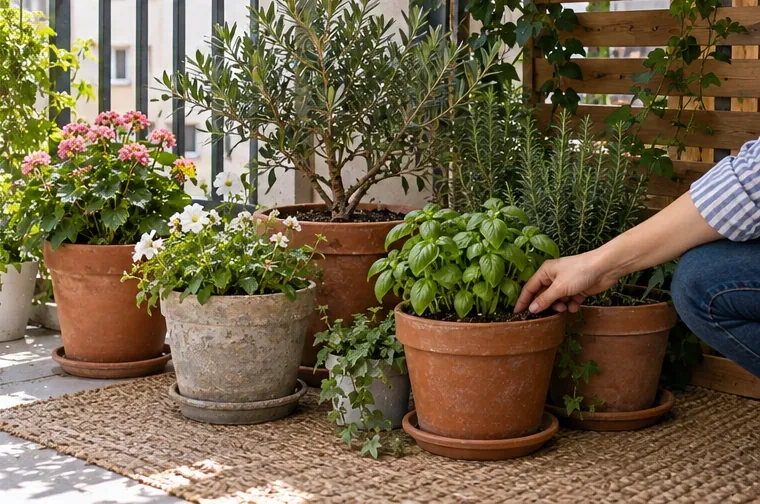
If the plants can tolerate it, move pots temporarily out of harsh afternoon sun and strong wind into bright shade. Avoid putting sun-loving outdoor plants into deep darkness, and do not move heavy containers if doing so is unsafe. Grouping pots can make care easier, but it does not replace a water source. A light layer of suitable mulch on the soil surface may slow evaporation; keep it away from stems and avoid using a material that stays soggy.
Test the entire arrangement for a few days before the trip, ideally in similar weather. Check whether the reservoir empties too soon, the mix stays wet, or water drains onto the balcony below. Put trays under ordinary draining pots where needed, then empty them after watering. Follow building rules about balcony runoff, weight, and hoses. Oregon State University Extension recommends checking container moisture more frequently in heat and moving pots to shade during a heat wave; its extreme-heat guidance was revised and reviewed in 2025.
| Situation | Practical choice | What to watch |
|---|---|---|
| A few days away, mild weather, established plants | Water thoroughly, allow drainage, and place pots in a suitable sheltered spot. | Small or exposed pots may still dry sooner than larger ones. |
| Thirsty herbs, annuals, or vegetables | Use a tested self-watering planter or wick, or arrange a person to check them. | Confirm that the reservoir and overflow behave as expected. |
| Hot, sunny, or windy spell | Favor a plant sitter or a tested irrigation setup; move pots to bright shade if appropriate. | Heat can make even a full reservoir run out quickly. |
| Succulents or plants that need dry periods | Water according to their normal needs and keep them out of continuously wet reservoirs. | Extra water can be more harmful than a short dry interval. |
| More than several days away | Ask a neighbor or plant sitter to check moisture and refill only when needed. | Leave plant-specific instructions rather than telling them to water every pot automatically. |
The key is to plan for the most vulnerable pots rather than overwatering the entire balcony. Illinois Extension’s vacation garden discussion likewise emphasizes watering adequately before departure, while noting that self-watering systems cover varying lengths of time. No source can determine exactly how long a particular balcony pot will stay moist without knowing the plant, container, mix, and weather—so a short pre-trip test or a trusted plant sitter is the reliable way to close that gap.
Use dry paper towels and four focused checks to find a hidden sink leak, tell supply leaks from drain leaks, and know when to call a plumber.
Bathroom mirror streaks often come from residue, dirty cloths, excess cleaner, or dried water. Find the likely cause and a gentle way to fix it.
Reduce overnight window condensation by controlling indoor moisture, improving airflow, monitoring humidity, and knowing when the window itself needs attention.
Reduce cooking and kitchen odors without fragrance by improving ventilation, cleaning grease and food residue, managing waste, and finding persistent odor sources.
Learn why ceiling fans wobble, which warning signs mean turn it off, and what you can safely check before calling an electrician.
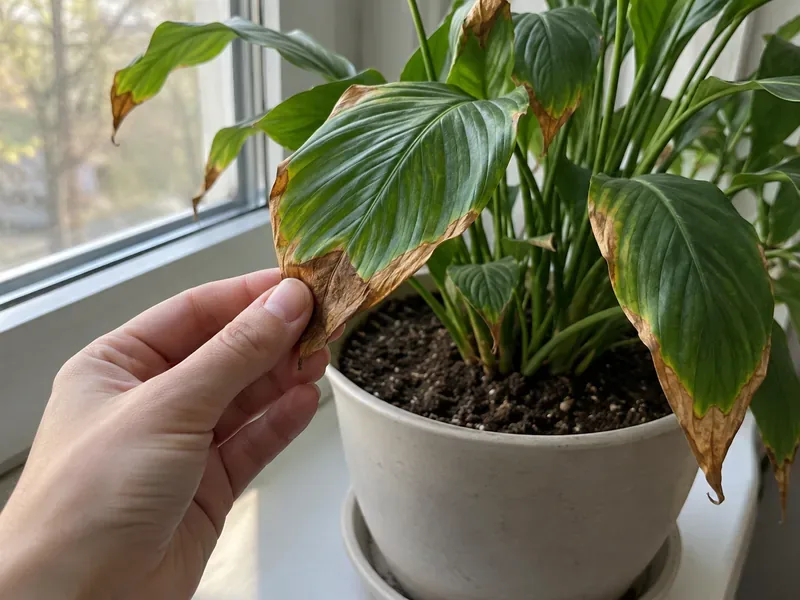
Learn why indoor plant leaves turn brown at the edges, how to read clues about watering, humidity, salts, and light, and when to seek expert help.
Keep stored clothes dry without mothballs: measure closet humidity, reduce moisture at the source, dry garments fully, choose suitable storage, and inspect for mold.
Musty towels often point to lingering moisture, washer residue, or slow drying. Learn how a hypothetical laundry example helps narrow the cause and what to change first.
Keep balcony plants hydrated during a short trip with a plan based on pot size, plant needs, sun, and wind. Compare wicks, self-watering pots, and plant sitters.
Move a heavy houseplant safely without scratching hardwood, denting flooring, spilling soil, or straining your back. Use a protected path, a dolly, and a controlled team lift.