How to Find a Hidden Water Leak Under a Sink: A Simple, Safe Check
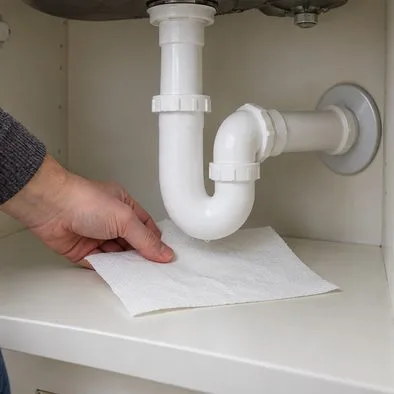
Use dry paper towels and four focused checks to find a hidden sink leak, tell supply leaks from drain leaks, and know when to call a plumber.
A heavy houseplant is rarely just a “plant.” Once a large ceramic or stone-look planter is filled with damp potting mix, drainage material, decorative rocks, and water, the combination can be awkward enough to damage flooring or injure the person moving it. The safest strategy is not to drag the planter at all. Instead, prepare the route, protect the floor, raise the pot only enough to place it on a suitable dolly or plant caddy, and move it slowly with a second person when the load is bulky or difficult to control.
Illustrative example: imagine Maya and Jordan need to move a mature peace lily in a large ceramic planter from one side of a hardwood living room to a brighter corner down the hall. The planter has no handles, the foliage is wide, and the total weight is uncomfortable for one person. This scenario is hypothetical; it is used here only to show how the same safety principles apply in a typical home.
Hard flooring can be damaged by concentrated pressure, trapped grit, rough planter bottoms, or a heavy object sliding across the finish. Shaw’s current hardwood-care guidance specifically says not to drag heavy furniture across hardwood, while its installation guidance recommends using a dolly and protective sheets of plywood when moving heavy objects. See Shaw hardwood care guidance and Shaw hardwood installation and protection guidance.
The same logic applies to a heavy planter. Even if the pot seems to slide easily, its bottom can trap sand or dried soil and turn that material into an abrasive. A small plastic saucer can also crack, buckle, or concentrate the load on a narrow edge.
In the hypothetical move, Maya first clears the path. She removes small rugs that could catch a wheel, picks up loose objects, sweeps away grit, and empties standing water from the plant saucer. She also checks that decorative stones or loose top-dressing cannot spill when the pot tilts slightly.
That floor-cleaning step matters. Shaw advises regularly removing dirt and grit from hardwood because abrasive debris can scratch the finish. Before moving a heavy object, the route should be especially clean because wheels, sliders, or plywood can press small particles firmly against the surface.
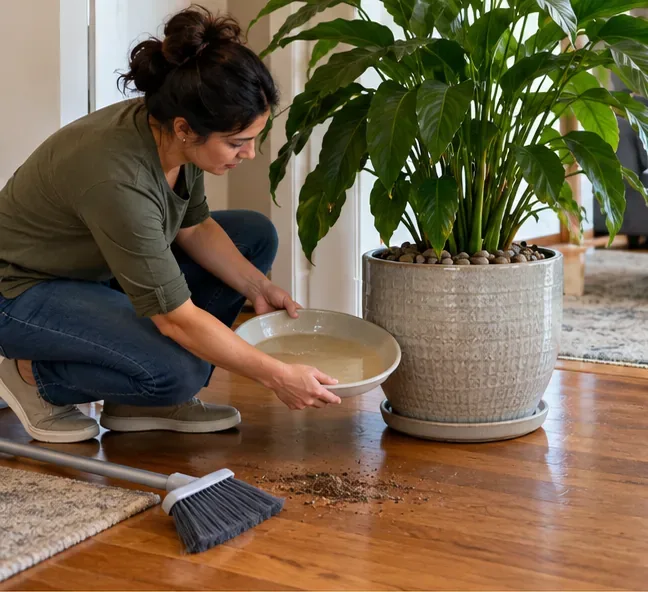
Caption: Before moving the planter, clear grit, spilled soil, standing water, and trip hazards from the route.
If the planter is unusually tall, top-heavy, cracked, or unstable, do not improvise a move. A cracked ceramic pot can fail under lifting pressure, and a tall plant can shift its center of gravity unexpectedly. In that situation, repotting into a safer container or using professional moving help may be more appropriate than forcing the move.
Jordan then lays a clean sheet of plywood over the hardwood path. The purpose is not to make a ramp for dragging the pot; it is to place a rigid sacrificial surface between the floor and the wheels or moving equipment. For hardwood, this follows Shaw’s recommendation to use protective plywood when moving heavy objects.
Make sure the underside of any protective sheet is clean before it touches the floor. Dirt trapped under plywood can still scratch the finish. Also check that the panel lies flat enough that a small dolly wheel will not catch a raised edge.
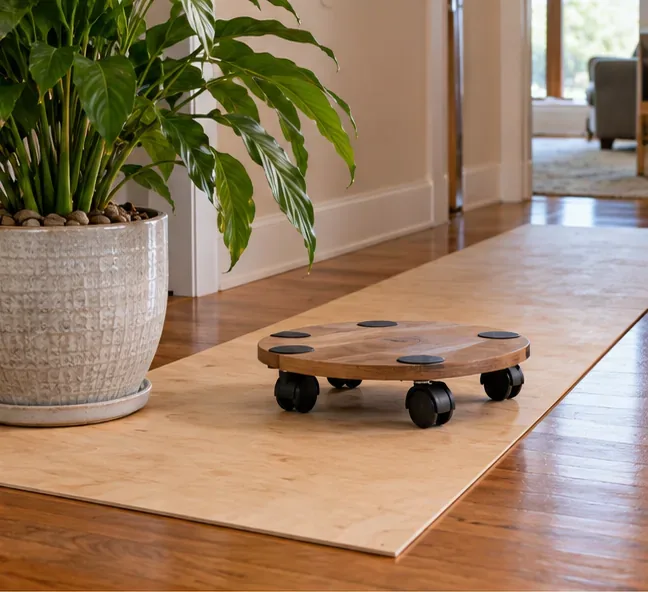
Caption: A rigid, clean protective path keeps the dolly wheels from bearing directly on the finished hardwood during the move.
For other floor types, use the flooring manufacturer’s care instructions as the deciding source. Hardwood, laminate, luxury vinyl, tile, and polished concrete can tolerate different loads and protective materials. Do not assume that a furniture slider designed for carpet is suitable for finished wood, or that a rubber-backed mat is safe for every resilient floor.
The most important equipment choice is a stable dolly or plant caddy that is rated for more than the combined weight of the planter, wet soil, and plant. The platform should be wide enough that the planter sits fully and securely on it. Wheels should roll freely, be clean, and be suitable for the protected surface.
Mechanical assistance is also consistent with general ergonomic guidance. OSHA recommends lift assists such as carts and dollies for heavy loads and notes that bulky loads, poor handholds, twisting, and carrying distance all increase lifting risk. OSHA also advises keeping loads close to the body and avoiding torso twisting when lifting. These workplace references are useful principles for home moving, although they are not a personal lifting-capacity test. See OSHA guidance on lifting factors and mechanical assistance and OSHA heavy-lifting guidance.
OSHA also notes that even under favorable workplace conditions, loads above 50 pounds increase injury risk, but that figure should not be treated as a universal home lifting limit. A planter can be much harder to handle than a box of the same weight because it is round, fragile, wide, and often has no handles. If the pot feels unstable or forces you to reach far away from your body, use more help rather than trying to prove that you can lift it.
For Maya and Jordan, the goal is a very short lift: just enough to move the pot from the floor to the dolly. They agree on the direction of travel and a verbal count before touching the pot. Each person gets a secure grip on the planter body or another structurally sound lifting point, keeps the load close, and turns with the feet rather than twisting at the waist.
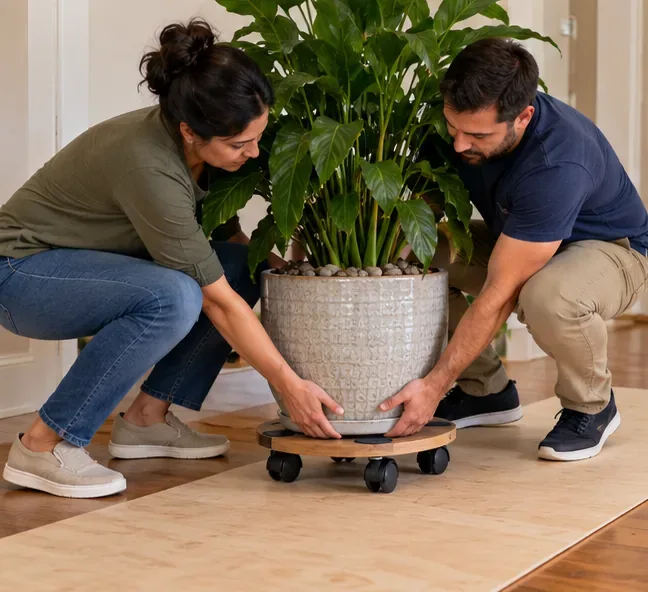
Caption: A coordinated two-person lift should raise the planter only as much as needed to place it securely on the dolly.
Do not lift by stems, a decorative rim that may not be structural, a thin saucer, or a detachable outer cachepot unless the manufacturer specifically designed that part to carry the full load. If there is no safe handhold, the planter is too bulky to control, or either person feels strain before the lift starts, stop and use a purpose-built lifting aid or professional mover.
Once the planter is centered on the dolly, Maya guides the foliage while Jordan controls the platform. They move slowly enough that neither person has to chase the plant or stop suddenly. At thresholds and doorways, they pause and make sure the plywood or other floor protection remains continuous.
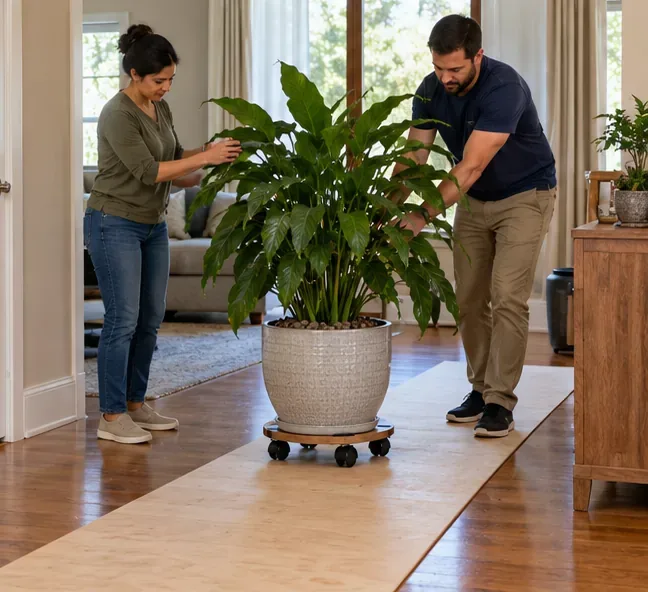
Caption: Move at walking speed, keep the planter centered, and guide the foliage so the load stays balanced through doorways and turns.
A dolly should be pushed or guided under control, not pulled rapidly by the planter itself. Keep fingers and toes away from the wheels and the base of the pot. If the route slopes, includes stairs, or requires lifting over a high threshold, a simple plant caddy may no longer be the right tool.
At the destination, stop the dolly on the protected surface and use the same short, coordinated lift to lower the planter onto a clean, stable final base. A waterproof saucer or tray can protect against watering spills, while felt protectors can be useful beneath furniture or stands when recommended for the flooring. Shaw specifically recommends felt pads under furniture legs to reduce scratches.
Inspect the floor immediately afterward. Remove any grit, wipe up moisture promptly, and check whether the planter or stand rocks. A wobbly base can concentrate pressure on a small area and create future damage even if the move itself went perfectly.
| Method | Floor risk | Best use | Main limitation |
|---|---|---|---|
| Dragging the planter | High | Not recommended | Can grind grit into the finish or gouge the floor. |
| Furniture sliders | Variable | Very short moves only when the slider is approved for that floor | The wrong material or trapped grit can still scratch. |
| Plant caddy or furniture dolly on a protected path | Low when properly set up | Most heavy planters on level floors | Requires stable load placement and a clear route. |
| Hand truck or professional moving equipment | Low to moderate when floor protection is used | Very heavy, tall, or awkward planters | Needs correct strapping, wheel type, and operator skill. |
| Manual carrying | Potentially low for the floor but higher for people | Only smaller, controllable pots | Dropping the pot can cause severe floor damage and injury. |
In the illustrative scenario, Maya and Jordan protect the hardwood because they reduce the amount of direct contact between the heavy planter and the finished floor. They clean first, create a rigid protected route, use a wheeled aid, and limit manual lifting to two short transitions onto and off the dolly. That approach also reduces strain compared with carrying a bulky planter across the room.
There is no single accessory that makes every move safe. The correct dolly, slider, plywood thickness, or floor protector depends on the planter’s actual weight, base shape, wheel design, and flooring manufacturer’s instructions. When those details are unknown, choose the conservative option: do not drag, do not attempt an awkward solo carry, and use clean floor protection plus mechanical assistance.
Use dry paper towels and four focused checks to find a hidden sink leak, tell supply leaks from drain leaks, and know when to call a plumber.
Bathroom mirror streaks often come from residue, dirty cloths, excess cleaner, or dried water. Find the likely cause and a gentle way to fix it.
Reduce overnight window condensation by controlling indoor moisture, improving airflow, monitoring humidity, and knowing when the window itself needs attention.
Reduce cooking and kitchen odors without fragrance by improving ventilation, cleaning grease and food residue, managing waste, and finding persistent odor sources.
Learn why ceiling fans wobble, which warning signs mean turn it off, and what you can safely check before calling an electrician.
Learn why indoor plant leaves turn brown at the edges, how to read clues about watering, humidity, salts, and light, and when to seek expert help.
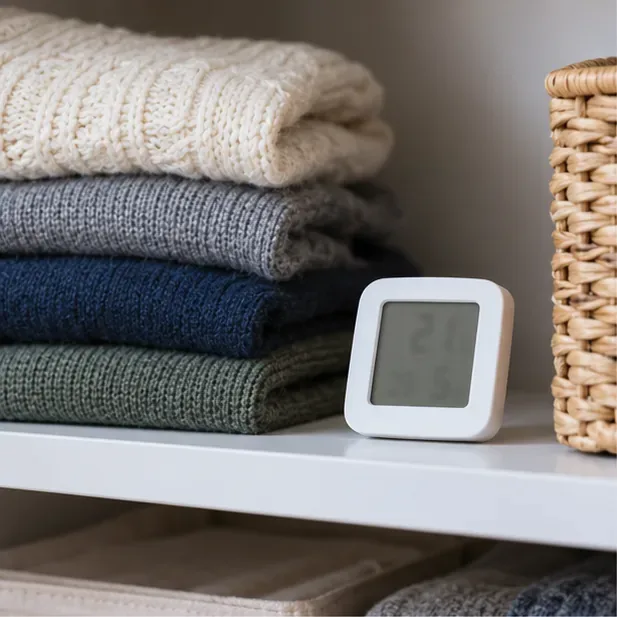
Keep stored clothes dry without mothballs: measure closet humidity, reduce moisture at the source, dry garments fully, choose suitable storage, and inspect for mold.
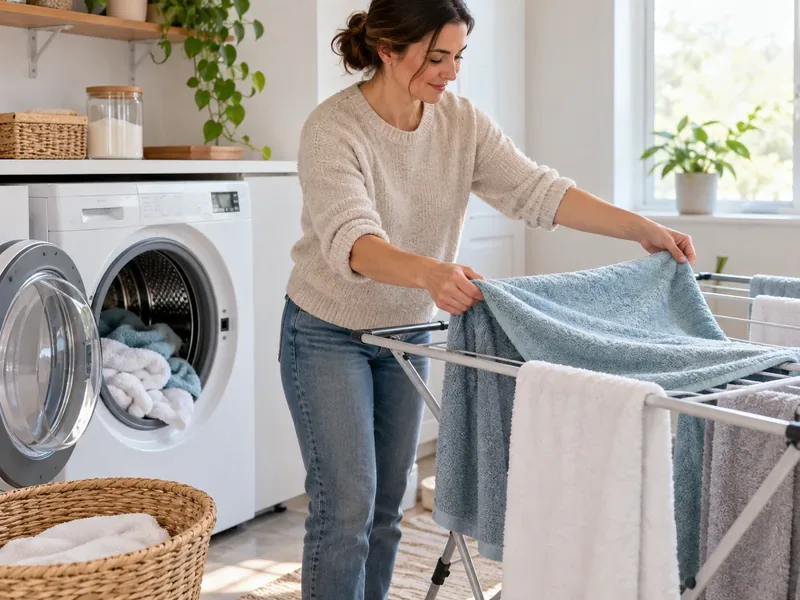
Musty towels often point to lingering moisture, washer residue, or slow drying. Learn how a hypothetical laundry example helps narrow the cause and what to change first.
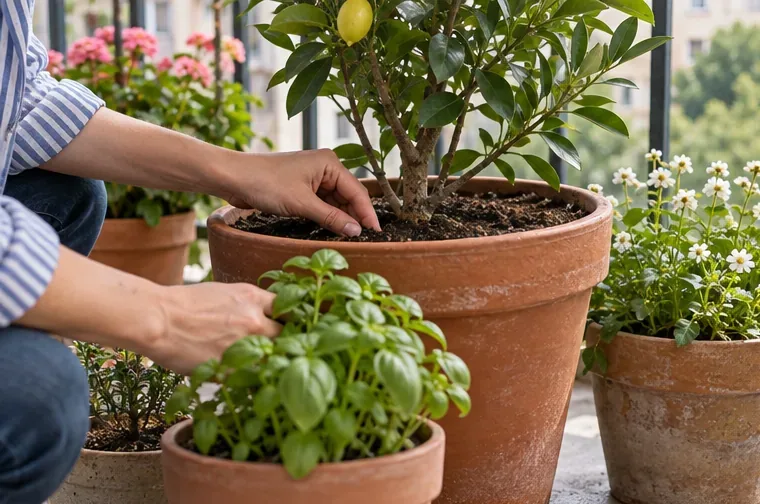
Keep balcony plants hydrated during a short trip with a plan based on pot size, plant needs, sun, and wind. Compare wicks, self-watering pots, and plant sitters.
Move a heavy houseplant safely without scratching hardwood, denting flooring, spilling soil, or straining your back. Use a protected path, a dolly, and a controlled team lift.