How to Find a Hidden Water Leak Under a Sink: A Simple, Safe Check
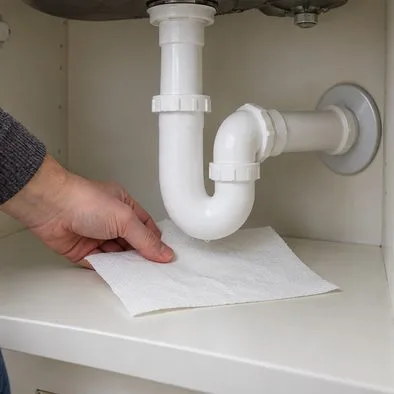
Use dry paper towels and four focused checks to find a hidden sink leak, tell supply leaks from drain leaks, and know when to call a plumber.
Hypothetical example: Imagine Jordan washes a load of bath towels after dinner, forgets to move them from the washer, and finds them still damp the next morning with a musty smell. This made-up scenario is not a test or a real household result. It gives us a way to separate likely causes: lingering moisture, residue in the washer or fabric, and a wash or dry routine that leaves towels damp.

A wash cycle does not guarantee a fresh-smelling towel if moisture or residue remains. Thick towels hold more water than many garments, and folds or a crowded load can slow rinsing and drying. When wet laundry sits in a closed washer or hamper, odor-causing microbes can multiply. A washer that stays damp can also hold detergent, soil, and softener residue that contributes to stale odors and may transfer a smell to a fresh load.
The U.S. Environmental Protection Agency notes that mold needs moisture to grow. A musty odor alone, however, cannot tell you whether a towel has mold, which organism might be present, or whether the washer is the only source. Treat the smell as a clue to check how wet items are handled and whether the washer needs care—not as a diagnosis.
Too much detergent is a common suspect, especially if towels feel coated, stiff, or less absorbent as well as smelling stale. The washer model, water amount, detergent type, load size, and soil level all affect how much product is appropriate. Fabric softener can leave a coating on towels, and some appliances advise using less or avoiding it for odor or absorbency problems. Follow your washer manual and detergent label rather than adding extra soap in hopes of getting a deeper clean.
Start with where and when the odor appears. If only the towels left damp in the washer smell, the delay before drying is a strong place to begin. If several different loads smell musty as soon as they come out, the washer, detergent drawer, gasket, or drain area deserves attention. If the towels smell clean while dry but turn musty after use or storage, check whether they dry fully between uses and whether the bathroom or storage space stays humid.
These are practical clues, not proof of a single cause. For example, Jordan’s overnight delay could explain one sour load, but if the washer drum itself smells musty, the machine may also need cleaning. More than one factor can be involved.
In Jordan’s case, the first simple change would be to remove the next load promptly and dry the towels fully. If they still smell after that, the next useful step is inspecting and cleaning the washer according to its own instructions. Changing one part at a time makes it easier to see which adjustment helps.
Check the manual for the washer’s cleaning cycle, the correct cleaner, and any parts that need routine attention. Depending on the model, that may include the detergent dispenser, door gasket, drain pump filter, or tub. Do not assume that a cleaning method approved for one brand or model is right for another. Some manufacturers specifically caution against certain cleaners or combinations.
After cleaning, remove laundry when the cycle ends. If the manufacturer recommends it and the space is safe, leave the door and detergent drawer open between uses so the interior can dry. Keep children and pets away from an open washer. If the musty smell remains after the manual’s cleaning procedure, appears with every load, or comes with poor draining or standing water, contact the manufacturer or an appliance technician rather than repeatedly adding cleaners.
For Jordan, a washer that smells musty when empty would support checking its seals, drawer, and tub. A washer with no odor and towels that smell only after being left wet points more strongly toward the delay. Neither observation proves what microbes, if any, are present.
Do not combine cleaning products or improvise a washer-cleaning recipe. The correct product and amount depend on the appliance and its manual. The CDC warns never to mix household bleach with another cleaner or disinfectant because dangerous vapors can be released. Vinegar and bleach must not be combined. Extra detergent may add residue instead of removing the odor, and using a product the washer does not permit can damage parts or interfere with cleaning.
If towels remain musty after a properly measured wash, prompt transfer, thorough drying, and the washer’s recommended cleaning routine, stop repeating the same cycle and look for a persistent machine or drainage issue. If there is visible growth on the towel, discard it or launder it only if the fabric and care instructions allow; address the source of moisture as well. The EPA emphasizes that cleanup alone may not prevent recurrence if the moisture problem remains.
For Jordan, success would mean the towels come out without the stale odor, dry all the way through, and stay fresh when stored. Check the next few towel loads rather than expecting one change to fix every possible cause. If the washer continues to smell, or the odor returns quickly despite towels drying fully, the routine alone may not be enough; use model-specific support or schedule service.
The main limits are that smell is subjective and does not identify the cause by itself. A musty towel can point to retained moisture, machine residue, or both. A care-label-safe wash, prompt drying, correct product amounts, and model-specific washer maintenance are the most useful first checks. Jordan’s situation is only an illustration of how to reason through those clues, not evidence that any one fix works for every home.
Use dry paper towels and four focused checks to find a hidden sink leak, tell supply leaks from drain leaks, and know when to call a plumber.
Bathroom mirror streaks often come from residue, dirty cloths, excess cleaner, or dried water. Find the likely cause and a gentle way to fix it.
Reduce overnight window condensation by controlling indoor moisture, improving airflow, monitoring humidity, and knowing when the window itself needs attention.
Reduce cooking and kitchen odors without fragrance by improving ventilation, cleaning grease and food residue, managing waste, and finding persistent odor sources.
Learn why ceiling fans wobble, which warning signs mean turn it off, and what you can safely check before calling an electrician.
Learn why indoor plant leaves turn brown at the edges, how to read clues about watering, humidity, salts, and light, and when to seek expert help.
Keep stored clothes dry without mothballs: measure closet humidity, reduce moisture at the source, dry garments fully, choose suitable storage, and inspect for mold.
Musty towels often point to lingering moisture, washer residue, or slow drying. Learn how a hypothetical laundry example helps narrow the cause and what to change first.
Keep balcony plants hydrated during a short trip with a plan based on pot size, plant needs, sun, and wind. Compare wicks, self-watering pots, and plant sitters.
Move a heavy houseplant safely without scratching hardwood, denting flooring, spilling soil, or straining your back. Use a protected path, a dolly, and a controlled team lift.