How to Find a Hidden Water Leak Under a Sink: A Simple, Safe Check
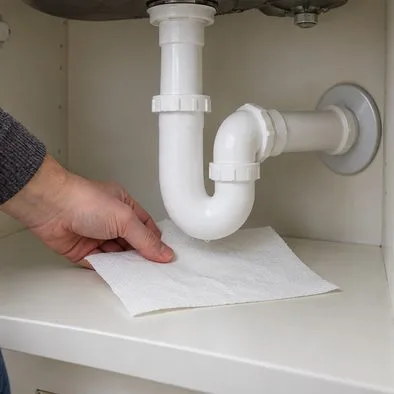
Use dry paper towels and four focused checks to find a hidden sink leak, tell supply leaks from drain leaks, and know when to call a plumber.
To protect stored clothes from humidity without mothballs, control moisture in the room, put away only clean and completely dry garments, and choose a storage spot with stable conditions and some air circulation. A hygrometer helps you measure the problem; a dehumidifier or air conditioner may help lower room humidity. Mothballs are pesticides for clothes moths, not moisture absorbers, so they cannot solve damp storage.
For a lived-in home, the U.S. Environmental Protection Agency (EPA) recommends keeping indoor relative humidity below 60% when possible, ideally between 30% and 50%, to help prevent mold. For long-term textile storage, the Smithsonian’s Museum Conservation Institute gives 40% to 50% relative humidity as an ideal range under controlled conditions. Those are guideposts, not a guarantee that every closet will stay mold-free: a leak, condensation, or damp fabric still needs attention.
Start with the space, not the container. Put a small hygrometer on the shelf or in the closet where the clothes will sit. Check it at different times of day for several days, especially after showers, cooking, rain, or laundry drying indoors. A single reading may miss a humid stretch. Also look for condensation on windows or pipes, water marks, a musty smell, peeling paint, or a wall that feels damp.
Choose an interior closet or dry bedroom shelf over a basement, attic, garage, or exterior wall that becomes cold and damp. The Smithsonian advises keeping stored textiles in a clean, cool, dry place with few swings in temperature and humidity, and specifically cautions against basements and attics for heirloom textiles. If the closet regularly smells musty or the hygrometer stays high, move the clothes while you address the moisture source.
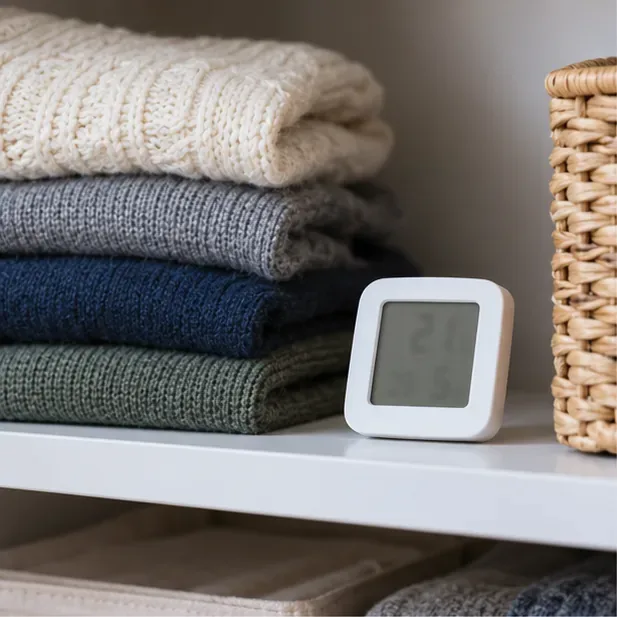
If readings are often above 60%, first check for leaks, condensation, and moisture coming from a bathroom, kitchen, or clothes dryer. Fix water entry and dry wet surfaces; putting fragrance or a moisture absorber beside a leak does not fix the cause. Use the bathroom exhaust fan while showering and vent a clothes dryer outdoors when possible. If outdoor air is drier and weather allows, opening a window can improve air movement; in hot, rainy, or very humid weather, outdoor air may add moisture instead.
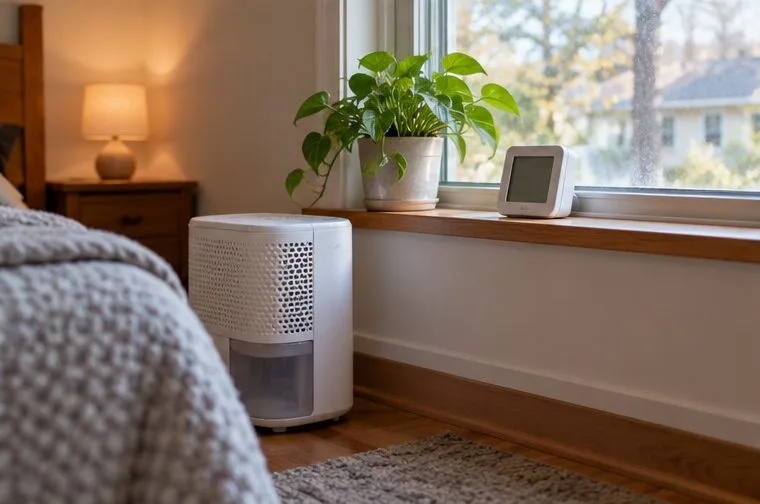
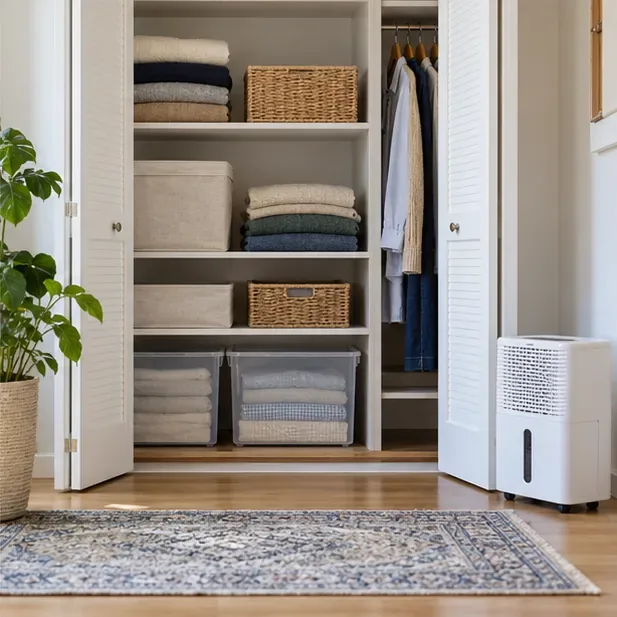
Run an air conditioner or a properly sized dehumidifier when needed, following the appliance instructions and emptying or draining collected water. Place it in the room, not pressed against hanging clothes, and leave room for its intake and exhaust. Recheck the hygrometer after changes. A closet door left ajar can help room air circulate, but it will not solve persistent dampness by itself.
For example, if a closet reads 68% after showers and the adjacent bathroom fan is rarely used, start by running the fan and checking for a plumbing leak. If the room remains humid, use a dehumidifier or air conditioning and monitor the readings before returning seasonal clothes. This is more useful than scattering scented sachets, which do not remove water vapor.
Wash or clean clothes according to their care labels, remove visible soil, and let every part dry completely before storage—including thick seams, cuffs, pockets, linings, and folded layers. Even a garment that feels dry on the surface can hold moisture in a dense fold. Allow air to move around items on the drying rack and wait until there is no cool, damp feel or lingering laundry smell.
Cleaning also helps reduce food and body-oil residues that can attract fabric pests. The Smithsonian recommends storing textiles as clean as possible and keeping storage areas clean, dry, and regularly inspected. For delicate, beaded, painted, or heirloom pieces, avoid experimenting with home washing; follow the garment’s care instructions or ask a textile conservator or qualified cleaner.

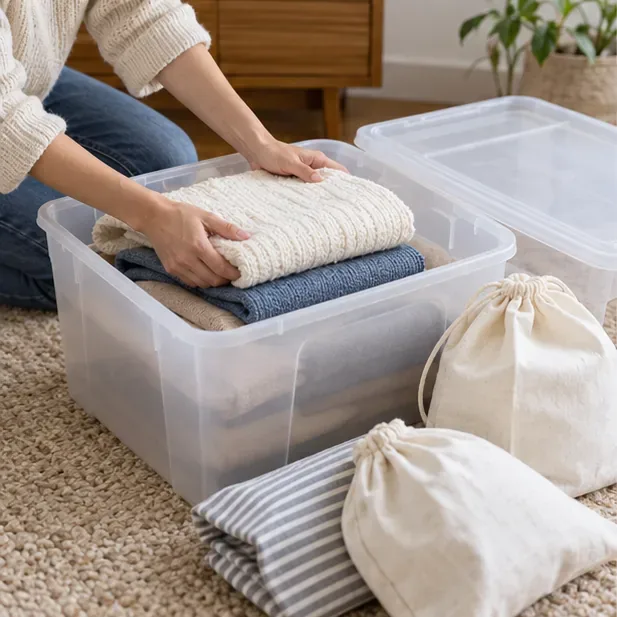
For everyday seasonal clothes, a clean drawer, closet shelf, or breathable cotton garment bag in a dry room is often a practical choice. Avoid tightly crowding clothes; leave enough room to remove and inspect them. Keep storage off a basement floor and away from damp walls. A lidded plastic bin can protect against dust or a brief splash, but it is not a dehumidifier. Never seal away a garment that is damp, and do not rely on an airtight container in a space where condensation is common. The Smithsonian cautions that textiles need some air movement and that moisture condensation can make airtight plastic storage damaging.
For a family heirloom or delicate textile, use clean, appropriate archival materials and follow conservation guidance rather than assuming that a standard plastic tote is suitable. The Smithsonian’s Museum Conservation Institute describes textile storage choices that vary with climate and the condition of the object. Stable humidity and careful handling matter more than buying a special box.
If a storage container is unavoidable in a generally dry room, start with a clean, dry container and bone-dry clothes, then inspect them after the first few weeks and periodically after that. A small silica-gel product may be used only as a supplement in a suitably enclosed space and according to its label; it will not dry out a damp closet, stop a leak, or replace room-level humidity control. Keep any desiccant away from children and pets and replace or regenerate it as the product maker instructs.
Mothballs are pesticide products intended for particular pest-control uses. They do not lower relative humidity or dry fabric. EPA warns about illegal mothball products and advises consumers to use registered pesticides only as directed on the label. If clothes moths are also a concern, keep garments clean, inspect seams and folds, vacuum the storage area, and look for larvae, webbing, or new damage. Treat a pest problem separately from moisture control; do not substitute cedar, lavender, or another scent for fixing dampness.
Check stored garments every month or two at first, then seasonally once you know the area stays dry. Look and smell for dampness, mustiness, condensation, spotting, or new insect damage. Recheck the hygrometer. If the reading rises, move clothes to a dry room and investigate the source before repacking them. If you find active mold, a large leak, or mold covering a broad area, avoid shaking or brushing the garments indoors and seek appropriate cleanup or textile-care advice.
A simple checklist helps:
If the area stays below 60% relative humidity and clothes remain dry and odor-free, the setup is working as a practical household approach. For long-term storage of valuable, fragile, or already mold-damaged garments, household tips have limits; consult a textile conservator. Controlling the moisture source is the main protection. Scented products and mothballs cannot take its place.
Use dry paper towels and four focused checks to find a hidden sink leak, tell supply leaks from drain leaks, and know when to call a plumber.
Bathroom mirror streaks often come from residue, dirty cloths, excess cleaner, or dried water. Find the likely cause and a gentle way to fix it.
Reduce overnight window condensation by controlling indoor moisture, improving airflow, monitoring humidity, and knowing when the window itself needs attention.
Reduce cooking and kitchen odors without fragrance by improving ventilation, cleaning grease and food residue, managing waste, and finding persistent odor sources.
Learn why ceiling fans wobble, which warning signs mean turn it off, and what you can safely check before calling an electrician.
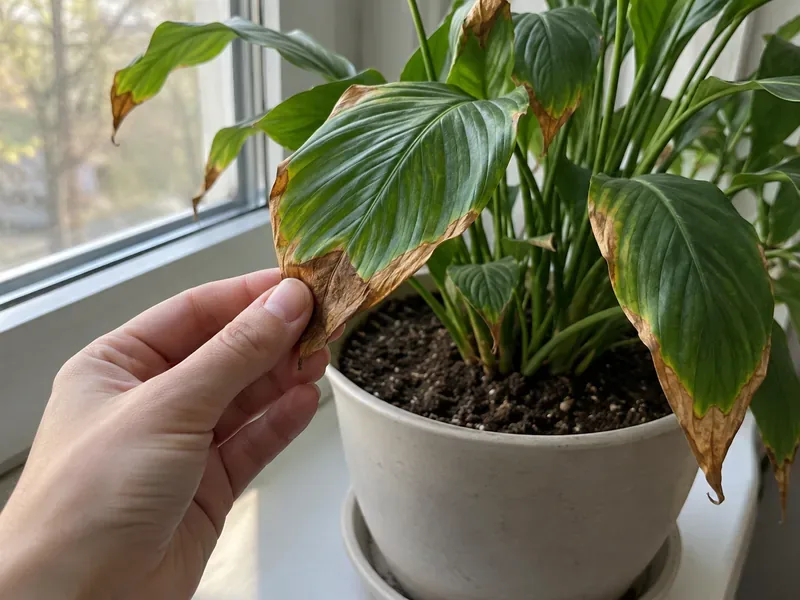
Learn why indoor plant leaves turn brown at the edges, how to read clues about watering, humidity, salts, and light, and when to seek expert help.
Keep stored clothes dry without mothballs: measure closet humidity, reduce moisture at the source, dry garments fully, choose suitable storage, and inspect for mold.
Musty towels often point to lingering moisture, washer residue, or slow drying. Learn how a hypothetical laundry example helps narrow the cause and what to change first.
Keep balcony plants hydrated during a short trip with a plan based on pot size, plant needs, sun, and wind. Compare wicks, self-watering pots, and plant sitters.
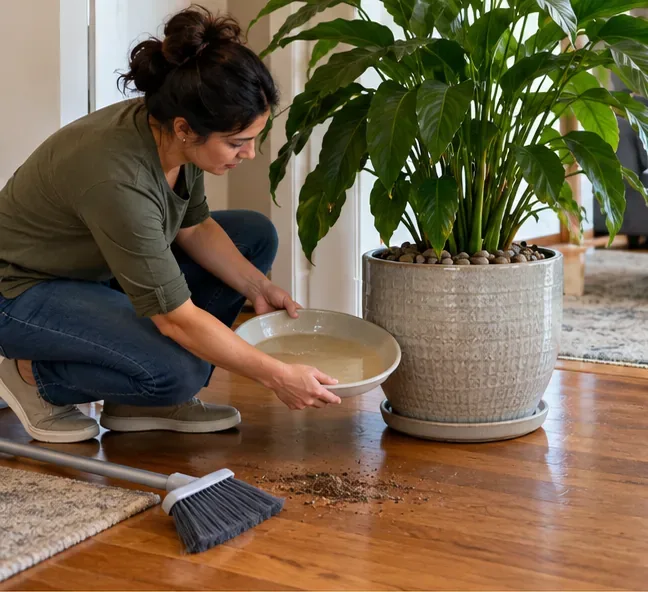
Move a heavy houseplant safely without scratching hardwood, denting flooring, spilling soil, or straining your back. Use a protected path, a dolly, and a controlled team lift.