Regardless of your puppy’s age, his ability to stay calm and remember his manners around people will be determined by three variables: breed influences, socialization experience, and your example. Even though your puppy’s breed drives are predetermined, you can vastly shape the future through socialization and positive modeling.
Socializing a young puppy (6 to 14 weeks)
A brand-new puppy is easy to condition and socialize because he’s unsure of himself and how best to react to new situations. Most puppies look to their people to direct and translate new situations. How you greet and interact with people from all walks of life are his greatest examples.
When welcoming new visitors, allow your puppy to approach them on his own terms rather than thrusting him forward or lifting him up excitedly. If your puppy is unsure, let him hang back and encourage your visitors to wait for him to approach them.
As the weeks pass, your puppy will feel more a part of your household and be more interactive when new situations arise. If your puppy begins to jump or mouth you or your company, kneel down next to your puppy and brace him by clipping your thumb gently under his collar.
Hold your puppy in a sitting position whether you’re greeting him or someone is approaching you. Command “Say hello” as you or an admirer pats your puppy. With this command and positioning, you’re teaching your puppy to stay on all four paws when interacting with people!

Credit: Illustration by Barbara Frake
Bracing reassures your young puppy when meeting unfamiliar people.
If your puppy is fearful or tense, ask the person to shake a treat cup and treat him so that he shapes a new and more positive outlook. In addition, ask the person to approach your puppy from the side or to kneel down. A straight-on, head-to-head greeting can easily overwhelm a nervous puppy, who’ll interpret the approach as threatening.
Shaping up older puppies
Is your older pup out of control or poorly conditioned to greeting new people? He’s not a lost cause. He may become hyper when the doorbell rings, react defensively to men in uniform, or act warily around toddlers, but you can reshape his focus with patience, ingenuity, and calm consistency.
Condition your puppy to a leash and collar and keep these items on him when meeting new people. Use the leash to guide your puppy, as if you’re holding a young child’s hand. If your puppy is having an extreme reaction, bring him behind you and ask the people to ignore him. Wait a few minutes until your puppy calms down as you condition him to look to and reflect your reaction.
Regardless of your puppy’s pre-established habits, remember these points when introducing your puppy to new situations and people:
-
Whoever is in front is in charge.
-
A confident and calm body posture conveys authority and self-assurance.
-
A steady voice encourages your puppy to listen to your direction.
Your puppy will repeat anything that gets attention — he doesn’t care whether the interaction is negative or positive. Reactionary puppies need a human example of confidence. Convey it with clear direction and a calm, upright body posture.
Use the following training practices to recondition your pup to life’s everyday interactions:
-
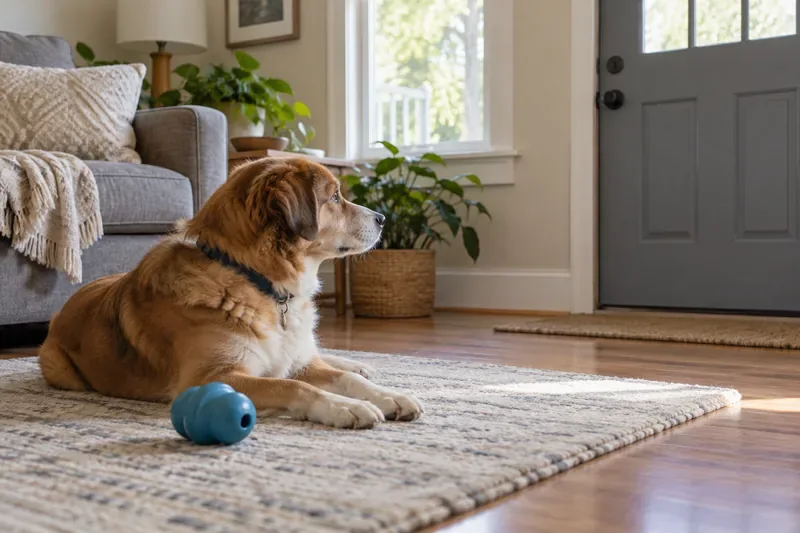
Anytime your puppy gets overexcited, displace his enthusiasm by offering him a bone or toy and then calmly placing him on a leash.
-
If someone is entering or knocking at the door, bring your puppy behind you or secure him to something immovable until he’s calmed down. Make sure you’ve offered him a toy to hold or a bone to chew.
-
Ignore your puppy (and make sure everyone else ignores him) until he has fully calmed down. Though ignoring his initial vocalizations and spasms may be difficult, he’ll soon discover that a relaxed posture gets immediate attention.
If your puppy is defensive or fearful, put a head collar or no-pull harness on him. These collars automatically condition and relax your puppy as you handle him on a leash because they don’t strain or jerk at his neck.