How to Teach Chores Without Redoing Every Task for Your Child

Teach kids to do chores with fewer reminders: set a clear finish line, model one task, step back, and correct only what is unsafe or unfinished.

When their children got sick, some mothers wanted their babies to get better as quickly as possible, so they gave their children antibiotics. But, you know, antibiotics aren't always the best approach, sometimes even more harm than good. How do you know how to safely use the drug and how to avoid overdose.
The first antibiotic, used in the 1940s, was one of the most useful. However, overdose has led to antibiotic resistance, meaning that the body does not respond positively to the drug when it is infected. Additionally, taking a lot of antibiotics is associated with an increased risk of side effects, like stomach upset and diarrhea or allergies.
To better understand how antibiotics work, parents need to know about two microorganisms that can cause disease, bacteria and viruses.
Bacteria are living organelles that exist as single cells. Bacteria can be everywhere but most are not harmful and in some cases can be beneficial.
Viruses do not live and exist - they are molecules that contain genetic material wrapped in proteins. Viruses develop and reproduce only after they invade other living cells.
Here are the symptoms parents need to know to consider whether to give their children medications:
Sore throat
Pharyngitis is often the first manifestation of a cold virus infection. If your child has a sore throat, they will usually include:
Fever;
Tonsillitis;
Small red spots on the mouth;
Swollen lymph vessels;
Pink eye
Red eye pain can be caused by bacteria, viruses, allergens or irritants. If the white part of a child's eyes turns red and swollen, parents should take the child to a doctor.
Ear infections
There are two common types of ear infections: otitis media with discharge (when the middle ear is blocked with fluid from allergens or irritants) and acute otitis media. When sick, children often have difficulty sleeping and tired.
Adjusting antibiotic use is not only up to the doctor, but also the parents.
Antibiotics are not always good for the child's body: For example, every time your child has a stuffy nose, sore throat and cough a lot, you want to heal quickly so you often ignore the instructions and ask your doctor for children take antibiotics;
Wait for the pathogen to disappear: If your child has a viral infection, time is the best medicine for treatment. But you can ask your doctor if pain relievers can ease your symptoms;
Suggestions: If your doctor prescribes antibiotics for your child, you should ask if they are necessary, can remove antibiotics if not necessary;
Follow the instructions: If your child really needs antibiotics, give them the instructions to get rid of the bacteria as quickly as possible. Especially always give the child the full dose of antibiotics, even when the child is getting better. When you stop giving the medication early, the bacteria get stronger and make the baby sick again, now a stronger dose of antibiotics is needed;
Use a new prescription every time you get sick: If you have a prescription for old antibiotics, you should not reapply even though they are extremely effective. Each disease, each type of infection requires a specific prescription;
Keeping children from getting infectious diseases: Several types of infectious and dangerous infections need to be prevented with vaccines, including pertussis and pneumococcal disease;
Use vaccines for yourself: If desired, be sure to use vaccines to protect your baby at birth and ask the midwife to get current vaccines.
Antibiotics are important medicine in medicine, but bugs of resistance are evolving faster than new drugs are being developed. We must use antibiotics wisely to make sure they will continue to work when your child really needs them. If you have any questions, you can contact your doctor for advice and necessary support.
Teach kids to do chores with fewer reminders: set a clear finish line, model one task, step back, and correct only what is unsafe or unfinished.
Learn why toilet-trained children may start having pee or poop accidents again, what patterns to track, how to respond calmly, and when to call the pediatrician.
A child may repeat a reassurance question to process information, seek connection, or manage worry. Learn how to respond and when persistent anxiety needs support.
Learn how to set screen-time boundaries with predictable routines, warnings, calm follow-through, and better transitions—without turning every device handoff into a fight.
Teach children to handle losing without shame or explosive anger by validating feelings, setting behavior limits, modeling recovery, and practicing at the right difficulty.
A calm, practical plan for after-school meltdowns: reduce overload, keep limits clear, track patterns, coordinate with school, and know when to seek help.
Learn how to respond when a child feels unwanted, ask supportive questions, recognize bullying or ongoing distress, and know when to seek extra help.
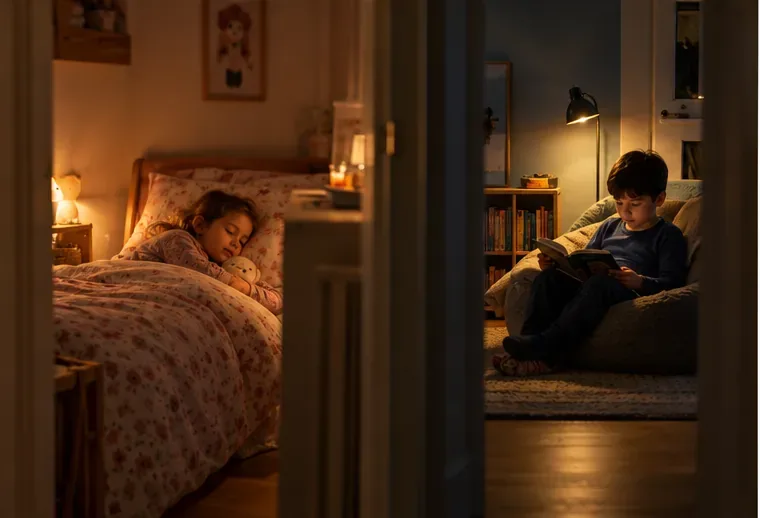
Learn how to set up a shared bedroom for siblings with different bedtimes, from planning around age-based sleep needs to creating separate sleep spaces and quiet routines.
Compare full-day, gradual, and temporary at-home return plans, plus health checks and school supports that can help a child reenter safely.
Learn when a child can try to solve a friendship problem, when adults should step in, and how to tell whether support is helping or needs to change.