Home
» Parenting
»
How to Teach a Child to Lose a Game Without Shame or Anger
How to Teach a Child to Lose a Game Without Shame or Anger
The most useful lesson is not “losing should not bother you.” It is: you are allowed to feel disappointed, and you are still expected to act safely and respectfully. Children learn this best when adults separate the feeling from the behavior, model a calm response, and give them repeated low-stakes chances to practice recovering after a loss.
That approach fits what current child-development guidance says about self-regulation. Young children often need adult help naming emotions and choosing what to do next, while games can provide repeated practice with attention, impulse control, rule-following, and flexibility. The CDC’s April 2026 parenting guidance recommends staying calm, validating feelings, setting limits on behavior, and helping children find workable solutions. The Harvard Center on the Developing Child likewise describes games as useful practice for executive-function and self-regulation skills.
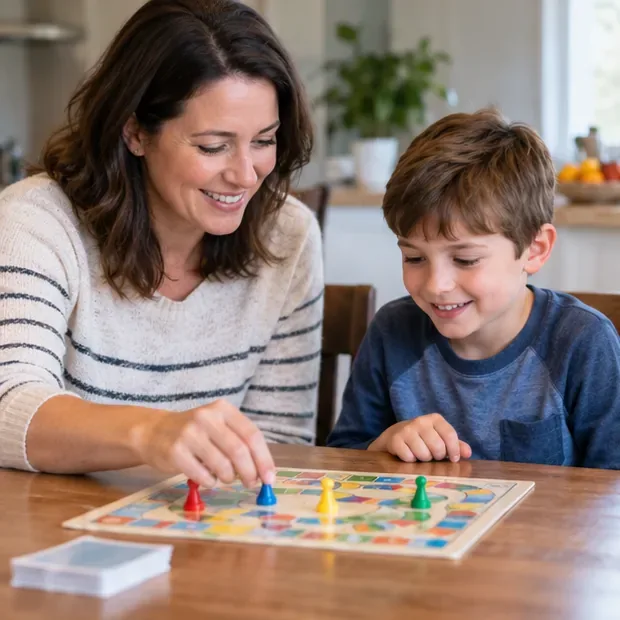
Start with ordinary, low-stakes games where the child can experience both winning and losing without a large audience or meaningful prize.
Teach the recovery routine before the next loss happens
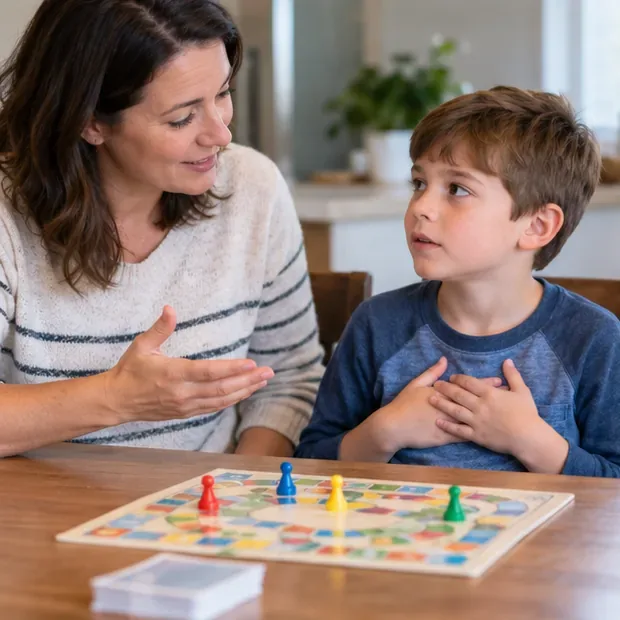
A child who is already furious is not in the best state to absorb a lecture about sportsmanship. Teach a simple routine when everyone is calm, then use the same words after future games.
Name the feeling: “You look disappointed.”
Allow the feeling: “It is okay to be upset that you lost.”
Hold the behavior limit: “It is not okay to throw pieces, insult someone, or change the rules.”
Choose a reset: three slow breaths, a drink of water, a brief pause, or one sentence about what was hard.
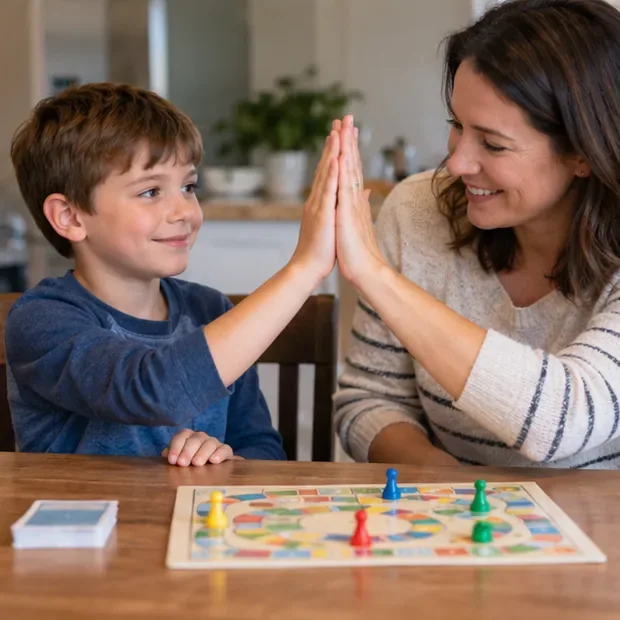
Close the game: put the pieces away, say “good game” if the child is ready, or simply leave the table calmly.
This routine gives the child something concrete to do with the emotion. It also avoids a common mistake: treating anger itself as misbehavior. The CDC specifically distinguishes validating feelings from setting limits on unsafe or unacceptable behavior in its emotion-coaching guidance for parents.
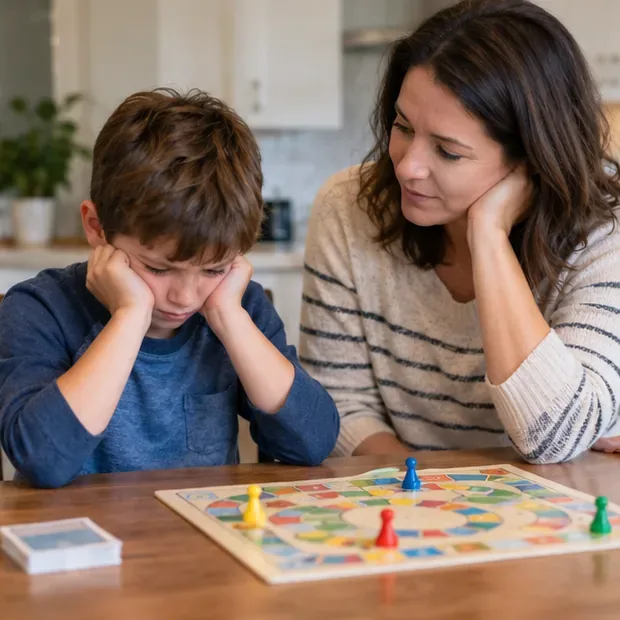
When disappointment shows up, keep your own tone neutral. The goal is not to erase the feeling but to prevent it from turning into hurtful or destructive behavior.
Do not use shame as the teaching tool
Comments such as “Stop being a sore loser,” “You are too old for this,” or laughing at tears may stop the moment quickly, but they attach social humiliation to an already difficult emotion. That can make a child more defensive, more secretive, or more determined to avoid losing.
Instead, describe what you see without defining the child by it. Compare “You are a bad loser” with “You are really angry about losing, and the pieces still need to stay on the table.” The second sentence is specific, temporary, and actionable.
The American Academy of Pediatrics advises adults to focus young athletes on effort, sportsmanship, and skill development rather than criticizing them for losing. Its sports guidance for families also notes that pressure to win can create emotional stress.
Let your child see you lose well
Children notice what adults do after a bad draw, a missed shot, or a surprising defeat. Model the exact behavior you want them to copy. You might say, “I wanted to win, so I am disappointed. Nice move. I am going to take one breath and help clean up.”
Avoid the opposite lesson: dramatically pretending not to care. Healthy sportsmanship does not require emotional flatness. A better model is disappointment plus control.
Use specific praise after recovery
Praise the skill you want repeated: “You were upset, but you kept your hands safe,” “You said good game even though you were disappointed,” or “You asked for a break instead of yelling.” This is more useful than “Good job,” because the child knows exactly what behavior counted as progress.
After the child is calmer, keep the debrief brief: name the feeling, restate the behavior limit, and notice one thing the child handled better.
Make the challenge fit the child
If every game ends in a meltdown, the practice level may be too hard right now. That does not mean removing all competition. It means adjusting the dose.
For preschoolers: use short games, simple rules, and cooperative play between competitive games. Strong feelings and limited language are common at this age, so expectations should match development.
For early elementary children: choose games that finish quickly enough to allow a second try. Practice a fixed end-of-game phrase such as “I did not win this one. Want to play again later?”
For older children: involve them in identifying triggers. Ask whether they get most upset by chance, mistakes, teasing, close scores, or feeling watched.
For very competitive children: alternate winner-take-all games with cooperative games where everyone works toward a shared goal.
Harvard’s executive-function activities guide notes that children benefit from games that are challenging without being too difficult and from gradually taking more responsibility for remembering and enforcing rules.
The American Academy of Pediatrics also suggests back-and-forth, noncompetitive play for children who become overwhelmed by competition. Its play guidance describes activities such as tossing a ball back and forth or doing shared creative play as ways to support co-regulation.
Do not secretly let the child win every time
Occasionally simplifying a game or giving a younger child a fair handicap can make play developmentally appropriate. Deliberately losing every time is different. It prevents practice with disappointment and may make later losses with peers feel even more shocking.
A better progression is to keep the game fair while controlling intensity: pick a shorter game, remove an advanced rule, play best-of-three instead of one high-stakes round, or stop before the child is tired or hungry.
What to say in the difficult moment
Short language usually works better than a long explanation. Try:
“You really wanted that win.”
“It is okay to be mad. It is not okay to call your brother stupid.”
“Do you want ten quiet breaths here or a two-minute break in the other room?”
“We can talk about the game after your body is calmer.”
“You do not have to feel happy for the winner. You do need to be respectful.”
Avoid forcing an immediate apology while the child is still flooded with emotion. First restore control; then repair. The repair can be simple: return a thrown piece, replace something damaged, apologize for a hurtful word, or rejoin the group calmly.
What progress should look like
Success does not mean your child never gets angry after losing. A more realistic sign is that the recovery becomes shorter, safer, and more independent over time.
Look for changes such as fewer insults, no throwing or hitting, accepting rules without prolonged arguing, asking for a break, returning to the group sooner, or being able to talk about one mistake without blaming everyone else.
Track the pattern across several games rather than judging one bad afternoon. Hunger, fatigue, unfamiliar rules, sibling rivalry, or a very close loss can temporarily make regulation harder.
The end goal is not forced cheerfulness. It is a safe, respectful recovery that lets the relationship and the game continue.
When to change your approach
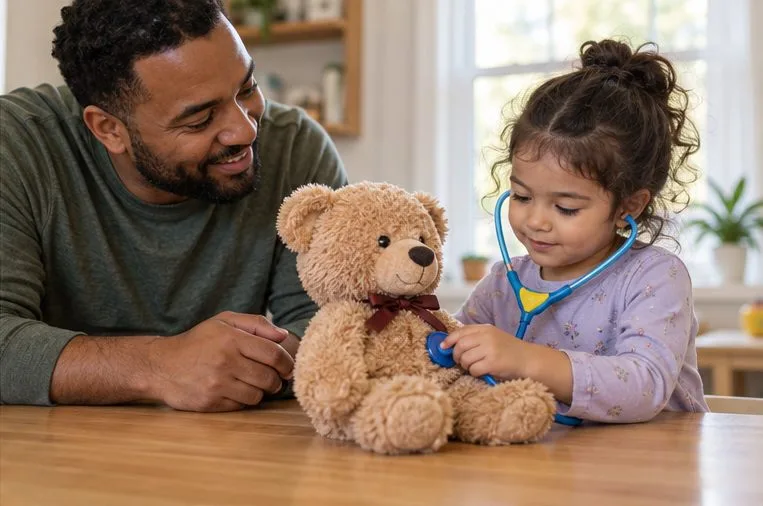
If the child repeatedly becomes overwhelmed, reduce the challenge for a while and practice the recovery routine outside competitive moments. You can role-play losing with stuffed animals, watch yourself lose a simple game, or use a cooperative activity before trying competition again.
If anger is persistent, unusually intense for the child’s age, causes injuries, leads to attacks on adults or peers, results in being excluded from school or play, or makes you fear for someone’s safety, it is reasonable to seek professional guidance rather than treating this only as a sportsmanship problem. The CDC notes that occasional anger or defiance can occur in children, while behavior that is severe, persists over time, or seriously affects daily functioning deserves closer attention in its overview of behavior and conduct problems. The AAP also advises contacting a pediatrician when aggressive behavior is unusually persistent or creates safety concerns in its guidance on aggressive behavior in young children.
A simple family rule that works across games
Keep one rule consistent: feelings are allowed; unsafe or disrespectful actions are not; everyone gets help returning to calm. Then practice it often enough that losing becomes familiar rather than threatening.
A child who can say, “I hate losing, but I can handle it,” has learned something more valuable than how to look cheerful after a game. They have practiced disappointment without turning it into shame, aggression, or a verdict on their worth.