How to Teach Chores Without Redoing Every Task for Your Child

Teach kids to do chores with fewer reminders: set a clear finish line, model one task, step back, and correct only what is unsafe or unfinished.
You ask your child to wipe the table, turn around, and find yourself wiping it again because crumbs remain in one corner. That quick fix may get the room ready on time, but if it happens after every chore, your child gets little practice finishing independently—and you keep the extra work. The useful middle ground is to teach a clear, safe definition of “done,” allow a real attempt, and correct only what matters.
Children may leave a task half-done because the direction was too broad, the sequence is new, or the expected standard is not yet realistic for their age and experience. The American Academy of Pediatrics advises parents not to expect perfection: chores are a learning process, and skills develop over time. Its guidance recommends clearly spelling out the task, introducing one new responsibility at a time, using routines, and praising effort. Start small, then build the child’s ownership instead of silently doing the final pass yourself.
Begin with a task your child can reasonably practice using their current abilities. A young child might put toys in a basket, place dirty clothes in a hamper, or carry napkins to the table. An older child may be ready for more steps, such as sorting laundry or unloading selected dishwasher items. Age guides are starting points, not guarantees; consider coordination, attention, confidence, and what the child has already practiced.
Make “done” visible and specific. “Clean your room” can mean almost anything. Try “Put the books on this shelf and the blocks in this basket.” For wiping a table, agree that the goal is to move visible crumbs into the trash and wipe the eating surface once. You do not need to specify every hand movement; identify the parts that make the task useful and safe.
When time is tight, choose a simpler chore instead of asking for a detailed task and then redoing it. Safety and sanitation can require an adult to finish a job; a crooked stack or an imperfect fold usually does not.
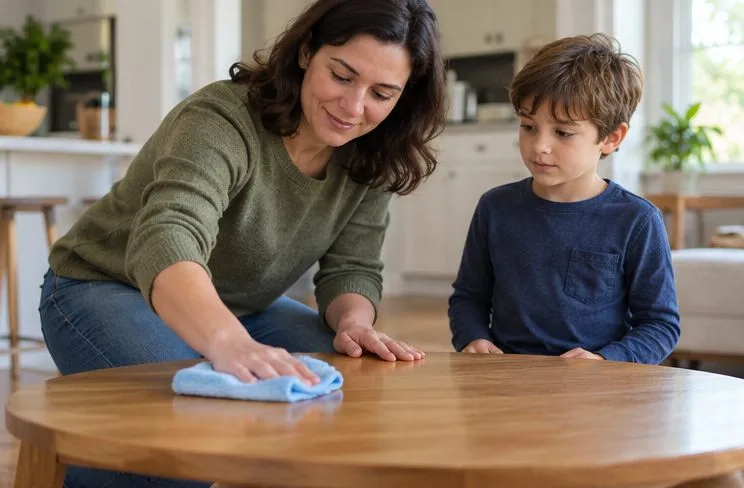
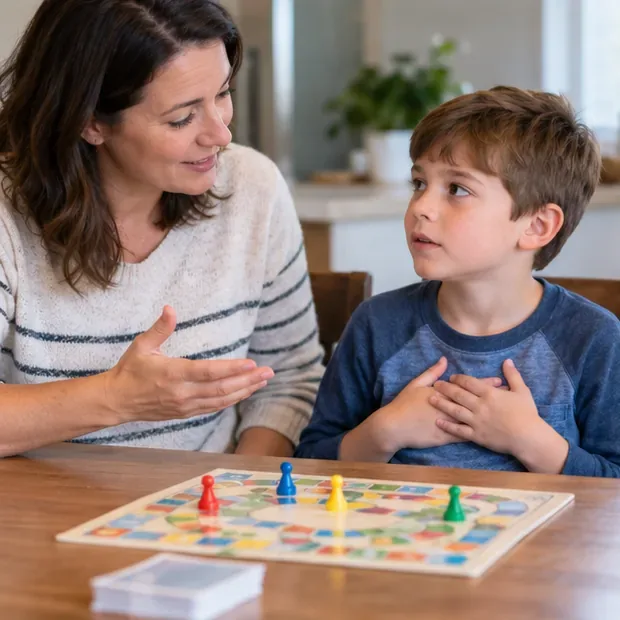
Show the task at a normal, unhurried pace. Use a short explanation that describes the action: “Wipe the crumbs toward the edge, then put them in the trash.” If it has several parts, demonstrate each one in order. Then invite the child to do the same job while you watch. For younger children, the Centers for Disease Control and Prevention recommends giving directions that fit the child’s age, making them specific, and offering one direction at a time. Its directions resource is written for parents of toddlers and preschoolers, so adapt its examples to your child’s age and needs.
Avoid turning the demonstration into a long lecture or a running stream of corrections. Give the child a moment to process and attempt the step. If they pause, point to the next object or ask, “What comes next?” before taking over. One calm prompt can keep the task moving while still leaving the work with them.
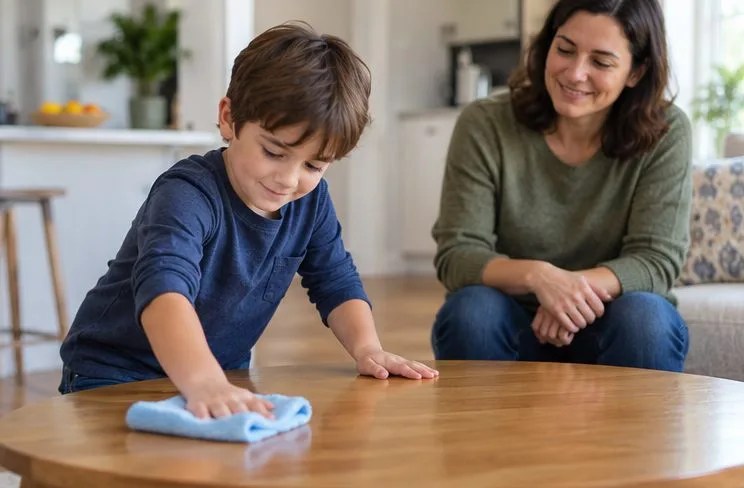
At first, you may need to work alongside your child. On later tries, stand nearby but let them handle the whole task. When they know the sequence, move farther away and check at the agreed finish point. A routine helps: “After snack, wipe your place and put the cloth in the laundry.” A picture list or a short written checklist can also help a child remember a sequence without depending on repeated reminders.
Keep the responsibility steady long enough for practice, but do not add several new chores at once. The AAP recommends introducing one new task at a time for school-age children who are new to responsibilities. If the child repeatedly gets stuck at the same point, make that part smaller: put away one category of toys, then the next; place laundry in the hamper before learning to sort it. The aim is a doable next step, not a perfect performance on the first attempt.
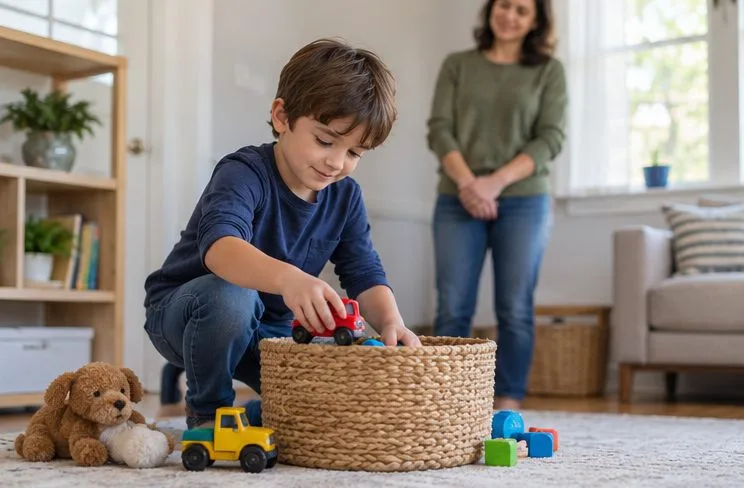
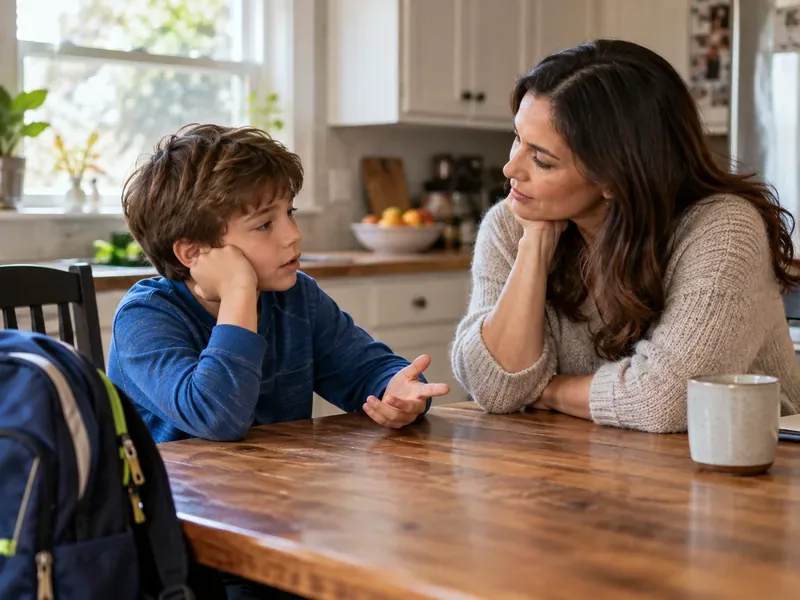
Agree that you will look together when the child says they are done. Start with what is complete: “You got the books onto the shelf.” If one required part is missing, state that part plainly and let the child finish it: “The blocks are still on the rug. Please put them in the basket.” This is coaching, not redoing the whole chore.
Use a quick decision rule when you feel the urge to fix something:
When you do need to finish something for a real reason, explain it without shaming: “I’m going to wipe this spot because food is still stuck here. Next time, let’s check this corner together.” If the same issue keeps happening, adjust the demonstration or the definition of done rather than repeating a frustrated correction.
Specific feedback helps a child know which action to repeat. Try “You put every toy into the basket without a reminder,” or “You checked the table before you told me you were finished.” Praise effort and follow-through, not only a flawless result. The AAP recommends praising effort on chores, and the CDC’s parenting guidance also recommends specific, positive praise. Sticker charts or other rewards may help some families with a new routine, but they are optional; start with a clear expectation and consistent acknowledgement.
Keep your tone calm if the child is slow or annoyed. If they do the chore but complain, decide whether the complaint changes the result. You can acknowledge the feeling and still keep the agreed responsibility: “I hear that you’d rather keep playing. The toys still need to go in the basket before dinner.” If a task repeatedly triggers conflict, check whether it is too long, too vague, scheduled at a difficult time, or simply not a safe or reasonable job for that child yet.
Children’s abilities vary, so use age lists as rough examples rather than deadlines. The AAP’s age-appropriate chores guidance describes tasks that can expand through the school years, and its teen chore guidance discusses broader household contributions. Use either as a menu to discuss what is suitable at home, not a rule that every child should do every listed task.
For any age, match the job to supervision and safety. Keep young children away from knives, hot surfaces, heavy loads, and cleaning products unless an adult is directly managing the task and the product label permits the use. A child who needs help can still contribute: carry unbreakable items, sort clean socks, or wipe a low surface with a damp cloth and no cleaner.
After several tries, look for practical signs of progress: the child can say what the chore involves, starts with fewer reminders, completes more of the agreed steps, or asks for help at the point they are stuck. The standard is not that the child works exactly like an adult. If you are still redoing everything, simplify the chore, demonstrate again, make the finish point more visible, or allow more practice time. If the child can do it safely and the result meets the family’s basic need, let that count as finished.
For toddlers and preschoolers, an adult will often need to work alongside them; independence can grow gradually. For a school-age child who continues to struggle across everyday tasks at home and in other settings, discuss your observations with the child’s pediatrician rather than assuming the cause. A short, predictable chore routine and a reasonable definition of “done” give both parent and child a clearer way to know when the job is complete.
Teach kids to do chores with fewer reminders: set a clear finish line, model one task, step back, and correct only what is unsafe or unfinished.
Learn why toilet-trained children may start having pee or poop accidents again, what patterns to track, how to respond calmly, and when to call the pediatrician.
A child may repeat a reassurance question to process information, seek connection, or manage worry. Learn how to respond and when persistent anxiety needs support.
Learn how to set screen-time boundaries with predictable routines, warnings, calm follow-through, and better transitions—without turning every device handoff into a fight.
Teach children to handle losing without shame or explosive anger by validating feelings, setting behavior limits, modeling recovery, and practicing at the right difficulty.
A calm, practical plan for after-school meltdowns: reduce overload, keep limits clear, track patterns, coordinate with school, and know when to seek help.
Learn how to respond when a child feels unwanted, ask supportive questions, recognize bullying or ongoing distress, and know when to seek extra help.
Learn how to set up a shared bedroom for siblings with different bedtimes, from planning around age-based sleep needs to creating separate sleep spaces and quiet routines.
Compare full-day, gradual, and temporary at-home return plans, plus health checks and school supports that can help a child reenter safely.
Learn when a child can try to solve a friendship problem, when adults should step in, and how to tell whether support is helping or needs to change.