How to Teach Chores Without Redoing Every Task for Your Child

Teach kids to do chores with fewer reminders: set a clear finish line, model one task, step back, and correct only what is unsafe or unfinished.
After a long absence, a child may need more than a date to come back. The right plan depends on why they were away, what they can manage now, and what is waiting for them at school. A return can be successful without being effortless: the useful signs are that the child can attend safely, take part in a reasonable portion of the day, and recover between school days.
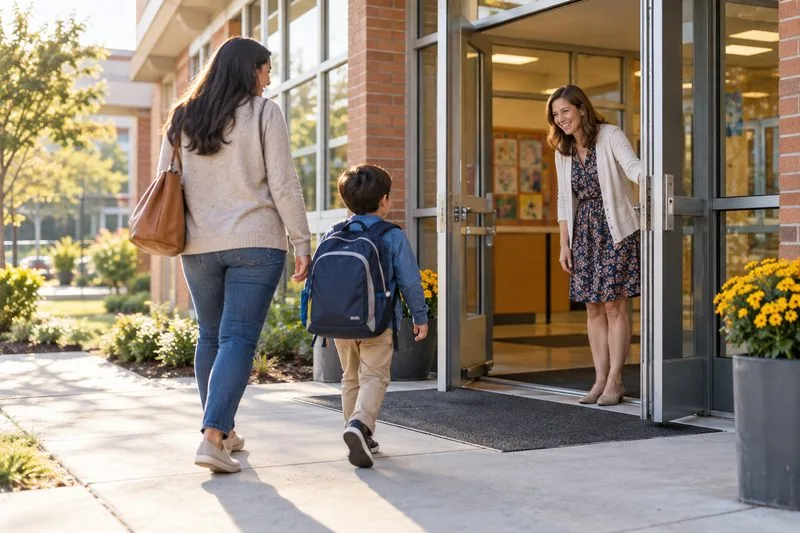
A long absence may follow a contagious illness, surgery, a chronic health flare, anxiety, bullying, a family disruption, or several of these at once. Each calls for a different first question. If the child is still medically recovering, ask the treating clinician what activity, medication, rest, or emergency plan school staff need to know. If fear, peer conflict, transportation, caregiving, or a difficult school environment contributed, those barriers need attention too. Attendance is a shared problem to solve, not proof that a child is lazy or that a parent has failed.
The U.S. Department of Education notes that chronic absence can reflect connected factors such as student disengagement, limited access to family and student supports, and health challenges. A return plan should therefore look for the obstacle behind the missed days, rather than focusing only on the attendance count. The Department's attendance and engagement guidance describes this broader approach.
| Approach | Often fits when | Practical trade-off |
|---|---|---|
| Return to the usual day | The child is medically cleared or meets current illness guidance, has enough stamina, and feels safe at school. | Restores routine, peer contact, and instruction sooner, but a full day may be tiring after a long recovery. |
| Short, stepped return | A clinician recommends limits, energy is still reduced, or severe anxiety makes an immediate full day difficult. | Can make the first step manageable, but reduces class time and needs a clear review date and path toward a normal schedule. |
| Remote work or home instruction for a defined period | A medical restriction or local policy makes in-person attendance temporarily inappropriate. | May preserve some learning while the child recovers, but cannot fully replace classroom routines, services, or in-person connection. |
For many children who are medically ready and do not face a safety barrier, a predictable full return with support is simpler than an open-ended half-day arrangement. A gradual plan is more appropriate when it is tied to a concrete need, such as fatigue after hospitalization or clinician-directed limits. If used, agree on which days or classes are included, who decides whether to advance, and when the plan will be reviewed. Avoid letting a temporary schedule continue by default.
For school-related anxiety, the American Academy of Pediatrics describes a step-wise return as one possible strategy for severe anxiety and recommends involving school staff. Its advice is not a substitute for assessing physical symptoms or safety concerns. Read the AAP's guidance on school avoidance. If a child reports bullying, threats, or feeling unsafe, first ask the school to address protection and supervision; do not treat the problem as something attendance alone will fix.
For an infectious illness, return timing is not simply “when the child looks better.” CDC guidance for schools says children should stay home when symptoms make participation unreasonable or raise a risk of spreading illness. For the general symptoms covered on its school page, CDC says schools can allow return when a child has been fever-free for at least 24 hours without fever-reducing medicine and respiratory symptoms have been improving overall for at least 24 hours. Additional precautions may still be appropriate because some spread can continue. Rules can differ by illness, state, district, and school, so check current local policy and disease-specific advice. See CDC's guidance on when students or staff are sick.
After surgery, a serious illness, or a chronic condition flare, ask the clinician whether the child can manage the school day and whether the school needs medication instructions, activity limits, symptom monitoring, or an emergency plan. Share the information staff need to keep the child safe; ask who will receive it and who is the day-to-day contact. School policies and available services vary, so confirm arrangements directly with the school nurse or administrator.
At the end of each day, ask a few neutral questions: Was the child able to get through the planned portion of school? Were symptoms or distress manageable? Did they connect with a trusted adult? How much recovery did they need afterward? A simple daily note can help the family and school identify patterns without turning every morning into a debate.
Signs a plan may be working include more predictable arrivals, increased time in class, manageable fatigue, a safe way to ask for help, and gradual progress on priority schoolwork. A child does not need to feel cheerful every minute for the return to count as progress. If symptoms consistently intensify, the child cannot complete even the agreed portion, or distress is not easing, bring the information to the clinician and school team and revise the pace or address a missed barrier.
Do not use an attendance plan to override urgent health concerns. Seek prompt medical advice for new or worsening symptoms, fainting, breathing difficulty, severe pain, medication problems, or a clinician's warning signs. Follow emergency guidance for an immediate threat to the child's safety. If anxiety-related school avoidance persists or interferes with daily functioning, contact the child's pediatrician and ask whether a child mental-health professional or school-based assessment would help. The AAP recommends professional support when school refusal persists; its published guidance advises seeking help if avoidance lasts more than a week.
The most useful plan is specific enough to act on, flexible enough to respond to recovery, and reviewed with the people who see the child at home and school. A full day, a temporary stepped schedule, or a short period of home instruction can each be reasonable in the right circumstances. Choose based on safety, participation, stamina, and the barrier that caused the absence—and set a date to check whether the choice is still helping.
This article offers general information, not a diagnosis or a substitute for individualized medical or educational advice. Follow the child's clinician and local school or public-health requirements.
Teach kids to do chores with fewer reminders: set a clear finish line, model one task, step back, and correct only what is unsafe or unfinished.
Learn why toilet-trained children may start having pee or poop accidents again, what patterns to track, how to respond calmly, and when to call the pediatrician.
A child may repeat a reassurance question to process information, seek connection, or manage worry. Learn how to respond and when persistent anxiety needs support.
Learn how to set screen-time boundaries with predictable routines, warnings, calm follow-through, and better transitions—without turning every device handoff into a fight.
Teach children to handle losing without shame or explosive anger by validating feelings, setting behavior limits, modeling recovery, and practicing at the right difficulty.
A calm, practical plan for after-school meltdowns: reduce overload, keep limits clear, track patterns, coordinate with school, and know when to seek help.
Learn how to respond when a child feels unwanted, ask supportive questions, recognize bullying or ongoing distress, and know when to seek extra help.
Learn how to set up a shared bedroom for siblings with different bedtimes, from planning around age-based sleep needs to creating separate sleep spaces and quiet routines.
Compare full-day, gradual, and temporary at-home return plans, plus health checks and school supports that can help a child reenter safely.
Learn when a child can try to solve a friendship problem, when adults should step in, and how to tell whether support is helping or needs to change.