How to Teach Chores Without Redoing Every Task for Your Child

Teach kids to do chores with fewer reminders: set a clear finish line, model one task, step back, and correct only what is unsafe or unfinished.
If homework takes much longer than expected, first find out where the time is going, then compare the pattern with the teacher’s expectations. One long evening can happen; repeated long evenings are useful information. Parents can help clarify the task, set up a workable routine, note where the child gets stuck, and ask the teacher what to adjust. Avoid labeling the child lazy or doing the assignment for them.
Imagine a fictional fifth grader, Sam, who usually completes a short reading response without much help but now spends an hour on similar assignments. The longer time could reflect unclear directions, tiredness, distractions, difficulty with a particular skill, or simply a larger task. The time alone cannot identify the cause. A brief record of what happens will help Sam’s parent and teacher decide whether to change the routine, explain the assignment differently, or look for another kind of support.
Homework is intended to give students practice, help them prepare for lessons, or let them explore a topic. Its purpose and expected time differ by grade, subject, school, and task. The often-mentioned “10 minutes per grade” guideline is used by some districts, but it is a rule of thumb, not a universal standard or a test of whether a child is working hard enough. The National Education Association’s discussion of homework time describes this guideline as adjustable for different students and subjects. Ask your child’s teacher about the school’s actual expectations.
Evidence also does not support solving every homework problem by simply assigning more time. The Education Endowment Foundation’s homework review says effects vary and highlights task quality, a clear purpose, addressing barriers, independent learning skills, and useful feedback. Its current toolkit page identifies the review as last updated in August 2021 and notes that the evidence has limitations. The practical point for families is to find out whether the work is helping the child practice a taught skill or whether something is blocking that practice.

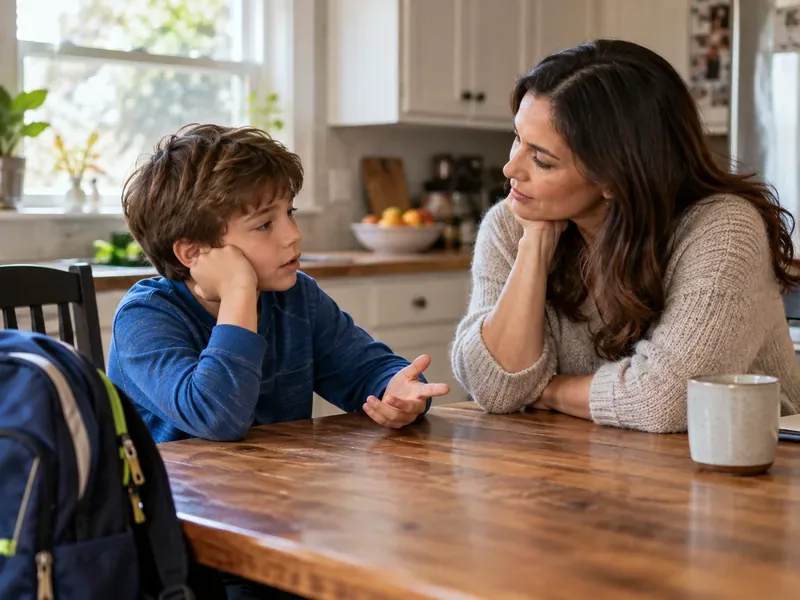
Ask the child to explain the assignment in their own words: “What do you have to turn in?” “Which part feels confusing?” Check the directions, due date, and whether the teacher expects every question or only selected ones. If the child cannot tell what to do, help them mark the unclear instruction rather than guessing or completing the work. For an online assignment, confirm the student is in the correct class or task; avoid assuming that a screen full of work means all of it is required.

Choose a reasonably quiet place with the supplies the child needs. Remove one obvious distraction, such as a television, and let the child begin with a small, clearly defined part of the assignment. A checklist, timer, or parent check-in can help some children organize; it is not a guarantee that every child will focus better. Give the child room to attempt the work independently, stepping in to restate directions or model a similar example instead of supplying the answer. The American Academy of Pediatrics’ family homework guidance recommends a consistent, low-distraction work area and notes that checklists, timers, and supervision may help with organization.
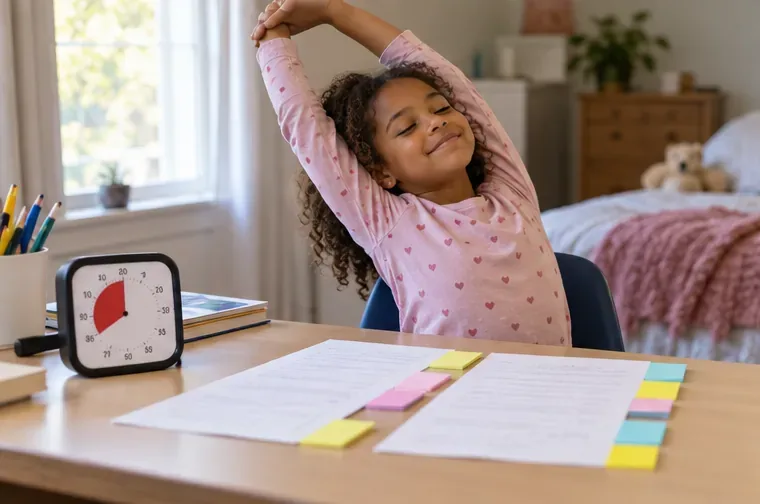
For several assignments, note when the child starts, when they finish, how much time is active work, and where they pause or ask for help. Record the type of task and whether the child understood the directions. A short stretch or water break can be reasonable when the child is tired; the AAP suggests brief breaks to ease eye, neck, and mental fatigue. If a timer increases stress or makes the child rush, put it away and record the time afterward instead.
Look for patterns without turning the evening into a test. Does reading take longer than math? Does copying from a screen slow the child down? Does the child understand a problem when it is read aloud but struggle to read the directions? Does the work get easier after a snack, rest, or fewer distractions? These observations describe what happens; they do not diagnose a learning, attention, or health condition.
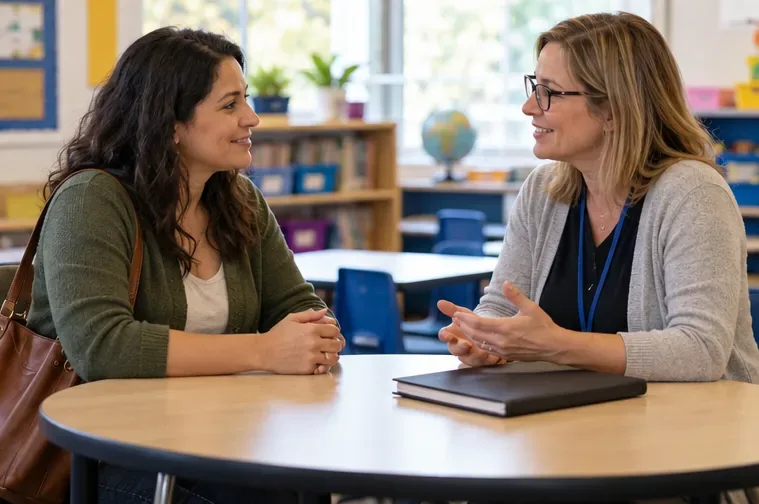
If homework regularly takes far longer than the school expects, or leaves the child distressed or unable to finish other routines, share the notes with the teacher. Ask specific questions: How long should this assignment usually take? Is the child using the directions correctly? Which questions are essential practice? What should the child do after trying and getting stuck? Could the task be adjusted, explained again, or supported at school?
For Sam, the parent might report that the last three reading responses took 50 to 65 minutes, that most time went to rereading the directions, and that Sam could explain the answer aloud but struggled to write it. That is more useful than saying only, “Homework takes forever.” It gives the teacher a starting point to check comprehension, workload, and the next skill to practice.
Keep the tone calm and make a practical plan with the child. Identify what is due first, complete a reasonable portion independently, and mark the question or step that needs teacher guidance. If the child is exhausted, upset, or making less progress despite sustained effort, pause and send the teacher a concise note explaining what was completed and where the child got stuck. Follow the school’s policy about unfinished work; if no clear policy exists, ask rather than repeatedly keeping the child up late or quietly skipping the assignment.
Parents can explain a direction, read a question aloud when appropriate, or work through a similar example. They should avoid replacing the child’s work with polished answers. The teacher needs to see what the student can do independently to know whether the lesson or assignment needs adjustment.
Talk with the teacher if the problem recurs across weeks, affects several subjects, leads to frequent missing work, or causes strong stress, tears, or conflict. Ask what the teacher sees in class and whether the child needs extra instruction, a different way to receive directions, or a school-based check-in. If school struggles persist, the American Academy of Pediatrics’ guidance on school performance recommends discussing concerns with the child’s pediatrician; many different academic, emotional, health, sensory, and environmental factors can affect progress. That does not mean a long assignment proves that a child has ADHD or a learning disability. It means the pattern is worth understanding.
Bring examples, not conclusions: the assignment, time spent, the child’s own description, what help was offered, and what happened next. Depending on what the family and school learn, possible next steps might include clearer instructions, smaller task sections, feedback on a specific skill, a meeting with school support staff, or a formal evaluation through the school’s process. The right response depends on the child, grade, subject, and school expectations.
After agreeing on a change, observe the next few assignments. Is the child clearer about what to do? Is the time closer to the teacher’s estimate? Can the child complete more work independently, and is frustration easing? If not, share the new information and revisit the plan. The goal is not to make every assignment fast. It is to make homework a reasonable chance to practice while showing the adults where the child needs clearer instructions, a different routine, or more support.
Teach kids to do chores with fewer reminders: set a clear finish line, model one task, step back, and correct only what is unsafe or unfinished.
Learn why toilet-trained children may start having pee or poop accidents again, what patterns to track, how to respond calmly, and when to call the pediatrician.
A child may repeat a reassurance question to process information, seek connection, or manage worry. Learn how to respond and when persistent anxiety needs support.
Learn how to set screen-time boundaries with predictable routines, warnings, calm follow-through, and better transitions—without turning every device handoff into a fight.
Teach children to handle losing without shame or explosive anger by validating feelings, setting behavior limits, modeling recovery, and practicing at the right difficulty.
A calm, practical plan for after-school meltdowns: reduce overload, keep limits clear, track patterns, coordinate with school, and know when to seek help.
Learn how to respond when a child feels unwanted, ask supportive questions, recognize bullying or ongoing distress, and know when to seek extra help.
Learn how to set up a shared bedroom for siblings with different bedtimes, from planning around age-based sleep needs to creating separate sleep spaces and quiet routines.
Compare full-day, gradual, and temporary at-home return plans, plus health checks and school supports that can help a child reenter safely.
Learn when a child can try to solve a friendship problem, when adults should step in, and how to tell whether support is helping or needs to change.