How to Teach Chores Without Redoing Every Task for Your Child
Teach kids to do chores with fewer reminders: set a clear finish line, model one task, step back, and correct only what is unsafe or unfinished.
When your child is overweight, you should adjust the diet, increase active activities and especially do not pressure or disparage the baby's appearance.
A plump baby looks lovely, but if the habit of overfeeding your baby makes him overweight, change it. Being overweight will lead to many health consequences as well as make your baby have psychological problems with his appearance.
Determining being overweight in young children is not easy. Each child will have a different rate of development at different times. In addition, a baby's fat intake will vary with age and vary between boys and girls.
To determine if your baby is overweight or not, you can calculate the child's body mass index (BMI). BMI is calculated by the total weight divided by the square of the height, the results will be compared with the standard BMI table to determine whether the child is fat, thin or normal. A child's BMI depends on age and sex and is often called the BMI-for-age (BMI-for-age).
Doctors often use this indicator to track a child's growth. BMI statistics for children and adolescents:
Healthy weight: between 5 and 84%
Overweight: 85% to 94%
Obesity: 95% or more.
BMI table standard for girls from 2 to 20 years old

Standard BMI table for boys from 2 to 20 years old 
Parents are the people who play an important role in helping children build healthy eating habits, physical activities and sleep habits. For example, teach your child to balance food intake with their daily physical activities. Take your baby to the supermarket and let him choose healthy foods.
Here are some ways to help your child develop healthy habits:
Be a role model for children. Eat healthy foods and get plenty of physical activity. Children are very fast learners and they often copy what they see.
Talk to your children about what it means to have good health and how to get there.
Discuss sports activities and foods that are good for your body.
Children should have at least one hour of exercise and should not sit for more than 2 hours in front of computer screens, televisions and mobile devices every day.
Discuss with your child making healthy food choices and healthy activities at school and elsewhere outside of your home.
The whole family must work together to build healthy eating habits and exercise regularly. This will keep all members healthy and children will not feel discriminated against because they are overweight.
Make sure your baby gets enough sleep. Studies on the relationship between sleep and weight have shown that there is some link between being overweight and getting insufficient sleep in young children.

Eating habits have a lot to do with improving body shape and health when children are overweight. In addition to giving your baby foods high in calories, fat, sugar and salt, you can also improve your child's meals by adding foods such as:
Fruits, vegetables and whole grains
Lean meat, poultry, seafood, beans, soy products, eggs
Milk, fat-free or low-fat dairy products or dairy alternatives, such as calcium and vitamin D fortified soy milk, instead of whole milk
Fat-free or low-fat fruit and vegetable smoothies, instead of yogurt or cream
Water, fat-free or low-fat milk instead of soft drinks and other sugary drinks.
You can also help your child by trying to:
Do not overeat during meals or snacks. Start with a small amount of food and ask if your baby is still hungry. If your child eats canned foods, read the nutrition information on the package to see if the food contains too many calories, fat and sugar.
Offer your baby healthy foods. Do not let high calorie foods and drinks appear in child's sight.
Eat less fast food. If you take your child to a fast food store, encourage them to choose healthy foods like sliced fruit instead of french fries.
Sit down and eat with your family as often as possible and don't eat too quickly.
Do not feed children while they are sitting in front of television screens, computers or other electronic devices.
Try to create fun sports activities. Children need about 60 minutes of exercise a day. You can have your child do 10-minute short exercises at a time or even 5 minutes at a time. If your baby is not used to being active, encourage him to work slowly and gradually increase the time until he / she has practiced for 60 minutes a day. Here are some ways to encourage your child to exercise every day to try:
Have your child choose a favorite activity to do regularly, such as joining a sports team or dance class, or going for a whole family jog together
Let children participate in simple and interesting activities that can be practiced at home in their own way such as jumping rope, riding a bicycle ...
Limit the time you spend using computers, televisions, cell phones and other devices. Children should not use more than 2 hours a day.
Plan for your child and other family members to participate in outdoor activities such as taking a walk or walking to a favorite place.
You can help children in many ways and support them in regaining a healthy weight, helping them set goals and track their progress. Reward your baby for certain achievements.
Let your children know that they are still loved and are extremely important to their parents. Children's thoughts about themselves often depend on how they think their parents feel. Listen to your child's concerns about their weight. Children always need support, understanding and encouragement from adults.
Teach kids to do chores with fewer reminders: set a clear finish line, model one task, step back, and correct only what is unsafe or unfinished.
Learn why toilet-trained children may start having pee or poop accidents again, what patterns to track, how to respond calmly, and when to call the pediatrician.
A child may repeat a reassurance question to process information, seek connection, or manage worry. Learn how to respond and when persistent anxiety needs support.
Learn how to set screen-time boundaries with predictable routines, warnings, calm follow-through, and better transitions—without turning every device handoff into a fight.
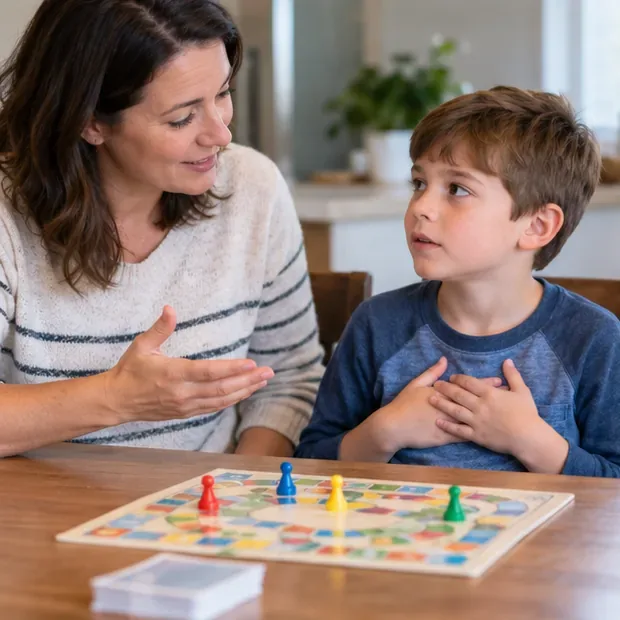
Teach children to handle losing without shame or explosive anger by validating feelings, setting behavior limits, modeling recovery, and practicing at the right difficulty.
A calm, practical plan for after-school meltdowns: reduce overload, keep limits clear, track patterns, coordinate with school, and know when to seek help.
Learn how to respond when a child feels unwanted, ask supportive questions, recognize bullying or ongoing distress, and know when to seek extra help.
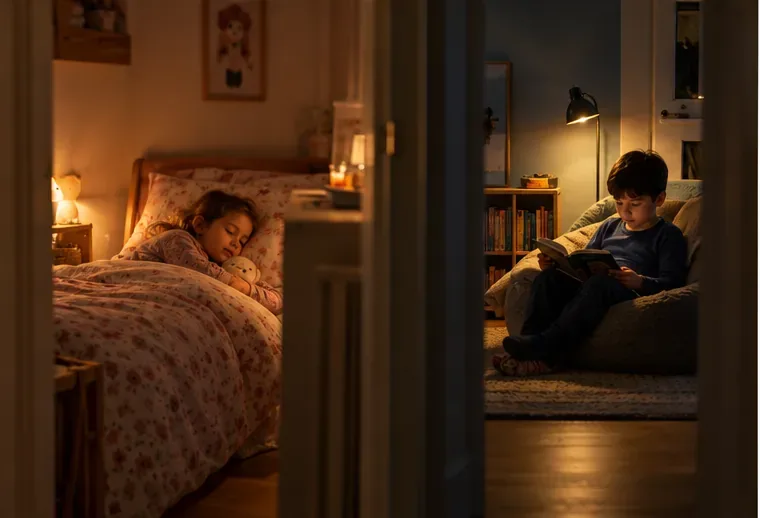
Learn how to set up a shared bedroom for siblings with different bedtimes, from planning around age-based sleep needs to creating separate sleep spaces and quiet routines.
Compare full-day, gradual, and temporary at-home return plans, plus health checks and school supports that can help a child reenter safely.
Learn when a child can try to solve a friendship problem, when adults should step in, and how to tell whether support is helping or needs to change.