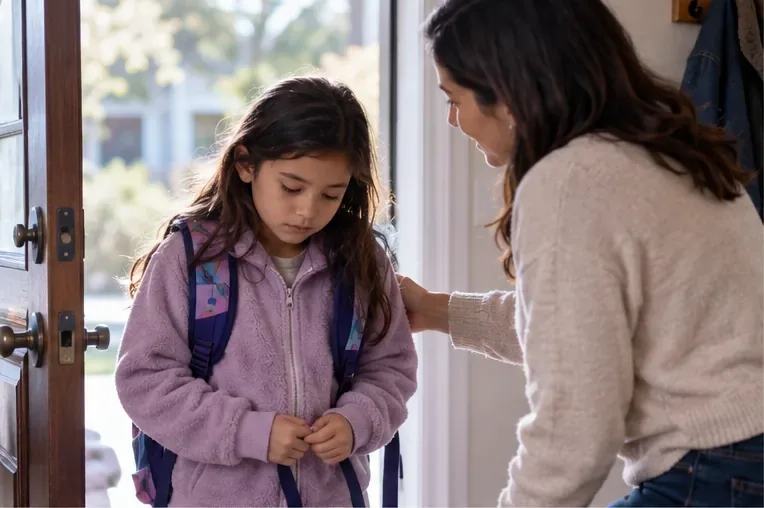
How to Teach Chores Without Redoing Every Task for Your Child

Teach kids to do chores with fewer reminders: set a clear finish line, model one task, step back, and correct only what is unsafe or unfinished.

Tonsillitis in children is an extremely common disease. So what do parents need to do to treat and take care of their children properly?
Tonsillitis in children is swelling and irritation of the tonsils, a collection of tissues located on either side of the back wall of the throat. The tonsils support the immune system to protect the body from infections that can get through the mouth. When the tonsils become infected, they become large and red and have a yellow or white coating.
Tonsil infections can be spread from person to person by touching the mouth, throat or saliva of an infected person. A person with tonsillitis may experience a sore throat , fever, swelling in the neck and difficulty swallowing.
The main symptoms of tonsillitis in children are inflammation and swelling of the tonsils, sometimes very severe, which can cause airway congestion. Other symptoms include:
Sore throat
Amidan red
There is a white or yellow coating on the tonsils
Sores or ulcers on the throat
Loss of appetite
Ear hurt
Difficulty swallowing or breathing through your mouth
Swelling of glands in the neck or chin area
Fever, chills
Strange breath
Stomachache.
Treatment for tonsillitis depends on whether the disease is caused by a virus or by bacteria such as group A Streptococcus bacteria. Doctors often cannot tell the difference just by looking at the tonsils, but they can detect streptococcus with a quick test or a smear from the throat.
If the tonsillitis is caused by a virus, the body fights the infection on its own. If it is caused by the strep bacteria, your doctor will likely prescribe antibiotics . If this is the case, parents should ensure that the baby completes the full treatment process even if symptoms have subsided.
For children with frequent tonsillitis (more than 6 times in a 12-month period) or repeated many times over the years, the doctor may recommend surgery to remove the tonsils.
Children with tonsillitis need plenty of nutrients and rest. If your baby swallows very painful, eating is difficult, try to offer fluids and soft foods like soups, milk, smoothies.
Make sure your child drinks plenty of fluids and gets plenty of rest. You can take pain relievers, like acetaminophen or ibuprofen, if your baby has a lot of pain in the throat. However, parents should not give their baby aspirin or other aspirin-containing products because they can put your child at risk for Reye's syndrome, a condition that can cause serious complications.
Besides, parents should let babies use cups and utensils to eat separately and wash them in hot water and soap. All family members should wash their hands often. Try to keep children away from people who already have tonsillitis or a sore throat and make sure everyone in your family wash their hands well.
Teach kids to do chores with fewer reminders: set a clear finish line, model one task, step back, and correct only what is unsafe or unfinished.
Learn why toilet-trained children may start having pee or poop accidents again, what patterns to track, how to respond calmly, and when to call the pediatrician.
A child may repeat a reassurance question to process information, seek connection, or manage worry. Learn how to respond and when persistent anxiety needs support.
Learn how to set screen-time boundaries with predictable routines, warnings, calm follow-through, and better transitions—without turning every device handoff into a fight.
Teach children to handle losing without shame or explosive anger by validating feelings, setting behavior limits, modeling recovery, and practicing at the right difficulty.
A calm, practical plan for after-school meltdowns: reduce overload, keep limits clear, track patterns, coordinate with school, and know when to seek help.
Learn how to respond when a child feels unwanted, ask supportive questions, recognize bullying or ongoing distress, and know when to seek extra help.
Learn how to set up a shared bedroom for siblings with different bedtimes, from planning around age-based sleep needs to creating separate sleep spaces and quiet routines.
Compare full-day, gradual, and temporary at-home return plans, plus health checks and school supports that can help a child reenter safely.
Learn when a child can try to solve a friendship problem, when adults should step in, and how to tell whether support is helping or needs to change.