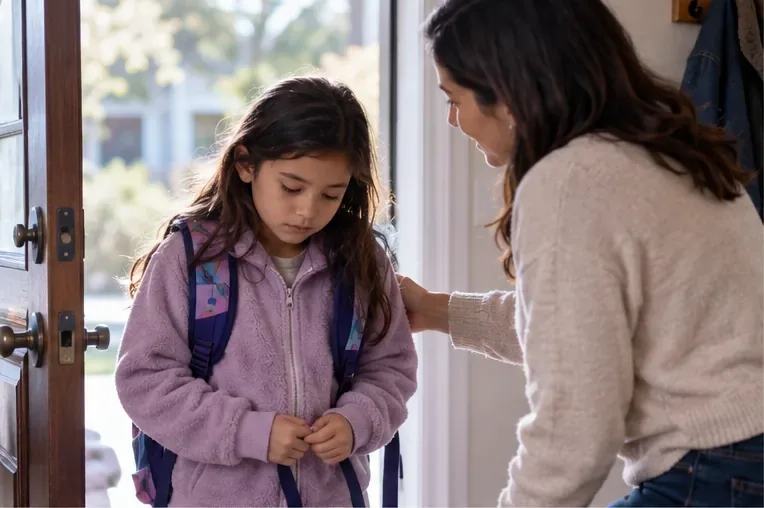
How to Teach Chores Without Redoing Every Task for Your Child

Teach kids to do chores with fewer reminders: set a clear finish line, model one task, step back, and correct only what is unsafe or unfinished.
Gingivitis in children is quite common among oral diseases. Finding the information about this disease will help you learn how to care and treat your child appropriately.
Your baby often bleeds when brushing teeth? Your baby's teeth are loose and their gums discolored? If your answer is “yes” to either of the above questions then your baby is more likely to have gingivitis. What is gingivitis and how is it treated? Please see the following shares of aFamilyToday Health for the answer to this problem.
Gingivitis is a condition in which surrounding tissues help, support, and support infected teeth. This disease is quite common in oral diseases, especially common in children. If not cared for carefully, this condition will cause serious damage to the gums, pus appearing around the tooth neck leading to jaw bone resorption, damaging all of the surrounding organs.
Not only that, this condition can also cause the gums to fall, the alveolar bone is destroyed, causing the teeth to shake, eventually leading to tooth loss. So, if you find that your child has symptoms of gingivitis, you should bring him to the dentist for an immediate check up.
There are many causes of gingivitis in children, but the most common is the accumulation of plaque on the teeth. These plaques contain bacteria that can produce toxins, irritate and damage gums. To avoid this, it is best to teach your child how to clean their teeth and ask them to brush their teeth regularly every day.
Besides plaque, there are many other causes of gingivitis such as:
Teething gingivitis: is a condition of a temporary nature, often seen when a child is about 6-7 years old, when the child has permanent teething.
Traumatic gingivitis: common due to mechanical trauma such as flossing teeth with a toothpick, biting nails, chewing on hard food ...
Herpes gingivitis : appears more in the age of 2 - 5 years old. Normally, the disease will go away on its own in about 2 weeks. However, there are also cases of complications related to the brain.
Depending on the cause and characteristics of each child, there will be different symptoms, but in general, children will have the following symptoms:
The gums are swollen and easily bleed when brushing or flossing
Loose teeth
Bad breath
Beneficial has unusual color
White patches or spots on the gums appear
Falling gums make the root of the teeth come out
Sores inside the cheeks, gums.

When your child has gingivitis, you should not buy medicine on your own because it will not cure the root, but also make the disease last longer. There are a number of options available to your dentist to treat gingivitis:
You need to take your child to the clinic for the tartar to be removed by the dentist. Once cleaned, the dentist will instruct your child on how to brush teeth and floss to remove plaque.
If the child is severe, bleeding gums a lot, in addition to removing plaque, the dentist will give the child more antibiotics to limit the spread of infection.
In addition, your child can also use a mouthwash that contains hydrogen peroxide, xylocaine or salt water to kill all harmful bacteria and promote gum healing.
If the disease turns to periodontitis , your dentist may recommend surgery to remove tartar that forms deep inside the periodontal pocket. The dentist may have to remove the gums to remove tartar.
If the gum tissue is severely damaged and cannot be treated, the dentist can take a healthy gum tissue from another and place it on the damaged tissue. This will help children have a beautiful smile, avoid the sensitivity when eating, and at the same time prevent dangerous complications such as destruction of gum tissue, bone destruction ...
Here are some simple remedies that can help prevent your child's risk of gingivitis:
Brush your teeth thoroughly twice daily (after meals and before bed) for at least three minutes each time.
Have your child floss instead of a toothpick.
Children use toothpaste containing fluoride and substances good for the teeth and gums.
Using a soft bristled toothbrush can brush all the teeth, the innermost teeth without damaging the gums. Change your toothbrush every three to four months.
Develop a healthy diet for your baby. Avoid junk foods, foods high in sugar, because these foods are beneficial for the growth of plaque-causing bacteria.
Take your child for regular oral exams, at least twice a year.
Teach kids to do chores with fewer reminders: set a clear finish line, model one task, step back, and correct only what is unsafe or unfinished.
Learn why toilet-trained children may start having pee or poop accidents again, what patterns to track, how to respond calmly, and when to call the pediatrician.
A child may repeat a reassurance question to process information, seek connection, or manage worry. Learn how to respond and when persistent anxiety needs support.
Learn how to set screen-time boundaries with predictable routines, warnings, calm follow-through, and better transitions—without turning every device handoff into a fight.
Teach children to handle losing without shame or explosive anger by validating feelings, setting behavior limits, modeling recovery, and practicing at the right difficulty.
A calm, practical plan for after-school meltdowns: reduce overload, keep limits clear, track patterns, coordinate with school, and know when to seek help.
Learn how to respond when a child feels unwanted, ask supportive questions, recognize bullying or ongoing distress, and know when to seek extra help.
Learn how to set up a shared bedroom for siblings with different bedtimes, from planning around age-based sleep needs to creating separate sleep spaces and quiet routines.
Compare full-day, gradual, and temporary at-home return plans, plus health checks and school supports that can help a child reenter safely.
Learn when a child can try to solve a friendship problem, when adults should step in, and how to tell whether support is helping or needs to change.