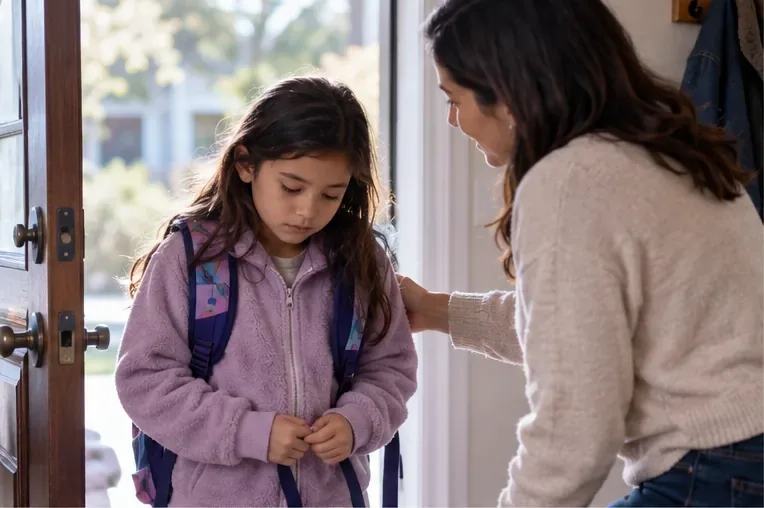
How to Teach Chores Without Redoing Every Task for Your Child

Teach kids to do chores with fewer reminders: set a clear finish line, model one task, step back, and correct only what is unsafe or unfinished.
The transition from bottle-feeding to drinking from a cup is extremely difficult. If you let your baby drink from a regular cup, he will very easily choke. Therefore, many mothers decide to use a drinking cup for their baby to make this process convenient and easy.
Cup-feeding is one of the most important skills that parents need to teach their babies. However, for this process to happen quickly and easily, the baby's drinking cup is an indispensable item. You are thinking of buying your baby a drinking cup but still have many doubts. If so, please see the following shares of aFamilyToday Health for some more experiences when using a baby drinking cup.
A drinking cup is a cup with a swirl lid or lid and has a drinking nozzle to help prevent your baby from choking. Currently, on the market, baby drinking cups are widely sold with many different designs: with or without handles with many different types of drinking taps.
According to many people, a drinking cup is quite a useful tool to help your baby switch from bottle-feeding to regular cup drinking. Because this cup not only helps to reduce the risk of choking, but also helps improve hand-mouth coordination.
There is no specific timing for this, so it's best to let your baby use it whenever you feel your baby is ready for the best. Normally, mothers will let their babies use the cup when they are about six months old, however, there are also some babies that do not like to use this cup even though they are over 1 year old.

During the transition from bottle-feeding to drinking cups, some babies will adapt quite easily, while others take a while to get used to. Here are some tips you can try to help your baby get used to using a drinking cup early:
At the beginning, you should choose cups with flexible spout like a bottle nipple because this will help your baby feel more familiar than those with hard taps.
Show your baby how to raise the cup to his mouth and raise the bottom of the cup to drink.
When you first start training your baby to drink, you should only drink water from a cup. Because if you let your baby drink milk or juice, when he shakes or tosses a cup, the milk or juice will spill out, which will make you spend a lot of time cleaning the floor and many other objects.
Choosing the right drinking cup for your baby is not a simple thing. Try a few until you find the right mug. Some cup models include a valve to help prevent air from getting into your baby's drinks.
Encourage your baby to use a practice cup when you feel ready.
If your baby does not like drinking with this cup, you can try some tips below:
For babies who are used to bottle feeding , pour half of their baby's bottle into a practice cup. At this point, your baby will drink half a bottle using a bottle and the other half using a cup. This method will help your baby get used to drinking from a cup.
Place a pacifier (without a bottle) in your baby's mouth and after your baby starts to suck, replace it with the drinking cup's drinking cup. Some mothers even told their baby to say "daddy" and replace the bottle with a practice cup at that time.
Dip the spout of the cup in your baby's favorite milk or juice and then give it to your baby.
Show your baby that the drinking nozzle is like a nipple (need to be latched on). Try to touch the tip of the nozzle to the lips to stimulate the baby's sucking reflex.
Instead of using a drinking hose, you can replace it with a straw to impress your baby.
Young children often like to imitate adults. Therefore, you try to model to stimulate your baby to imitate you. However, you should prepare yourself another cup to ensure hygiene instead of sharing it with your baby.
Sometimes, milk residue can build up in the drinking tap, making it difficult for your baby to drink. If you suspect this, try removing the hose to check and clean it.
If your baby can't suckle forever, try taking out the flow rate control valve (if your baby's drinking cup has valves and can be removed). Once your baby has learned to hold the cup, you can put the valve back on and the baby will suck harder to drink.

When using a baby drinking cup, you should:
Pay attention to keep your baby's oral hygiene when using a drinking cup. Children over 2 years old, you should start to use toothbrush and toothpaste to protect their teeth.
Rinse the cup (especially the lid and spout) thoroughly after using it. Drinks can easily stick in nooks and crannies leading to the growth of bacteria and fungi. If you can't wash it off, try to rinse it thoroughly and let the cup dry completely before using it.
You should not:
Let your baby sleep while using a drinking cup containing fruit juice or milk because this will make your baby more susceptible to tooth decay .
Leave drinks for too long in the cup. Try to let your baby drink it all within a few hours.
Use a drinking cup for weaning purposes . For some babies, a practice cup is simply an alternative to a bottle and you will face another weaning challenge.
Use a practice cup when your baby is old enough to use regular cups. Most of the time, babies over 2 years old are able to stop using a drinking cup.
Through the above sharing, hopefully you have learned some more information about using baby drinking cups. Choose a suitable cup for your baby to easily switch from bottle-feeding to cup use.
Teach kids to do chores with fewer reminders: set a clear finish line, model one task, step back, and correct only what is unsafe or unfinished.
Learn why toilet-trained children may start having pee or poop accidents again, what patterns to track, how to respond calmly, and when to call the pediatrician.
A child may repeat a reassurance question to process information, seek connection, or manage worry. Learn how to respond and when persistent anxiety needs support.
Learn how to set screen-time boundaries with predictable routines, warnings, calm follow-through, and better transitions—without turning every device handoff into a fight.
Teach children to handle losing without shame or explosive anger by validating feelings, setting behavior limits, modeling recovery, and practicing at the right difficulty.
A calm, practical plan for after-school meltdowns: reduce overload, keep limits clear, track patterns, coordinate with school, and know when to seek help.
Learn how to respond when a child feels unwanted, ask supportive questions, recognize bullying or ongoing distress, and know when to seek extra help.
Learn how to set up a shared bedroom for siblings with different bedtimes, from planning around age-based sleep needs to creating separate sleep spaces and quiet routines.
Compare full-day, gradual, and temporary at-home return plans, plus health checks and school supports that can help a child reenter safely.
Learn when a child can try to solve a friendship problem, when adults should step in, and how to tell whether support is helping or needs to change.