How to Teach Chores Without Redoing Every Task for Your Child

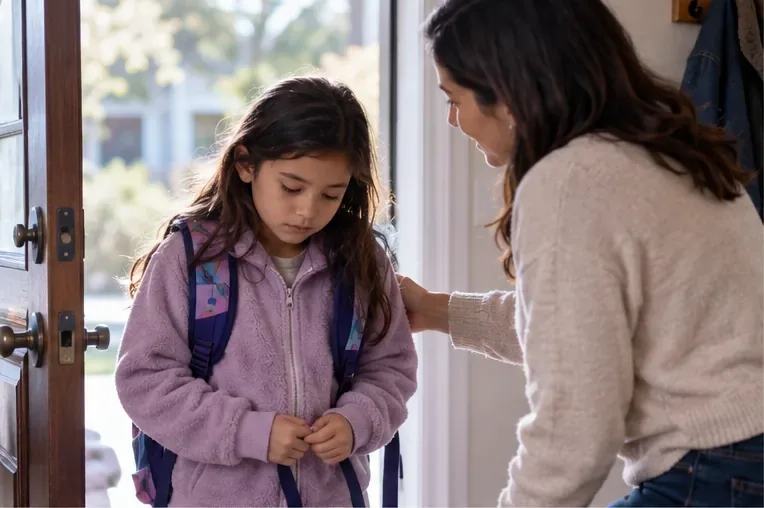
Teach kids to do chores with fewer reminders: set a clear finish line, model one task, step back, and correct only what is unsafe or unfinished.

Iron deficiency in children is the cause of many serious diseases. Do you know the cause as well as preventive measures for your baby yet?
Iron is an essential trace element for children's growth and development . They play a role in helping the body transport oxygen from the lungs to other organs, as well as helping the muscles store and use oxygen. If your baby is not getting enough iron, he is at risk for many other diseases and developmental delay. The following article will help you have a clearer picture of iron deficiency in children.
The following infants and children are at increased risk of iron deficiency:
Babies born prematurely 3 weeks earlier or underweight;
Children drink cow or goat's milk when less than 1 year old;
Iron-fed infants lack iron after 6 months of age;
Children drink non-iron formula;
Children 1 to 5 years old drink more than 710 ml of cow's milk, goat's milk or soy milk in a day;
Children with other health problems such as malnutrition, chronic infections;
Children 1 to 5 years old with lead.
Iron deficiency reduces a child's ability to function. However, most signs or symptoms do not show up until anemia occurs. If your baby is at risk of iron deficiency, you should quickly bring your baby to see a doctor for prompt advice and treatment.
Below are the typical manifestations and symptoms of iron deficiency in children:
The baby's skin is pale, pale;
Tired;
Underdeveloped;
Loss of appetite;
Tachycardia;
Have behavior problems;
Frequent infection;
Often has different preferences, likes to be exposed to substances such as ice, paint colors, starch ...
In addition to giving your baby iron-rich formula, the following should be kept in mind if you choose to breastfeed:
For full term babies. Start adding iron to your baby at 4 months and do this continuously until your baby is able to eat foods like meats and cereals. If you are breast-feeding or drinking iron-containing formula, you should no longer give your baby iron supplements;
For premature babies. You should start adding iron to your baby right after 2 weeks of age and continuously until your baby is 1 year old. Likewise, if you are breastfeeding or drinking iron-containing formula then you should not give your baby other iron supplements;
To prevent iron deficiency in children, you should take the following steps:
Develop a diet full of iron. When starting solids (usually between the 4th and 6th months of age), you should add foods with high iron content such as cereals, mashed meat, mashed beans, ... more, you can get your baby iron from many other sources such as red meat, fish, beans and leafy green vegetables;
Do not give your baby too much milk. In the period between 1 and 5 years old, you absolutely should not give your baby more than 710ml of milk per day;
Increase nutrient absorption. Vitamin C helps to promote iron absorption . Therefore, you should provide iron for your baby by adding foods rich in vitamin C such as citrus fruits, strawberries, bell peppers, tomatoes, cantaloupe and vegetables.
Iron deficiency and iron deficiency anemia are often diagnosed through blood tests. Many health organizations recommend that all newborns be tested for iron deficiency anemia as well as iron deficiency starting between the 9th and 12th months of age. Based on test results, doctor will recommend iron or vitamin supplements for the baby. In addition, the doctor can also perform many other health checks to prevent related diseases.
Parents can completely help prevent iron deficiency. To help your baby grow healthy, you need to provide a full range of iron-rich foods, as well as seek the advice of a doctor if the child shows signs of illness.
Teach kids to do chores with fewer reminders: set a clear finish line, model one task, step back, and correct only what is unsafe or unfinished.
Learn why toilet-trained children may start having pee or poop accidents again, what patterns to track, how to respond calmly, and when to call the pediatrician.
A child may repeat a reassurance question to process information, seek connection, or manage worry. Learn how to respond and when persistent anxiety needs support.
Learn how to set screen-time boundaries with predictable routines, warnings, calm follow-through, and better transitions—without turning every device handoff into a fight.
Teach children to handle losing without shame or explosive anger by validating feelings, setting behavior limits, modeling recovery, and practicing at the right difficulty.
A calm, practical plan for after-school meltdowns: reduce overload, keep limits clear, track patterns, coordinate with school, and know when to seek help.
Learn how to respond when a child feels unwanted, ask supportive questions, recognize bullying or ongoing distress, and know when to seek extra help.
Learn how to set up a shared bedroom for siblings with different bedtimes, from planning around age-based sleep needs to creating separate sleep spaces and quiet routines.
Compare full-day, gradual, and temporary at-home return plans, plus health checks and school supports that can help a child reenter safely.
Learn when a child can try to solve a friendship problem, when adults should step in, and how to tell whether support is helping or needs to change.