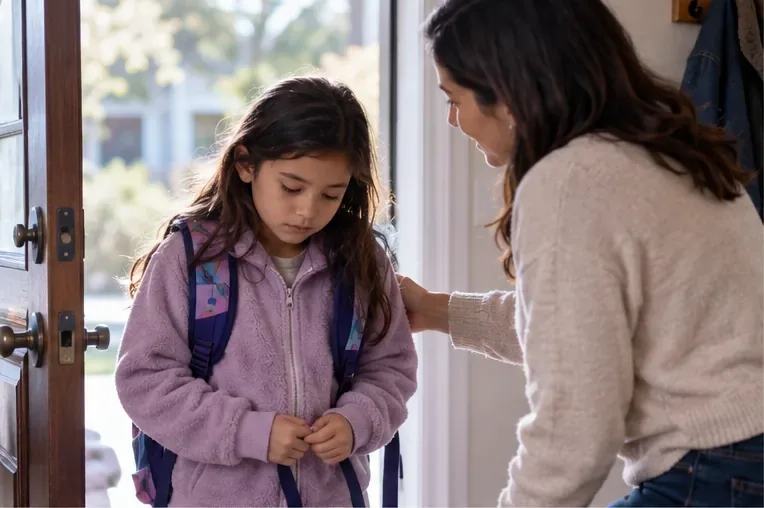
How to Teach Chores Without Redoing Every Task for Your Child

Teach kids to do chores with fewer reminders: set a clear finish line, model one task, step back, and correct only what is unsafe or unfinished.
October half-term can invite a week of ambitious plans that are expensive by lunchtime and exhausting by midafternoon. With a preschooler, a useful outing has a smaller target: one thing to notice, make, or talk about, plus enough time and energy to get home comfortably. The five ideas below can cost little or nothing at the destination. Transport, parking, snacks, special exhibitions, and booked activities can still change the total.
This article is for families planning around the UK autumn school break in 2026; the wording is in American English. Check your own school or nursery calendar first. GOV.UK directs families to local councils for term dates, and individual schools may vary. For example, Surrey's council calendar shows October 19–30, 2026 for its community and voluntary controlled schools, while Essex lists October 26–30. Preschool schedules may differ from school holidays altogether. Treat any date on an event poster as something to verify directly with the venue.
A successful low-cost outing might mean your child heard one story, found three different leaves, or had a calm hour somewhere new. It need not fill a full day. Before committing, check the door-to-door travel time, admission and booking rules, bathrooms, food policy, step-free or stroller access if needed, and a nearby place to take a break. Choose one main activity and one easy exit. If a venue adds a paid activity or the trip requires two costly fares, decide whether a closer substitute better fits the day.
Good result: Your child joins in at their own pace, chooses a book, or simply enjoys looking at pictures with you. Search the council library events calendar for a preschool storytime, rhyme session, or drop-in play hour. Hampshire County Council's children's events page, for example, lists free activities and shows the age group and day for each. A regular term-time session may not run during half-term, so verify the exact date, any booking requirement, and whether an adult must stay.
Plan to arrive with enough time for coats and a bathroom stop, then leave room to browse. If the session is fully booked or the room is too noisy for your child, borrowing or reading together can still make the trip worthwhile. The library is a particularly useful wet-weather choice, but its quieter hours and holiday opening times vary. Its event listing is more reliable than last year's social post.
Good result: The child remembers one object and has a question about it. Look for a free local museum or permanent collection. As a verified example, the Natural History Museum in London says general visiting is free and recommends booking a free entry ticket, especially at busy times. Its admissions policy notes that some temporary exhibitions and events carry charges. That example shows why “free museum” does not always mean every room or family activity is free.
Pick a single room that fits the child's interest, such as animals, vehicles, or local history. Check opening hours, stroller rules, lockers, and how far the museum is from the station or parking before reserving a slot. A short visit followed by a packed snack can be more satisfying than trying to see everything. If queues are long, ask staff whether a quieter gallery is open; if the child stops engaging, leave without treating the shorter visit as a failure.
Good result: The child explores safely and you both notice a change in the season. Choose a nearby public park with a path, play area, or open space. Make a three-item search: a yellow leaf, a seed case, and a tree with rough bark. No printed scavenger sheet or paid trail is necessary. Keep the route short enough that you can return when the child is cold or tired. Set the budget around the journey and packed food; a free park can become an expensive day if a café is the only lunch plan.
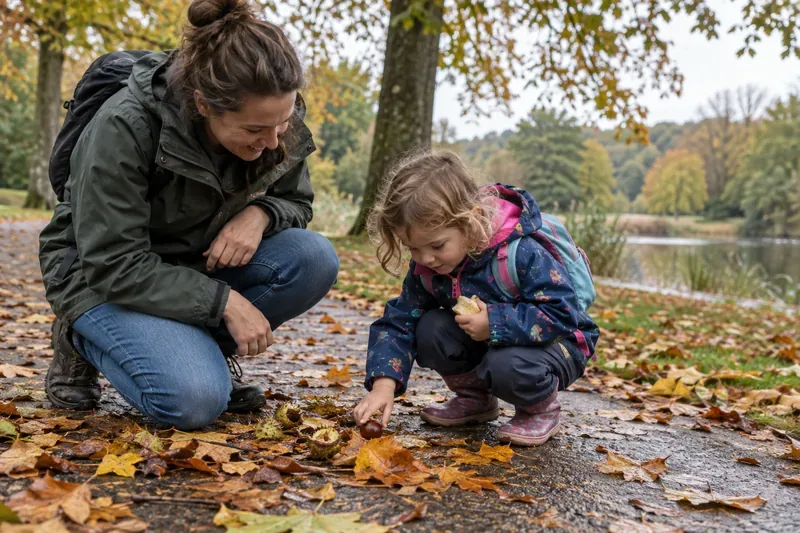
Before leaving, check the park operator's current opening information, bathrooms, play-area notices, and weather. Stay close when exploring near water, and do not let a young child taste or put found seeds, berries, mushrooms, or conkers in their mouth. If the ground is muddy, a paved loop or a different park can meet the same goal. The payoff is observation and movement, not the number of things collected.
Good result: Your child hears or spots something they would miss on a street, and everyone finishes before the walk becomes a struggle. A woodland outing feels different from a playground trip when you set one sensory question: Which leaves sound crunchiest? Where can we hear birds? Use the land manager's site page to check the actual trail length, terrain, toilets, and parking. The Woodland Trust's Londonthorpe Woods page, for example, distinguishes an accessible traffic-free link from tracks that can be slippery and muddy. Forestry England's family outing guidance also makes clear that a free trail may still involve parking charges.
Choose a short out-and-back route with a clear turnaround point. Bring layers and a small snack, and stay on permitted paths. If a stroller cannot handle the surface or heavy rain makes the track unpleasant, switch to a nearby paved route or the library. The outing has succeeded when it fits the child in front of you, even if you only walk a few hundred yards.
Good result: The child spots two shapes, colors, or landmarks and helps decide where to go next. Check whether your council, local museum, or town center offers a free self-guided family route. The City of London's Children's Trail, for instance, offers child-friendly walking routes, while its Sculpture in the City family trail describes a free app-based guide. Neither is a requirement to visit London: a short loop past a mural, bridge, library, and public square can work in your own town.
Plan a route with safe crossings and a bathroom or café you can use without buying something. Download or save the route before travel if mobile reception could be poor, and check whether any featured space has its own opening hours. Stop at two or three points rather than trying to finish the map. If city traffic overwhelms your child, take a break or replace the trail with a quieter street or park.
Do not book five demanding days just because there are five ideas. Select two outings that need reservations, keep an indoor backup, and leave recovery time between busier trips. A useful check the night before is brief: Is the venue open tomorrow? Is the free activity actually running? Do we need tickets? What will transport, parking, and food cost? Where can we leave early?
After each trip, ask what held your child's attention and how they seemed on the way home. Curiosity, manageable transitions, and a comfortable return are better measures than the number of stops. If a full museum felt too much, the next outing could be a 30-minute park visit. If the park was wet and stressful, book a small indoor session. Low cost helps only when the total journey, time, and effort also fit your family. Specific schedules, prices, and access arrangements can change before October half-term, so confirm them on the official venue or council page when you are ready to go.
Teach kids to do chores with fewer reminders: set a clear finish line, model one task, step back, and correct only what is unsafe or unfinished.
Learn why toilet-trained children may start having pee or poop accidents again, what patterns to track, how to respond calmly, and when to call the pediatrician.
A child may repeat a reassurance question to process information, seek connection, or manage worry. Learn how to respond and when persistent anxiety needs support.
Learn how to set screen-time boundaries with predictable routines, warnings, calm follow-through, and better transitions—without turning every device handoff into a fight.
Teach children to handle losing without shame or explosive anger by validating feelings, setting behavior limits, modeling recovery, and practicing at the right difficulty.
A calm, practical plan for after-school meltdowns: reduce overload, keep limits clear, track patterns, coordinate with school, and know when to seek help.
Learn how to respond when a child feels unwanted, ask supportive questions, recognize bullying or ongoing distress, and know when to seek extra help.
Learn how to set up a shared bedroom for siblings with different bedtimes, from planning around age-based sleep needs to creating separate sleep spaces and quiet routines.
Compare full-day, gradual, and temporary at-home return plans, plus health checks and school supports that can help a child reenter safely.
Learn when a child can try to solve a friendship problem, when adults should step in, and how to tell whether support is helping or needs to change.