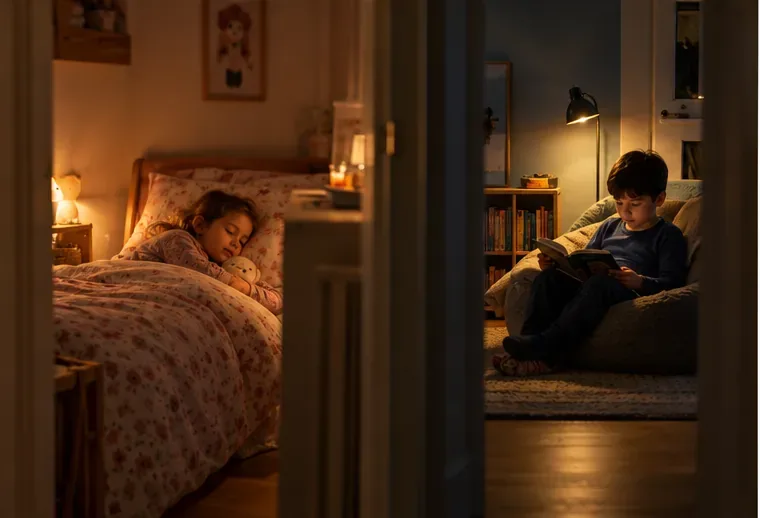
How to Teach Chores Without Redoing Every Task for Your Child

Teach kids to do chores with fewer reminders: set a clear finish line, model one task, step back, and correct only what is unsafe or unfinished.
Mumps in children, unlike adults, is usually mild and has few complications. But not so that you subjectively do not prevent or take care of your baby properly when the baby has this disease.
Mumps is currently not treated, but you can completely protect your child from the disease by getting the MMR vaccine ¹ . However, you can completely ease the symptoms of the disease by taking care of your baby properly. Please refer to the following article of aFamilyToday Health to know how to prevent infection and take care of when your baby is sick.
Mumps is a viral disease that causes painful swelling in the salivary glands, also known as parotid glands. It is usually spread through casual contact when the virus is present in the air.
The mumps virus can infect many parts of the body, especially the salivary glands of the ear. These glands are located on both sides in front of the ear and below the cheekbones, the area between the ear and jaw. With mumps, the salivary glands will swell and be very painful.
Mumps was a common disease worldwide until the mumps vaccine was discovered in 1967. People who did have it rarely get it again because after the first one, the body produces antibodies. lifelong protection. There are many other infections that cause swelling of the salivary glands, so many parents mistakenly think their baby will have mumps again.

Mumps symptoms in children usually appear about 2 weeks after the child is infected with the virus. These symptoms are very similar to the flu, such as:
Tired
Muscle pain, jaw pain
Cough, runny nose
Anorexic
Low-grade fever.
Over the next few days, your baby will have a fever of about 39 ° C and swelling of the salivary glands. With the swelling of the salivary glands, the baby is at risk of transmitting the virus to others through casual contact. The salivary glands will swell and pain periodically or when taste is stimulated.
Most infected babies show signs of infection with the virus, but there are also babies with little or no symptoms. About one third of children will have no symptoms or very mild symptoms.
The mumps virus is very contagious. They follow the tiny droplets of fluid from the mouth and nose of an infected person sneezing, coughing, even laughing, and transmitted directly to the person in contact. The virus can also be spread through the use of shared towels or glasses of water.
People with mumps are usually contagious to others, especially 1-2 days before the salivary glands begin to swell for up to 6 days after the illness is gone. If your child has mumps, keep him away from others, especially babies and young children, until the disease is no longer at risk of infection and vice versa. People infected with the mumps virus may not have any symptoms.
Complications of mumps are relatively rare, but if left untreated, they can become very serious. Mumps not only affects the salivary glands in the gills, but it can also infect other parts of the body, including the brain and reproductive system.
Mumps is usually mild in children, but complications can occur sometimes. Although serious complications are rare, they can have long-term effects on adulthood. Common complications of the disease include:
If infected at a young age, the child can be deaf, the rate of children experiencing this complication is 1 / 200,000 infected children.
Mumps can attack the central nervous system, increasing the risk of meningitis, encephalitis, or cerebellar malformation (causing problems with motor coordination). Nervous system complications from mumps are more common in adults, but can also occur in children.
Mumps can cause meningitis in 4 out of 10 adult boys and men. It is more common after puberty and can cause pain for a few weeks with swelling, pain, nausea, vomiting, and fever. Testicular inflammation does not affect fertility.
Your doctor will diagnose mumps through an examination of the clinical symptoms. In addition, your doctor may order a blood test or test for fluid from the nose or throat to make the diagnosis more accurate.

Since mumps is a caused virus, antibiotics or drugs are ineffective. The way to treat mumps in children is to help your baby treat symptoms to make them feel more comfortable:
Give your baby full rest when tired
Do not let your baby come into contact with people, especially children and infants.
Use pain relievers, such as acetaminophen and ibuprofen, to reduce fever. Be careful not to give ASA (acetylsalicylic acid) to children.
Use an ice pack to hold the ear
Drink plenty of water, rehydrate
Eat snacks like soups, yogurts, and foods that don't need to chew (chewing can hurt your baby because the salivary glands are swollen)
Do not use acidic foods and drinks.
Mumps in children can be prevented with a vaccine. The mumps vaccine is part of the measles-mumps-rubella (MMR) integrated vaccine (MMR) that is usually given to babies between 12 and 15 months of age. The second dose of MMR vaccine will be given when the baby is 4-6 years old.
Sometimes the vaccine will be given without following the vaccination schedule. This is because in the case of a measles outbreak, the doctor will recommend an additional dose of MMR vaccine when the baby is between 1 and 4 years old. You should consult your pediatrician for the most current information.
If you have mumps, your baby will usually recover in about 10-12 days. A week after the salivary glands will no longer swell, but usually the two parotid glands will swell at different times, so there will be glands that stop swelling first and swelling glands cease to swelling later.
Take your baby to the hospital to see a doctor if:
Baby fever more than 3 days
Swollen salivary glands that last for more than 7 days (in many cases, swelling will occur in the other earlobe after a day or two).
Babies show more swelling and pain.
Babies have abnormal behavior and physical expression
Have a seizure
Stop eating and drinking
There are signs of dehydration .
If you have any questions, please consult your doctor to get the best treatment support for your child.
Teach kids to do chores with fewer reminders: set a clear finish line, model one task, step back, and correct only what is unsafe or unfinished.
Learn why toilet-trained children may start having pee or poop accidents again, what patterns to track, how to respond calmly, and when to call the pediatrician.
A child may repeat a reassurance question to process information, seek connection, or manage worry. Learn how to respond and when persistent anxiety needs support.
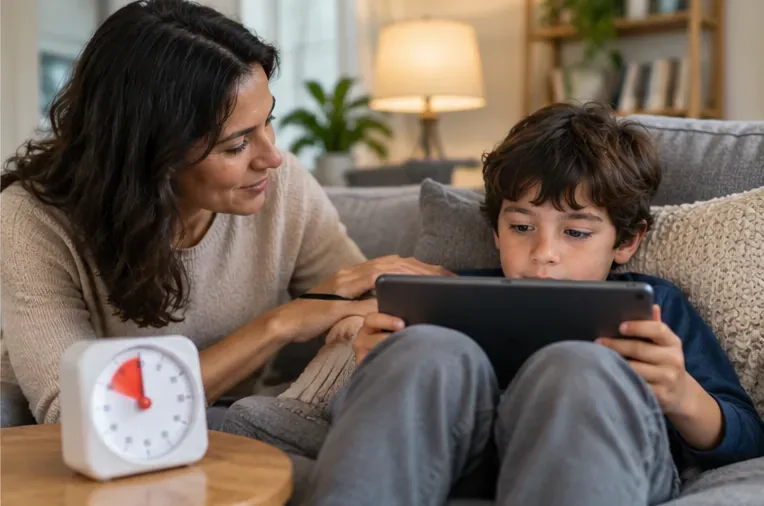
Learn how to set screen-time boundaries with predictable routines, warnings, calm follow-through, and better transitions—without turning every device handoff into a fight.
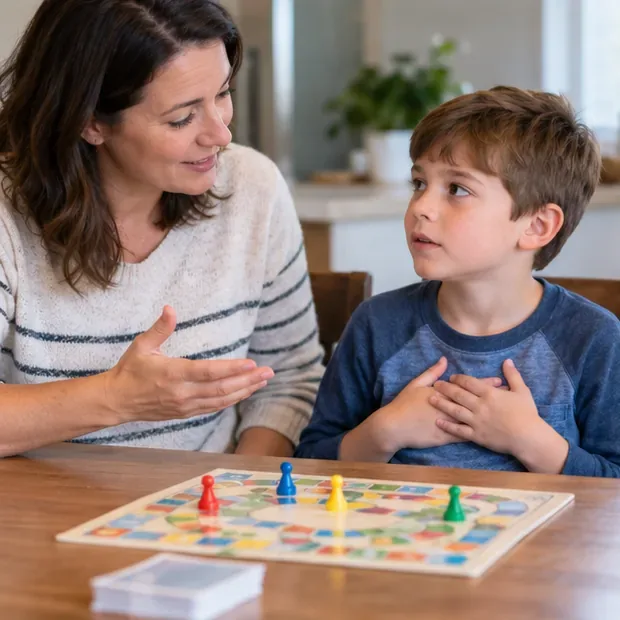
Teach children to handle losing without shame or explosive anger by validating feelings, setting behavior limits, modeling recovery, and practicing at the right difficulty.
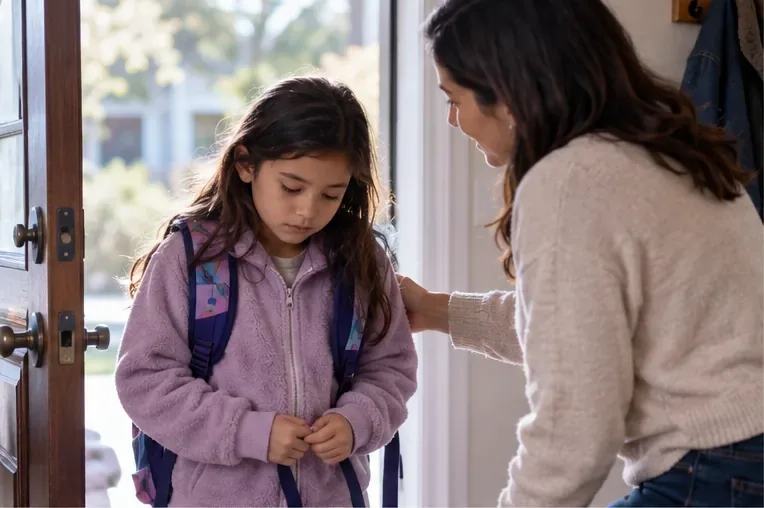
A calm, practical plan for after-school meltdowns: reduce overload, keep limits clear, track patterns, coordinate with school, and know when to seek help.
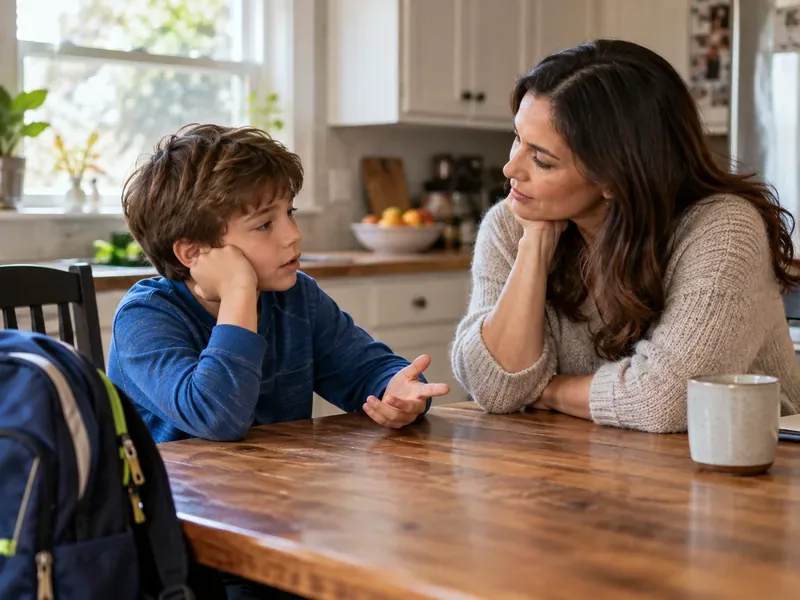
Learn how to respond when a child feels unwanted, ask supportive questions, recognize bullying or ongoing distress, and know when to seek extra help.
Learn how to set up a shared bedroom for siblings with different bedtimes, from planning around age-based sleep needs to creating separate sleep spaces and quiet routines.
Compare full-day, gradual, and temporary at-home return plans, plus health checks and school supports that can help a child reenter safely.
Learn when a child can try to solve a friendship problem, when adults should step in, and how to tell whether support is helping or needs to change.