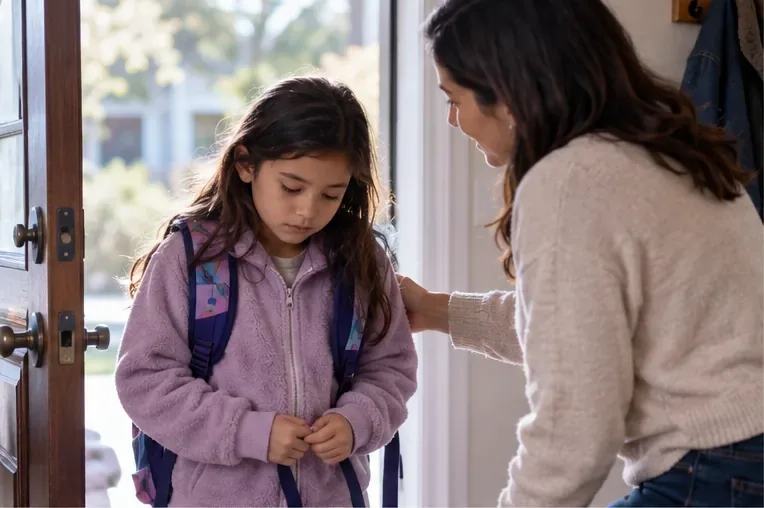
How to Teach Chores Without Redoing Every Task for Your Child

Teach kids to do chores with fewer reminders: set a clear finish line, model one task, step back, and correct only what is unsafe or unfinished.
Kawasaki disease in children is one of the reasons why babies suffer from heart disease. Parents need to observe carefully the symptoms to promptly treat their children.
Kawasaki is a condition involving the blood vessels. The disease is common in children from 1 to 2 years old and rarely occurs in children over 8 years old. This disease is not contagious, but very dangerous.
Kawasaki is a disease that causes inflammation of the arteries, veins and capillaries. It affects the internal lymph nodes as well as causes symptoms in the nose, mouth and larynx. Kawasaki is a common cause of heart disease in children .
Experts do not know the exact cause of Kawasaki disease in children, but scientists have proven that a combination of genetics and environmental factors can cause this disease. They think bacteria or viruses may be the cause, but luckily Kawasaki is not contagious.
Kawasaki disease symptoms are divided into 2 phases.
In the early stages, symptoms can last up to 2 weeks, including:
High fever for more than 5 consecutive days;
Red eyes;
Rashes on the body;
Swollen and chapped lips and tongue;
Swollen limbs;
Lymph nodes in the neck are swollen.
Cardiovascular problems will also arise during this period.
In later stages, the child has a fever that lasts for 2 weeks. The skin on the child's hands and feet shows signs of peeling off in patches. Many children will experience arthritis-related symptoms.

In addition to the above symptoms, the disease has many other notable signs, including:
Stomachache
Vomiting
Diarrhea
The gallbladder is enlarged
Temporary hearing loss.
Children younger than 1 year old or older than 5 years with the disease often do not show complete symptoms. 25% of them have a high risk of cardiovascular complications.
If your child has any of the above symptoms, see a doctor immediately.
When your baby is admitted to hospital, doctors often use the following drugs to treat:
Intravenous immunoglobulin use to limit inflammation of blood vessels;
Use aspirin to treat fevers, relieve pain, and limit the risk of blood clots.
Do you continue to take aspirin at home? However, because aspirin carries the potential to cause Reye syndrome (a dangerous syndrome that causes swelling in the liver and brain), you should not use aspirin without your doctor's prescription. If your baby shows signs of having chickenpox or the flu while taking aspirin, take him or her to the doctor right away.
In case your baby is tired, fussy and dry for a month, try to take care, do not let the baby get tired, and use lotions to provide moisture for fingers and toes baby's.

It will take a few weeks for your baby to fully recover from the illness. However, most children, after being treated promptly, return to normal and do not experience problems later. Timely treatment for children is very important, helping to limit dangerous cases as well as the risk of cardiovascular diseases.
A few children develop coronary artery damage. The artery becomes enlarged and causes an aortic aneurysm. Narrow arteries lead to blood clots forming. Babies with coronary artery damage are often at risk of a heart attack as adults. Parents need to observe carefully and treat promptly children as soon as they know their children are sick.
Since Kawasaki disease in children is still a strange disease, some parents ignore their child's symptoms and lead to unfortunate cardiovascular damage in the future.
Hopefully, with the above information, the parents will have more knowledge as well as timely solutions to treat the baby as soon as they get sick.
Teach kids to do chores with fewer reminders: set a clear finish line, model one task, step back, and correct only what is unsafe or unfinished.
Learn why toilet-trained children may start having pee or poop accidents again, what patterns to track, how to respond calmly, and when to call the pediatrician.
A child may repeat a reassurance question to process information, seek connection, or manage worry. Learn how to respond and when persistent anxiety needs support.
Learn how to set screen-time boundaries with predictable routines, warnings, calm follow-through, and better transitions—without turning every device handoff into a fight.
Teach children to handle losing without shame or explosive anger by validating feelings, setting behavior limits, modeling recovery, and practicing at the right difficulty.
A calm, practical plan for after-school meltdowns: reduce overload, keep limits clear, track patterns, coordinate with school, and know when to seek help.
Learn how to respond when a child feels unwanted, ask supportive questions, recognize bullying or ongoing distress, and know when to seek extra help.
Learn how to set up a shared bedroom for siblings with different bedtimes, from planning around age-based sleep needs to creating separate sleep spaces and quiet routines.
Compare full-day, gradual, and temporary at-home return plans, plus health checks and school supports that can help a child reenter safely.
Learn when a child can try to solve a friendship problem, when adults should step in, and how to tell whether support is helping or needs to change.