How to Teach Chores Without Redoing Every Task for Your Child

Teach kids to do chores with fewer reminders: set a clear finish line, model one task, step back, and correct only what is unsafe or unfinished.
Menstruation is a normal physiological phenomenon and has a periodic monthly nature. Menstrual irregularities during puberty can last for about 1-2 years due to unstable ovarian activity. However, you should still pay attention to monitor your baby's period to prevent unusual symptoms.
Menstrual irregularities are very common in teenagers. A lot of people think that menstruation will appear on a specific day each month, but in fact, this is not true for everyone. Your daughter has missed her period a few days, so what do you need to do? Let aFamilyToday Health follow up on the following sharing.
Most girls will have their first menstrual period between the ages of 10 and 15. However, there are also children who have it sooner or later, this depends on the development of the body. Some babies will puberty faster than others while others take longer. However, if after 16 years old, but your baby still hasn't had a period, you should take your baby to the doctor to make sure that the baby's body is developing normally.
Most doctors say that menstruation is about 28 days. However, keep in mind that 28 is just an average and doesn't mean that if your baby doesn't have a 28-day cycle, something is wrong with him.
To find out your baby's cycle, ask your baby to count the number of days from the first day your baby starts to period until the day your baby starts the next month. The number of days your baby can count is their menstrual cycle.
During the first two years of your baby's period, your baby's cycle will be more irregular. Here are some issues to keep in mind:
Puberty is a period in which a child's menstrual cycle is often disrupted, which means that a child's period does not appear on a specific, predetermined day. On average, a baby's second period will come within 35 to 40 days of the baby's first period. In some cases, it can take up to a month or two for your baby to have a second period after the first period.
If you notice that your baby hasn't had a period for more than 3 months, see a doctor.
Sometimes, babies only have period 2 - 3 days a month, while in other months, babies get period up to 5-7 days. All of these are normal as the child's body is still developing and a lot of changes are going on inside. During puberty, your baby will undergo many changes in the body, which can also affect the menstrual cycle in different ways.
Since the child's body is still in the developing stage, there will be a lot of hormonal changes in the body. The amount of bleeding each month can be more or less depending on the amount of hormones being produced in the body.

As a mother, it's understandable that you feel anxious when your baby shows signs of menstrual irregularities. However, instead of worrying too much, you should take your child to see if there is something unusual or not:
If your baby hasn't had a period for more than 3 months, see a doctor. In some cases, this can be a sign that the baby is suffering from a reproductive disease.
If your baby is still menstruating for 3 months, then you don't need to worry too much. But if you are not sure, you can see your doctor to ask more.
In addition to hormonal fluctuations, there are many other reasons that can cause a baby's period to be irregular. Here are a few common reasons you should be aware:
Although it could be due to hormonal changes, there is a very high chance that the baby is already pregnant . Even if a child uses a condom when having sex, its effectiveness is only about 99% and there is always a risk of random pregnancy.
In addition, if the child takes birth control pills , it will only work when taken on a regular basis. If in doubt, ask your child if he or she has had sex lately. If so, get your child to see a doctor right away.
Excessive exercise can have a negative impact on a teen's menstrual cycle. If your baby regularly participates in sports activities, he or she will likely not have periods for many months. Your period will vary depending on the intensity of the exercise and the exercises your baby is doing.
Excessive exercise can also reduce the period of menstruation, children may have a period of 5 days last month, but these months they only bleed lightly for 2-3 days. In some cases, a baby's menstrual cycle may stop completely. Do not panic, if the child reduces the intensity of exercise or stops exercising, everything will return to normal.
The child may be experiencing school stress or any other problem. Being too stressed about everything can make a baby's period irregular.
Many teenage girls experience eating disorders such as anorexia, vomiting ... If the child is having an eating disorder, it is likely that it may affect the child's menstrual cycle. If you notice your baby is having a change in eating habits, be careful because this can seriously affect body functions and affect the menstrual cycle.
As a parent, it is your responsibility to help your child understand the physical changes they are going through. In addition, you also need to pay attention to monitoring the child's menstrual cycle to be able to promptly detect abnormalities.
Teach kids to do chores with fewer reminders: set a clear finish line, model one task, step back, and correct only what is unsafe or unfinished.
Learn why toilet-trained children may start having pee or poop accidents again, what patterns to track, how to respond calmly, and when to call the pediatrician.
A child may repeat a reassurance question to process information, seek connection, or manage worry. Learn how to respond and when persistent anxiety needs support.
Learn how to set screen-time boundaries with predictable routines, warnings, calm follow-through, and better transitions—without turning every device handoff into a fight.
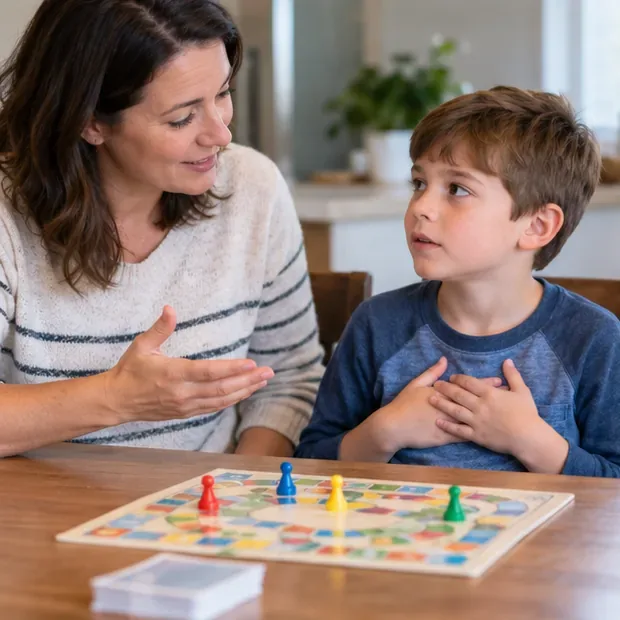
Teach children to handle losing without shame or explosive anger by validating feelings, setting behavior limits, modeling recovery, and practicing at the right difficulty.
A calm, practical plan for after-school meltdowns: reduce overload, keep limits clear, track patterns, coordinate with school, and know when to seek help.
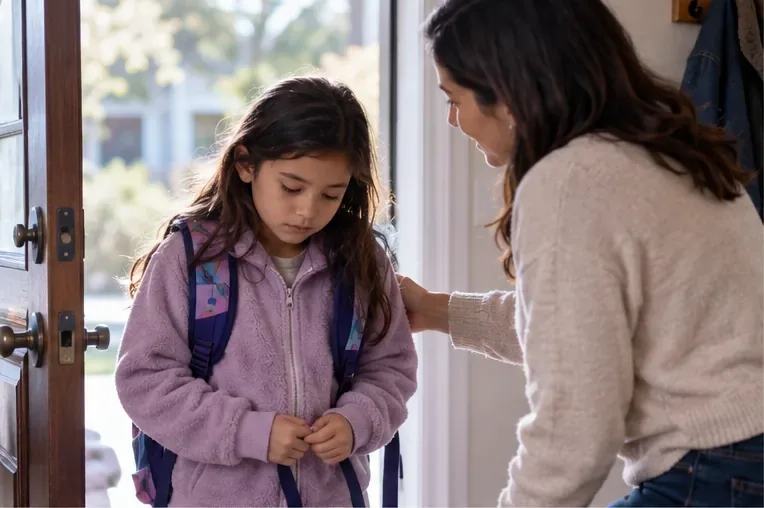
Learn how to respond when a child feels unwanted, ask supportive questions, recognize bullying or ongoing distress, and know when to seek extra help.
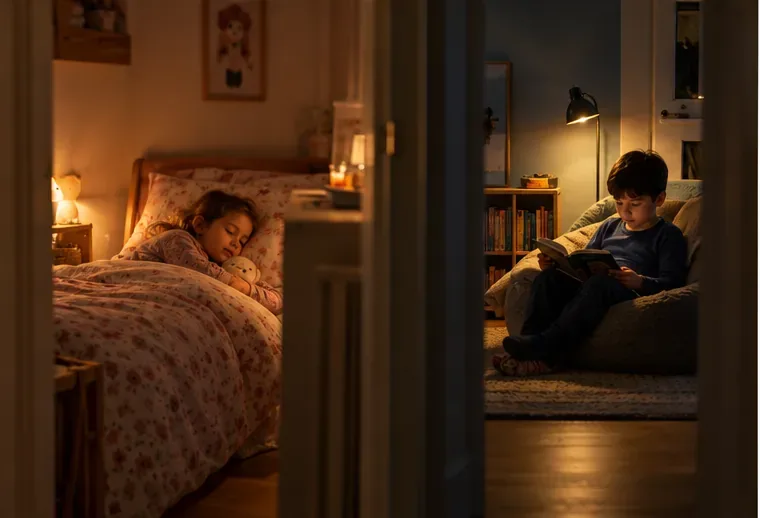
Learn how to set up a shared bedroom for siblings with different bedtimes, from planning around age-based sleep needs to creating separate sleep spaces and quiet routines.
Compare full-day, gradual, and temporary at-home return plans, plus health checks and school supports that can help a child reenter safely.
Learn when a child can try to solve a friendship problem, when adults should step in, and how to tell whether support is helping or needs to change.