How to Teach Chores Without Redoing Every Task for Your Child

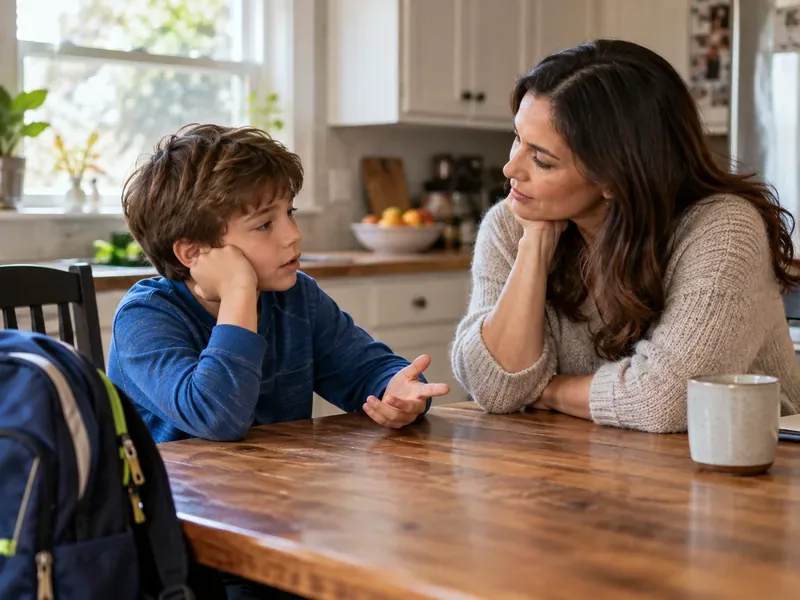
Teach kids to do chores with fewer reminders: set a clear finish line, model one task, step back, and correct only what is unsafe or unfinished.

Babies dream more than we think. Before 6 months of age, babies dream more than half the time of sleep. Not only that, the baby is dreaming even when still in the womb.
In the first week, your baby will sleep about 16 hours a day. Do children dream during sleep? aFamilyToday Health will answer this question shortly.
In fact, babies dream more than you do. Just like adults, babies need sleep to restore body and brain. Everyone must go through a "sleep cycle": when you first fall asleep, you fall into a shallow sleep. At this point, it will be very easy to wake up. Then you will go to deep sleep. That's when your brain restes, recovers and eventually returns to shallow sleep. Each sleep cycle takes about 90 minutes, but your baby's sleep cycle is usually much shorter. The time it takes to move from shallow sleep to deep sleep is about 50 minutes.
Your baby's shallow sleep is usually longer. That is why babies dream more often than adults. Young children dream more often than adults, but babies dream the most.
The answer to this question is yes. Scientists believe that when a person enters the stage of fast-moving eye sleep ( REM sleep ), brain waves will become active and dream. When measuring the infant's brain waves, the results showed that the baby's REM sleep lasted about 10 hours. This will gradually decrease in the following months and when your baby is 1 year old, his REM sleep lasts about 5 hours.
Of course, you won't be able to ask your baby, "What did you dream about yesterday?" Often, dreams help babies better understand their experiences. Babies can hear and smell in the womb. So, while in the womb, the baby will dream that he is processing the amniotic fluid and try to learn about it. This process will continue when the baby is born.
Although your baby can't tell you what he dreamed of, he still has clues for you to discover. The biggest clue you need to pay attention to is how your baby behaves when he wakes up. If your baby is happy and smiling, he may have had a beautiful dream. If your baby becomes irritable and crying, chances are he has had a bad dream.
Here are 3 important signs that your baby is dreaming:
Hair pulling: Does your baby pull hair when he sleeps? These small movements can reveal skills your baby will learn. For example, if your baby jerked his neck, he might soon learn to lift his head when he wakes up.
Smile: In the first month after birth, if you see your baby with a natural smile during sleep, your baby is probably enjoying a happy dream.
Eye movements: Babies are definitely dreaming if you see their eyes moving quickly below their eyelids. Studies have shown that when the eyes flash rapidly during sleep, it means that the scenes in dreams are changing.
The bad dreams tend prevalent in children from three to six years old. At this time, the child's imagination is very rich and they can think about things that they really cannot feel. In addition, this is also the time when your baby develops a feeling of fear.
Nightmares help children understand the things they are worried about. When they are old enough, ask them to draw pictures of the bad dreams they are having, which will help you see what is happening. Encourage your child to find a positive point at the end of the story.
Remember, all dreams, good or bad, have only one task to help develop your baby's brain. Dreams will help children understand the world. So, let your baby sleep early today.
Teach kids to do chores with fewer reminders: set a clear finish line, model one task, step back, and correct only what is unsafe or unfinished.
Learn why toilet-trained children may start having pee or poop accidents again, what patterns to track, how to respond calmly, and when to call the pediatrician.
A child may repeat a reassurance question to process information, seek connection, or manage worry. Learn how to respond and when persistent anxiety needs support.
Learn how to set screen-time boundaries with predictable routines, warnings, calm follow-through, and better transitions—without turning every device handoff into a fight.
Teach children to handle losing without shame or explosive anger by validating feelings, setting behavior limits, modeling recovery, and practicing at the right difficulty.
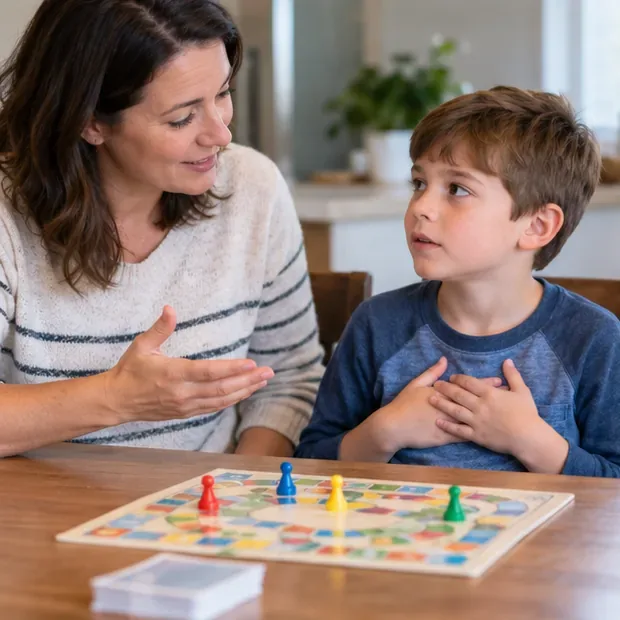
A calm, practical plan for after-school meltdowns: reduce overload, keep limits clear, track patterns, coordinate with school, and know when to seek help.
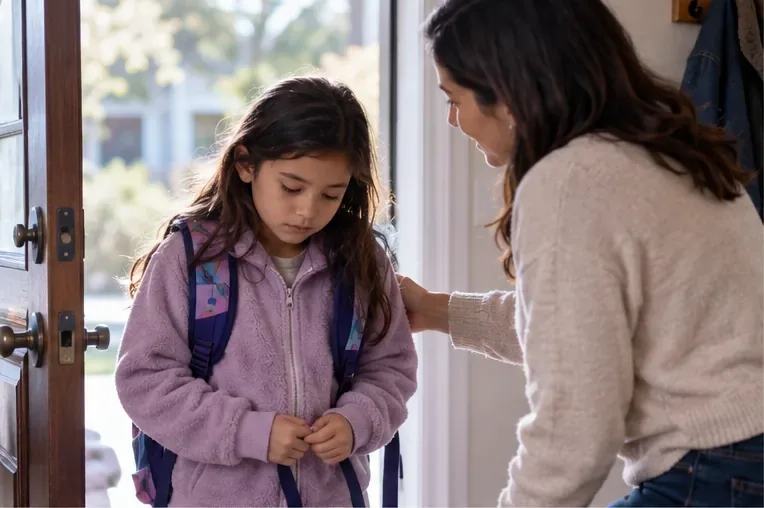
Learn how to respond when a child feels unwanted, ask supportive questions, recognize bullying or ongoing distress, and know when to seek extra help.
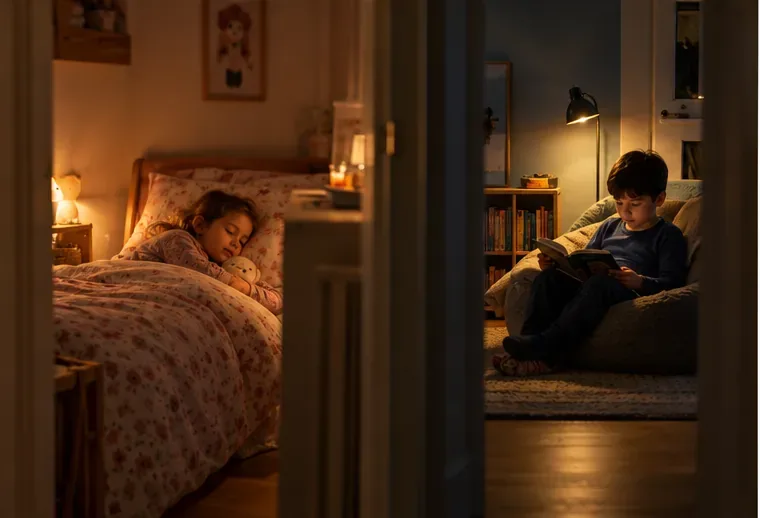
Learn how to set up a shared bedroom for siblings with different bedtimes, from planning around age-based sleep needs to creating separate sleep spaces and quiet routines.
Compare full-day, gradual, and temporary at-home return plans, plus health checks and school supports that can help a child reenter safely.
Learn when a child can try to solve a friendship problem, when adults should step in, and how to tell whether support is helping or needs to change.