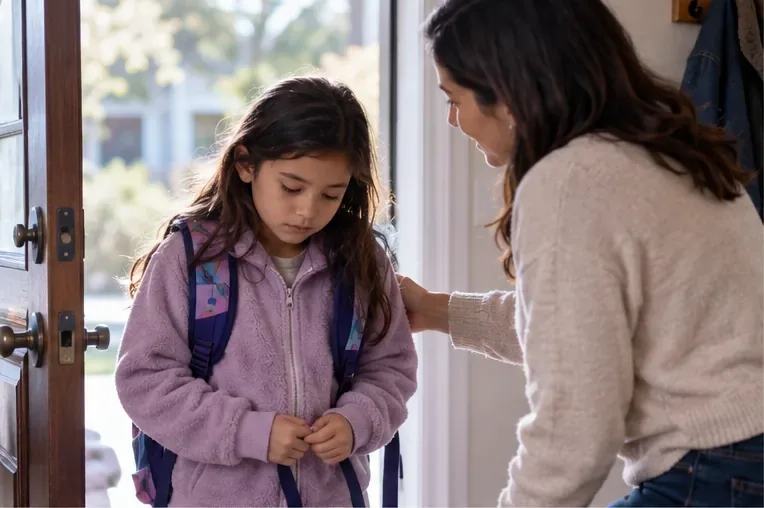
How to Teach Chores Without Redoing Every Task for Your Child

Teach kids to do chores with fewer reminders: set a clear finish line, model one task, step back, and correct only what is unsafe or unfinished.

If your angel is anorexic, you will be afraid that your child will eat too little and not enough nutrients, so they often feed them more. However, how do I know if my baby is eating too much?
Being a mother for the first time, we cannot avoid being surprised and worried if we are doing well in this new role. Being careful and attentive is fine, but if your child eats or drinks more than usual, there is no need to worry too much because it will not cause serious consequences.
Usually, you should let your child decide on their portion sizes. You also don't need to worry too much about whether your child eats more than he needs, as long as he or she grows up at a normal rate.
One way for you to realize that your baby is eating enough, not too much is learning to read the signs. When they feel full, babies often have signs such as closing their mouth, turning to no bottle, biting the nipple, playing with the bottle or falling asleep. If you see 113ml of milk from your baby in less than 15 minutes, you can replace your current nipple with a smaller breast to slow down your baby's feeding.
Infants have small stomachs and usually only drink a few dozen milliliters of breast milk or formula per meal. Your baby will only suckle until they feel full and then stop. Babies tend to suck less than suck too much. Here are a few signs that your baby's stomach is overloaded:
If your baby is eating too much or too quickly, the most common phenomenon is that the milk will spill out. Your baby will burp powdered milk or breastmilk in the form of a strong, smelly white mucus that will usually stick all over you. Therefore, you should put a cotton towel or soft cloth on your shoulder to avoid this situation. If not, you will most likely have to change clothes for your child as well as for you.
Just like for adults, overeating or indigestion causes stomach pain in babies. Symptoms of stomach pain include bloating, heavy crying, gasping sound in your stomach, and gas. To relieve pain and promote digestion for your baby, you can hold the baby's feet and gently push like the position of a bicycle and rub the baby's abdomen counterclockwise. Note that stomach pills should not be used while your baby is an infant.
In the long run, overfeeding a child will make him obese in the future. Periodic health check-ups will include comparing height and weight to see if your baby has a healthy body. Weight gain is slow and difficult to notice because the baby changes from day to day. Check with your pediatrician to find out if your child has a reasonable weight for its age and height.
Hopefully, through this article, you will have a way to adjust your baby's diet to the most scientific and nutritionally complete!
Teach kids to do chores with fewer reminders: set a clear finish line, model one task, step back, and correct only what is unsafe or unfinished.
Learn why toilet-trained children may start having pee or poop accidents again, what patterns to track, how to respond calmly, and when to call the pediatrician.
A child may repeat a reassurance question to process information, seek connection, or manage worry. Learn how to respond and when persistent anxiety needs support.
Learn how to set screen-time boundaries with predictable routines, warnings, calm follow-through, and better transitions—without turning every device handoff into a fight.
Teach children to handle losing without shame or explosive anger by validating feelings, setting behavior limits, modeling recovery, and practicing at the right difficulty.
A calm, practical plan for after-school meltdowns: reduce overload, keep limits clear, track patterns, coordinate with school, and know when to seek help.
Learn how to respond when a child feels unwanted, ask supportive questions, recognize bullying or ongoing distress, and know when to seek extra help.
Learn how to set up a shared bedroom for siblings with different bedtimes, from planning around age-based sleep needs to creating separate sleep spaces and quiet routines.
Compare full-day, gradual, and temporary at-home return plans, plus health checks and school supports that can help a child reenter safely.
Learn when a child can try to solve a friendship problem, when adults should step in, and how to tell whether support is helping or needs to change.