How to Teach Chores Without Redoing Every Task for Your Child

Teach kids to do chores with fewer reminders: set a clear finish line, model one task, step back, and correct only what is unsafe or unfinished.

Fungi of the skin in young children is similar to that of adults due to many different strains of fungi, damaging the skin, hair and nails. Treat the disease early so as not to cause discomfort for the child.
Fungus is caused by a ringworm that is often itchy, uncomfortable, but not painful. These fungal infections are often named after the areas where the fungal disease occurs, such as systemic thrush or scalp fungus . Fungal skin infections are more common in children younger than 2 years old, but sometimes babies and adults can also get them.
If you have fungal skin, your baby will appear one or more bright red rings. The circles are about 6mm in diameter. The center ring is usually pink, light pink, or red, while the outer ring is prominent and has a sharp color. As the fungus grows, these circles become larger but by about 2.5 cm, they stop growing. This area of the skin may appear in patches, the surface is also scaly with sharp edges or blistering small blisters.
Fungi can also appear on the scalp. However, they will not be circular at this time. Instead, you will see symptoms like a rash and swelling in the scalp. Pustular pustules may appear in the form of honeycombs or blistering, pus-containing, small areas. It is easy to confuse fungus with dandruff or buffalo shit . So if you are unsure, take your child to see a doctor.
There are many causes of ringworm, which can be from contact with an infected person or a pet. Mushrooms are also found in towels, toothbrushes, combs, hats, and clothing. If your baby is barefoot, he or she can also get ringworm.
In addition, ringworm can also be contagious. Besides, excessive sweating is also one of the causes of this disease because humidity is the most suitable condition for fungus to multiply.
The doctor will diagnose fungal skin diseases by looking at the child's skin. In addition, your doctor may also take some skin for microscopic examination. If a child has red patches on his body, take him to the doctor. If your baby has systemic fungal skin diseases, the doctor will give him a topical anti-fungal medicine. You must apply it to the child twice a day around the fungal area.
It takes 3 to 4 weeks for the fungal skin to disappear. However, after the fungus disappears, you should continue to apply it to your baby as directed by your doctor. Some babies are very sensitive to this drug. Therefore, at first, you should only apply a little to see how your baby's skin reacts. If your baby has unusual symptoms after applying it, tell your doctor for advice or change the medication. Before applying cream to your baby, be sure to wash your hands carefully.
If your baby is very sick, the doctor will prescribe stronger medications. Sometimes a doctor may give your baby medicine.
It is often more difficult to treat scalp fungus. Your doctor will prescribe a topical antifungal and medicated shampoo. It takes at least 6-8 weeks for the fungal skin to disappear.
Wash blankets, bed sheets and baby clothes thoroughly when treating fungal skin infections.
Babies can become infected if they scratch to the point of bleeding in the itchy area. So, cut your baby's nails and observe them carefully. If your baby scratches or scratches, bring gloves to sleep. If after a week of treatment, your baby's fungal skin condition does not improve, take your baby for re-examination.
Ask if the school has special care for babies with ringworm. If your baby has applied medicine, he or she can still go to school normally.
There are several things you can do to reduce your risk of getting fungal skin diseases:
Limit your baby's sweating too much (eg, not wearing too many clothes for the baby).
Let your baby wear sandals when going out.
Do not let your baby share personal items such as towels, combs, pillows, or clothes with others.
Check your pets regularly for fungal skin infections. If so, take them to your vet. Even if your pet does not have a fungus but your baby does, you should still take the pet to the veterinarian to have it checked.
If a family member has fungal infections, get treated right away.
Through the above sharing, hope you have some more useful information about fungal skin diseases. Although the disease is bothersome for young children, it's not too dangerous, so there's no need to worry.
Teach kids to do chores with fewer reminders: set a clear finish line, model one task, step back, and correct only what is unsafe or unfinished.
Learn why toilet-trained children may start having pee or poop accidents again, what patterns to track, how to respond calmly, and when to call the pediatrician.
A child may repeat a reassurance question to process information, seek connection, or manage worry. Learn how to respond and when persistent anxiety needs support.
Learn how to set screen-time boundaries with predictable routines, warnings, calm follow-through, and better transitions—without turning every device handoff into a fight.
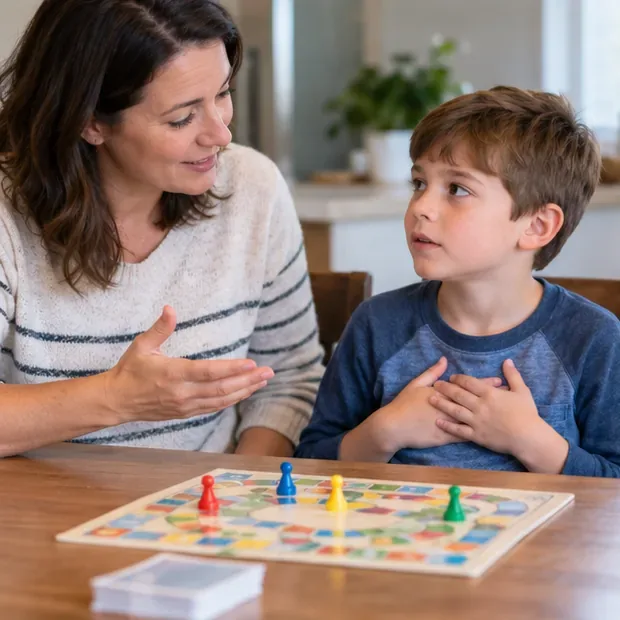
Teach children to handle losing without shame or explosive anger by validating feelings, setting behavior limits, modeling recovery, and practicing at the right difficulty.
A calm, practical plan for after-school meltdowns: reduce overload, keep limits clear, track patterns, coordinate with school, and know when to seek help.
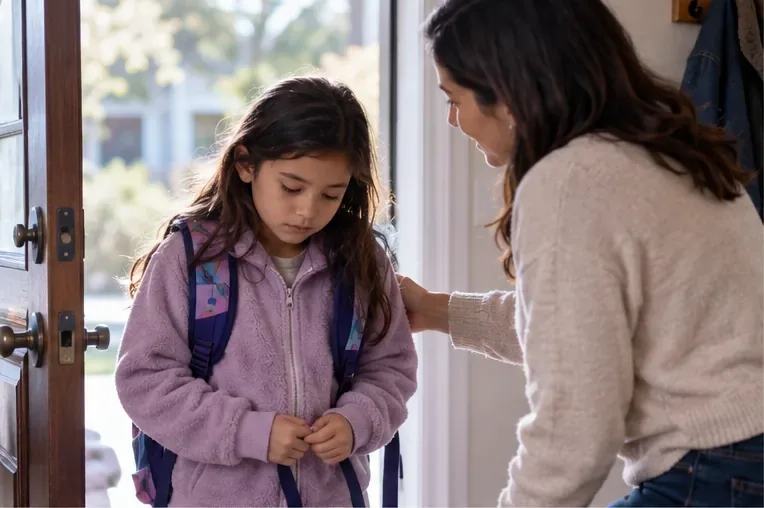
Learn how to respond when a child feels unwanted, ask supportive questions, recognize bullying or ongoing distress, and know when to seek extra help.
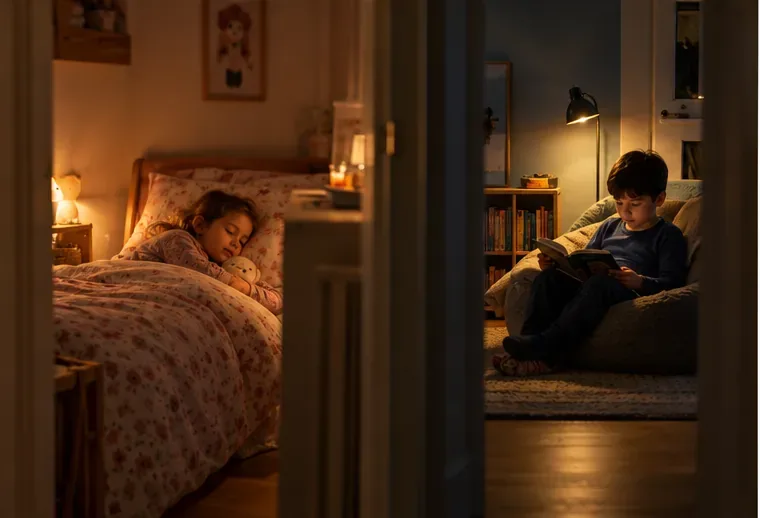
Learn how to set up a shared bedroom for siblings with different bedtimes, from planning around age-based sleep needs to creating separate sleep spaces and quiet routines.
Compare full-day, gradual, and temporary at-home return plans, plus health checks and school supports that can help a child reenter safely.
Learn when a child can try to solve a friendship problem, when adults should step in, and how to tell whether support is helping or needs to change.