How to Teach Chores Without Redoing Every Task for Your Child

Teach kids to do chores with fewer reminders: set a clear finish line, model one task, step back, and correct only what is unsafe or unfinished.
If you've ever had a baby, you should have seen the apgar score in your baby's wellness booklet released by the hospital after you gave birth. So you know what this indicator is? aFamilyToday Health will help you better understand this indicator in babies.
Once born, the newborn will have an apgar test. However, do not expect your baby to have a perfect score. This is the baby's first test and has no predictive meaning in behavior and intelligence .
The infant apgar index is the first health test your baby takes after birth to assess the overall health of the baby. This index is intended for the purpose of assessing the general health of an infant at birth.
The apgar test is performed immediately after birth. Test scores are recorded 1 and 5 minutes after the baby is born.
The apgar index will provide information about your baby's physical health, helping the doctor determine which treatment should be taken immediately and in the future.

Apgar index was assessed by 5 criteria of skin color, heart rate, stimulation reflex, movement and respiration.
To conduct the test for your baby, the doctor will measure 5 apgar scores and score on a scale of 0 to 2, the ideal total score of 5 indicators is 10. Healthy babies will have index This is out of 7 at first try. Children with a low score of 4-6 need medical assistance such as breathing oxygen or sucking up phlegm. Infants with an apgar score of less than 4 should be placed in an emergency situation.
At 5 minutes postpartum, a score of 7 to 10 is normal. If the score is below 7, the baby will have to continue to be monitored and tested every 5 minutes for 20 minutes. A lower than normal apgar score does not mean your baby will have long-term health problems.
Heartbeat:
0 - Loss of heartbeat
1 - Less than 100 beats per minute indicates the baby is not responding quickly
2 - More than 100 beats per minute indicates healthy baby
Respiratory:
0 - Not breathing
1 - Faint, uneven crying or gasping for breath
2 - Good, cry out loud
Move:
0 - No.
1 - Several flexing movements in the legs and arms
2 - Fold the legs and arms against the stretching movement
Irritating reflex:
0 - No response
1 - Winced, weakly crying
2 - Cry or pull back
Skin color:
0 - Baby's whole body is blue or pale
1 - Paleness in the extremities, ruddy body
2 - There is no pale pale, full body rupture.
In addition to the apgar index, what tests should your baby do in the first day of life? Please refer to the article What will the baby's first day after birth look like?
Teach kids to do chores with fewer reminders: set a clear finish line, model one task, step back, and correct only what is unsafe or unfinished.
Learn why toilet-trained children may start having pee or poop accidents again, what patterns to track, how to respond calmly, and when to call the pediatrician.
A child may repeat a reassurance question to process information, seek connection, or manage worry. Learn how to respond and when persistent anxiety needs support.
Learn how to set screen-time boundaries with predictable routines, warnings, calm follow-through, and better transitions—without turning every device handoff into a fight.
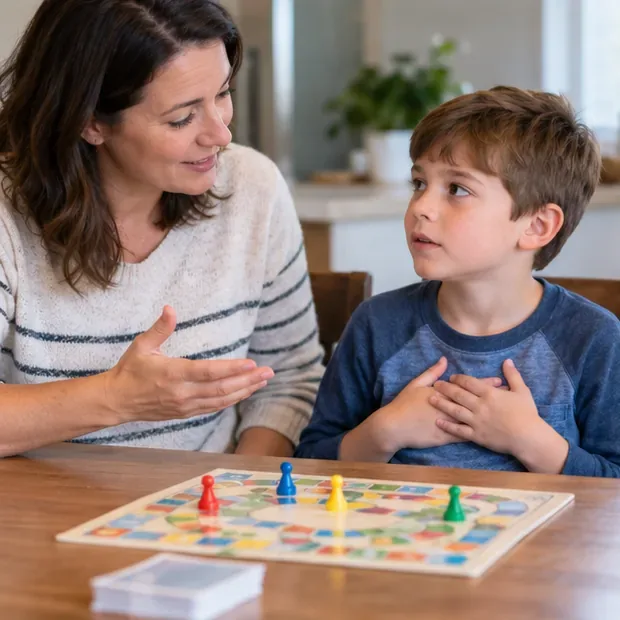
Teach children to handle losing without shame or explosive anger by validating feelings, setting behavior limits, modeling recovery, and practicing at the right difficulty.
A calm, practical plan for after-school meltdowns: reduce overload, keep limits clear, track patterns, coordinate with school, and know when to seek help.
Learn how to respond when a child feels unwanted, ask supportive questions, recognize bullying or ongoing distress, and know when to seek extra help.
Learn how to set up a shared bedroom for siblings with different bedtimes, from planning around age-based sleep needs to creating separate sleep spaces and quiet routines.
Compare full-day, gradual, and temporary at-home return plans, plus health checks and school supports that can help a child reenter safely.
Learn when a child can try to solve a friendship problem, when adults should step in, and how to tell whether support is helping or needs to change.