How to Teach Chores Without Redoing Every Task for Your Child

Teach kids to do chores with fewer reminders: set a clear finish line, model one task, step back, and correct only what is unsafe or unfinished.
How children develop their own strengths is a matter of many parents' headaches.
There are many parents expressing concern or disappointment about their children not showing any strengths. The reason is that I rarely have social activities or have an interest in a sport, a certain art form ... like "a neighbor's child". In fact, each child has a unique strength, your child may have strengths in an area you haven't realized yet, such as being subtle in observing, eager to read or loving programs. science or like embroidery, sewing ...
Each child is born as an individual, with a talent and strength unlike any other child. Even children who are siblings have different biases. You and your siblings are not the same, each with their own strengths, right? Therefore, do not force your child to be like a sibling or any other child you know. Parents early understanding and accepting this difference in their children will help children develop their own strengths in the best way. In fact, using our strengths in everyday things will make our lives more peaceful and happy.
On the other hand, in parenting, many of us tend to focus, even deepen, our child's weaknesses. Some people often make fun of their children for their "incompetence", even embarrass them in front of friends and people around them, hoping that they will improve. In fact, this is a very wrong job. We need to understand that not getting good grades in school does not mean children will experience failure in life and vice versa.
As parents, we need to identify our child's strengths as soon as possible and try to support them to develop those strengths.
Play a variety of games together with your child and see what games your child shows interest or interest in. From there, let's create conditions for your child to gradually develop their strengths in that game.
If your child doesn't like any of the games, don't try to force him or her. Coercion only causes a child to have a negative reaction.

Let your child have access to everything he wants to play or interact with. Then, learn your child's interests and strengths through the signs you receive while observing your baby.
Make a note of what your child likes and dislikes, their strengths and weaknesses, and their reasons. This is very helpful in parenting.
Spend time talking to your baby often, becoming a friend at home. If you can do that, your child can freely share with parents about their interests, dreams, ambitions….
Comparing a child with a sibling or a "neighbor's child" does not make the child any better, it only hurts the child's self-esteem. Therefore, you should absolutely not do this.
Instead, help your kids find their strengths, allowing them to play together. This helps your child learn beneficial things.
Point out the differences between your child's interests and strengths and help them bring into play both of them.

If possible, invite your child's friends over for weekends or contact other parents to organize outings. At these meetings, talk to them and find ways to encourage your children to share their strengths and interests. This helps your child understand that each child will have his or her own interests and strengths. No one is perfect or incompetent. In addition, chat occasions like these not only help children become more aware of the strengths of others and themselves, but also improve communication skills.
Helping children develop their own strengths does not mean you will ignore their weaknesses. You need to frankly look at the child's weaknesses, find out the causes to have a suitable remedy. If your child's weakness is too timid, you can talk to his or her teacher and ask them to help you with this. In addition, you should also let your child join groups to make them more brave.
Helping your children to develop their own strengths cannot happen overnight, but it takes time. Therefore, in this, you should be patient with your child, working with them to remove difficulties for the best results.
Teach kids to do chores with fewer reminders: set a clear finish line, model one task, step back, and correct only what is unsafe or unfinished.
Learn why toilet-trained children may start having pee or poop accidents again, what patterns to track, how to respond calmly, and when to call the pediatrician.
A child may repeat a reassurance question to process information, seek connection, or manage worry. Learn how to respond and when persistent anxiety needs support.
Learn how to set screen-time boundaries with predictable routines, warnings, calm follow-through, and better transitions—without turning every device handoff into a fight.
Teach children to handle losing without shame or explosive anger by validating feelings, setting behavior limits, modeling recovery, and practicing at the right difficulty.
A calm, practical plan for after-school meltdowns: reduce overload, keep limits clear, track patterns, coordinate with school, and know when to seek help.
Learn how to respond when a child feels unwanted, ask supportive questions, recognize bullying or ongoing distress, and know when to seek extra help.
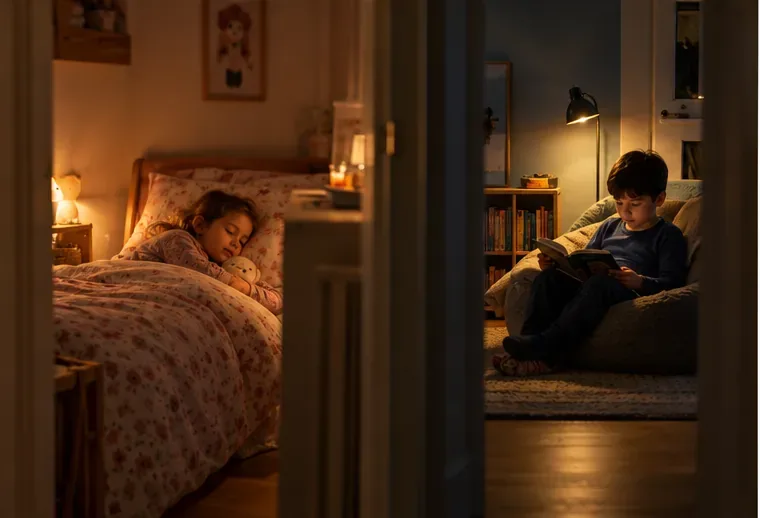
Learn how to set up a shared bedroom for siblings with different bedtimes, from planning around age-based sleep needs to creating separate sleep spaces and quiet routines.
Compare full-day, gradual, and temporary at-home return plans, plus health checks and school supports that can help a child reenter safely.
Learn when a child can try to solve a friendship problem, when adults should step in, and how to tell whether support is helping or needs to change.