How to Teach Chores Without Redoing Every Task for Your Child
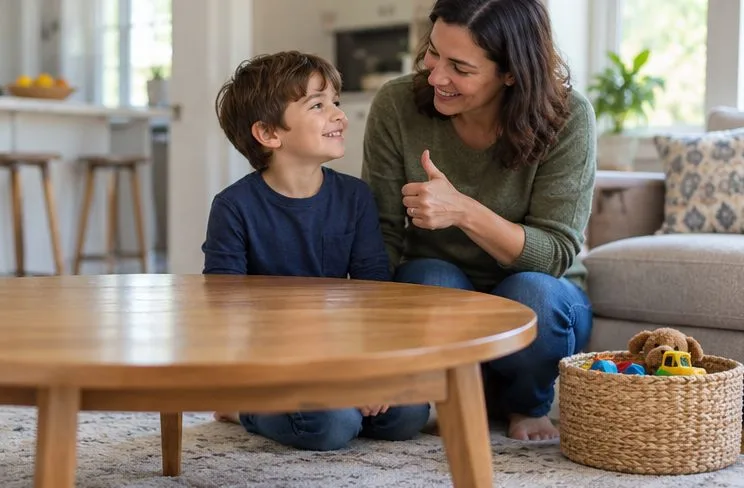
Teach kids to do chores with fewer reminders: set a clear finish line, model one task, step back, and correct only what is unsafe or unfinished.
According to many people's thoughts, the twins will be identical in appearance and a part of personality. However, this is only true for twins with the same egg, while the other twins with different eggs will have quite characteristic differences.
Having twins is extremely fun for the whole family, but with joy there are many worries and worries about caring and raising children. Among twins, non-egg twins are quite common, accounting for two-thirds of twins. Just like identical twins, non-identical twins also have many interesting traits. To understand more, please see the following shares of aFamilyToday Health .
Different twin eggs are the phenomenon of having 2 eggs at the same time and conceiving with 2 different sperm in the same batch. Twins with different eggs have more genetic differences than identical twins. Therefore, two different twins with different eggs do not have to be the same sex or look identical.
Twins of the same egg phenomenon after fertilization of the egg will divide into 2 separate cells and develop into 2 individual individuals. Therefore, these twins will have almost 100% of the same DNA structure, while other twins with only 50% identical DNA structure. Usually, non-egg twins will be of the same sex or the same sex at the rate of 50:50.

Babies can be of the same or different sex, meaning you can have 1 boy 1 girl, 2 boys or 2 girls.
Babies may not be as much the same as identical twins because they have only 50% of the same DNA structure.
A woman can conceive a different pair of identical twins with the sperm of two different men, a phenomenon known as alternate fertilization.
The incidence of non-identical twins is highest in Central African countries, while in Asia and Latin America the lowest.
Having twins can increase your pregnancy needs.
According to the researchers, twins depend largely on genetic aspects. Birth of identical twins may not be inherited, but non-identical twins may be genetic. There are also a number of factors that increase your chances of having other twins like:
Mother's age: If you are over 30, this rate will be higher because at this age, your body will release more FSH, a hormone that can stimulate the release of two eggs.
Genetic factors: If you have twins or have twins in your household, your chances of conceiving twins are also very high.
If both the internal and the external have twins, your chances of having twins will increase.
Women with a BMI ( body mass index) above 30 are more likely to have twins than those with a normal BMI. The reason is that excess fat in the body increases estrogen levels.
Women with a tall stature are more likely to have twins compared to small women.
The more you are pregnant, the higher your chance of having twins.
Women who breastfeed are more likely to have twins than women who don't. One study has shown that the rate of twins is 11.4% in lactating women and women who do not breastfeed it is only 1.1%.
One study has shown that women who eat a lot of dairy products are more likely to have twins than other women.
The application of assisted reproductive technologies, especially in vitro fertilization , can stimulate more ovulation each month and increase the likelihood of having twins.

Are other twins the same egg? The answer may or may not be. 50% of the genetic makeup of the non-identical twins will be different. The twins' hair color, skin color, weight, size, face, and physique can be completely different at birth if the mother and father have different skin tones. Unborn twins have two placenta for each fetus and are located in different amniotic membranes in the mother's womb.
You can see this through your pregnancy symptoms. During the first 3 months, you will feel more nauseous than in other pregnancies (if you have ever been pregnant). In addition, you can get severe morning sickness when eating foods such as meat, seafood, coffee ... Your stomach will be much bigger than other pregnant women in the same period, you will also urinate more and the hCG concentration is also much higher. Some women even dream that they are pregnant with different twins.
During the first 8 weeks of pregnancy, 2 fertilized eggs begin to develop into hundreds of cells, attached to the uterine wall. Each baby will be in a separate amniotic sac and begin to develop parts of the body. By 8 weeks, babies will have arms and legs and begin to develop the nervous system.
By 12 weeks, babies will start kicking and stretching, nails also begin to develop and eyelids appear. By 16 weeks, each baby will have its own fingerprint and by 20 weeks, your baby's hair will begin to grow.
By 24 weeks, eyebrows begin to appear, by the 28th week, the twins can open their eyelids and form fat layers under the skin. By 32 weeks, the baby's arms and legs will be fully developed. The babies are now ready to be born in the next few weeks.
The complications that pregnant women with other twins experience are the same complications as other twins. Common pregnancy complications such as:
Babies are born with lower weight for gestational age
In the later stages of pregnancy, as the baby grows, the uterine space becomes narrowed. This can also limit the baby's development.
The risk of pregnancy hypertension (PIH) is also higher.
There is a risk of developing gestational diabetes .
There is a potential risk of miscarriage and one in two babies dying at birth.
The risk of preterm birth is high.
Twins are very rare and if you are lucky enough to have this, enjoy your happiness. Although the process of bringing up and taking care of it will be difficult and difficult, but watching the babies grow up healthy and happy every day will be a great thing.
Teach kids to do chores with fewer reminders: set a clear finish line, model one task, step back, and correct only what is unsafe or unfinished.
Learn why toilet-trained children may start having pee or poop accidents again, what patterns to track, how to respond calmly, and when to call the pediatrician.
A child may repeat a reassurance question to process information, seek connection, or manage worry. Learn how to respond and when persistent anxiety needs support.
Learn how to set screen-time boundaries with predictable routines, warnings, calm follow-through, and better transitions—without turning every device handoff into a fight.
Teach children to handle losing without shame or explosive anger by validating feelings, setting behavior limits, modeling recovery, and practicing at the right difficulty.
A calm, practical plan for after-school meltdowns: reduce overload, keep limits clear, track patterns, coordinate with school, and know when to seek help.
Learn how to respond when a child feels unwanted, ask supportive questions, recognize bullying or ongoing distress, and know when to seek extra help.
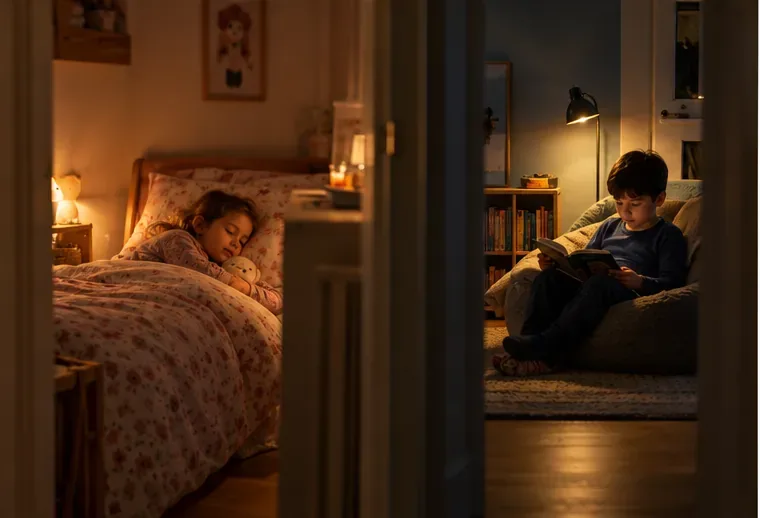
Learn how to set up a shared bedroom for siblings with different bedtimes, from planning around age-based sleep needs to creating separate sleep spaces and quiet routines.
Compare full-day, gradual, and temporary at-home return plans, plus health checks and school supports that can help a child reenter safely.
Learn when a child can try to solve a friendship problem, when adults should step in, and how to tell whether support is helping or needs to change.