How to Teach Chores Without Redoing Every Task for Your Child

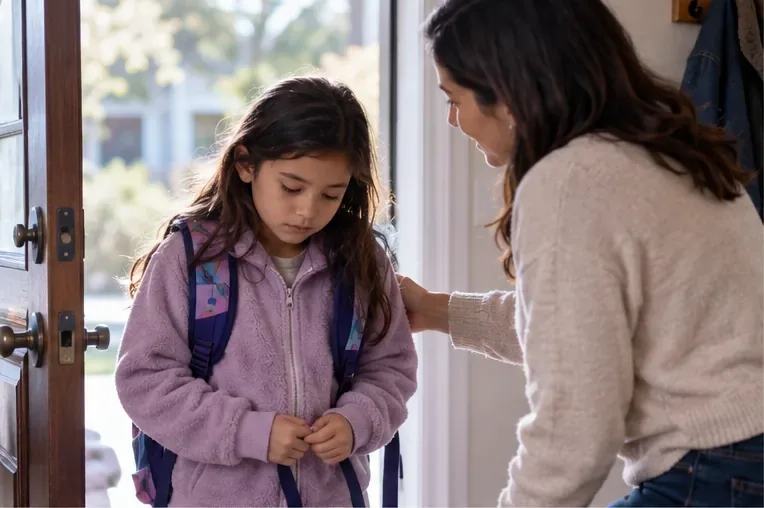
Teach kids to do chores with fewer reminders: set a clear finish line, model one task, step back, and correct only what is unsafe or unfinished.
Your child can now make sounds that sound like a real word, and he can even use a few words correctly. The baby's ability to think and speak is also improving because his brain is much more developed now.
By the first week of 11 months (age 45 weeks), your baby may be able to:
Sit up from a lying position;
Pick up tiny objects with your fingers. So remember to always keep dangerous objects out of the reach of your baby;
Understand what a "no" means, but don't always listen to what you say.
At this age, your baby will be able to imitate the sounds they hear. Babies are also able to follow simple instructions, such as "Bring me a ball!" or "Pick up the spoon!". You can help your baby learn faster by separating multi-step commands into simple steps for them to follow. You can also do illustrative gestures to make it easier for your baby to follow.
Most doctors will not have regular checkups for your baby this month. This turns out to be a good deal, as children this age don't like having to sit still while seeing a doctor. Babies who are anxious about meeting strangers may also dislike doctors, no matter how friendly they are. You can always take your baby to see the doctor if you have any urgent questions that can't wait until the next visit.
The baby can now walk. But if you pay attention, you will see that the baby's legs are not straight, but the knees are very curvy inward. Your baby will also begin to become more active and falls can become a part of their daily life. So is the phenomenon of falling in the knee of a baby worrying? What do you need to know when your baby falls? The following sections of the article will provide you with an overview on the above two issues.
Knees knocked in
Babies' feet usually have knee-inward knuckles until they are two years old and hooped up until they are four years old. Rest assured, this is a very normal phenomenon in toddlers. Almost all babies will have knee knuckles during the first two years. Then, as your baby learns to walk more, his feet will become bowed legs (their knees touch each other, but not ankles). It is not until the teenage years that a baby's knees and ankles are straight and back to a normal state. You don't have to equip your baby with special shoes or use orthotic tools such as rods, beams or other orthotic devices to interfere with this very normal development of the baby's feet.
In some cases, a baby's leg can actually have something unusual, such as a bent leg, a bent knee, or a real bow tie. You can find out this when your baby gets older and his legs have not returned to normal. If your family member has a history of abnormal leg phenomena, take your baby to see a pediatrician or orthopedic specialist to be evaluated and clearly identified the baby's condition. Depending on each specific case, experts may or may not treat the baby. You should also pay attention to rickets - one of the most common causes of permanent arched legs. Strengthen your baby's milk and provide other vitamin D rich dairy products with daily meals.
Fall down
The baby is in an active age and always makes many parents worry about their safety. Your baby can experience torn lips, bruises, swelling, bumps, bruises and a myriad of other dangerous situations. The fact that the baby continues to perform such dangerous actions is actually a good thing, because otherwise he will never be able to rub with reality and learn to play and stand up by himself later. tripping times.
Some children will learn a lesson about carefulness quite soon. After the first fall from the coffee table, your baby will stop climbing for a few days and then continue playing more carefully. Some other children (babies who like to hang their little lives upside down on branches, causing parents to worry often) seem to never know what is careful, never fear, never. Now feel pain: every five minutes after the baby falls, he will continue to climb and play.
Your baby's learning to walk is the process of walking and falling continuously until he or she can walk properly. You cannot and should not try to interfere with your child's learning to walk. Your role, in addition to being an anxious and proud watcher, is to do everything you can to ensure that even if your baby falls, he or she is safe. Stumble on a carpet in the living room can cause a baby's legs to bruise, hitting hard on the rounded edges of the sofa can make him cry, but bumping into the sharp corners of the glass table can bleed. To reduce your baby's risk of serious injury, make sure everything in the house is safe for young children. Even if you've eliminated the dangers, remember that it is most important to have someone look after your baby and keep an eye on your baby.
Even when a baby is indoors and well cared for, serious injuries can happen. Prepare for this by attending a first aid course for young children and learning the most basic first aid steps.
The parent's reaction will often determine the child's response to an accident. If every time the baby falls, adults panic rush to save the baby, repeating sentences such as: “Are you okay? Are you in pain? ” And always extremely worried, the baby that has just stumbled will sometimes overreact like those around him. Your baby will cry louder even if he does not really hurt too much and then may become too careful or lose interest in exploring things around. On the other hand, if the adult's reaction is a very calm statement like: "Oh no, I fell! But that's okay, get up! ”, The baby can quickly stand up straight and become much stronger.
In the first week of 12 months there are a lot of things you may be interested in, one of which is helping your baby wean from a bottle. You can follow these tips to make the transition from bottle to cup easier for your baby:
Weaning bottle at the right time;
Make changes slowly;
Keep the bottle out of your baby's sight;
Try to make drinking from a glass more enjoyable;
Psychological preparation is that it will be very difficult to wean the baby from the bottle;
Don't expect too much;
Illustrate yourself for your baby to follow;
Always be very optimistic;
Be patient;
Give your baby more love.
Teach kids to do chores with fewer reminders: set a clear finish line, model one task, step back, and correct only what is unsafe or unfinished.
Learn why toilet-trained children may start having pee or poop accidents again, what patterns to track, how to respond calmly, and when to call the pediatrician.
A child may repeat a reassurance question to process information, seek connection, or manage worry. Learn how to respond and when persistent anxiety needs support.
Learn how to set screen-time boundaries with predictable routines, warnings, calm follow-through, and better transitions—without turning every device handoff into a fight.
Teach children to handle losing without shame or explosive anger by validating feelings, setting behavior limits, modeling recovery, and practicing at the right difficulty.
A calm, practical plan for after-school meltdowns: reduce overload, keep limits clear, track patterns, coordinate with school, and know when to seek help.
Learn how to respond when a child feels unwanted, ask supportive questions, recognize bullying or ongoing distress, and know when to seek extra help.
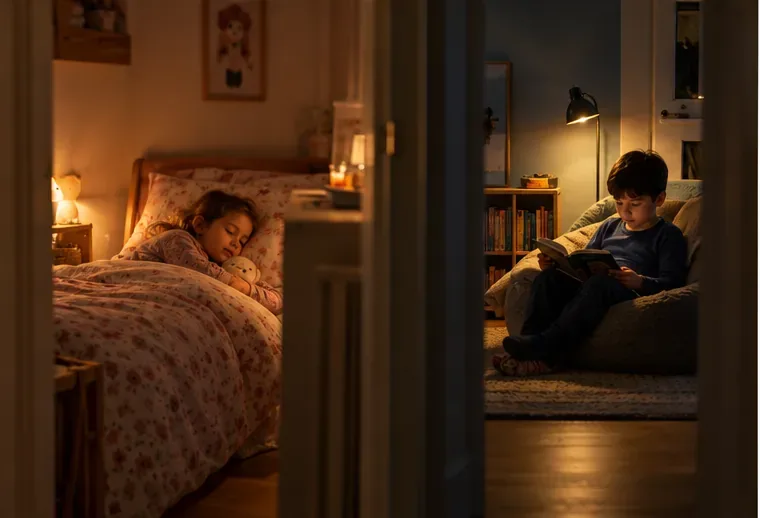
Learn how to set up a shared bedroom for siblings with different bedtimes, from planning around age-based sleep needs to creating separate sleep spaces and quiet routines.
Compare full-day, gradual, and temporary at-home return plans, plus health checks and school supports that can help a child reenter safely.
Learn when a child can try to solve a friendship problem, when adults should step in, and how to tell whether support is helping or needs to change.