How to Teach Chores Without Redoing Every Task for Your Child
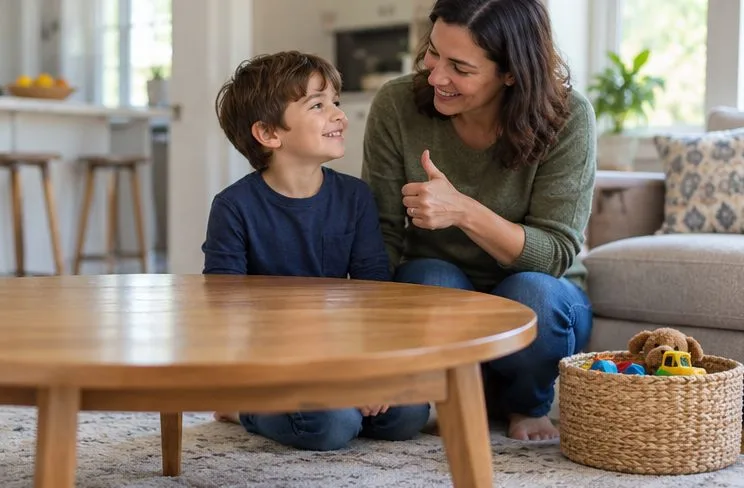
Teach kids to do chores with fewer reminders: set a clear finish line, model one task, step back, and correct only what is unsafe or unfinished.

Sports exercise is considered a very good method of exercising health for young children. In addition, this is also the secret to your children having an ideal height.
Physical activity, playing sports will be a good way for your child to grow tall while the bones can still develop. However, it is important that parents choose appropriate exercises for their children. Here are some effective exercises for your child.
Stretching is a great way to increase height. Let your baby start with simple movements such as wall pushes. Have your baby stand with his back facing the wall. Then, raise your hand as high as possible and reach as high as you can. Then sit down in the same position and do stretches of the leg muscles. Repeat the process 10 times.
Another leg and back exercise is to sit on the floor with your legs apart. Then bend forward (toward the right side) and stretch to touch your right leg with your hand. Do 3-4 times, then return to the starting position and repeat on the left side. This exercise is also ideal for lengthening your baby's spine and improving her posture.
Some yoga poses, especially "Sun hello" (Surya Namaskar) and "Dog stretching dog" (Adho Mukha Syanasana) help stretch the entire body easily. Give your baby basic breathing exercises before starting. Then lie on your back on the floor, lift your hips up with your feet and stretch your legs. Make sure your back is always straight. Maintain this position and continue to breathe deeply for as long as possible.
In addition, the wheel posture (Chakrasana) can also help your child stretch the whole body. Have your baby lie on his back, feet shoulder-width apart. Bend your knees so your feet touch your buttocks and bend your elbows so your fingers touch your shoulders. Inhale and push the body to make a U-shape and hold for as long as possible. Exhale and relax for a few seconds before repeating.
All kids love to hang from the crossbeams and this fun exercise can help straighten the spine and lengthen the spine. So, encourage your child to do lots of single bar inhalations. Install a beam in the house. The best is a bar that the baby can hang all over it.
If you are concerned about your baby's safety, you can also teach your baby to hang with his feet folded across his knees. It is best to hang for 1 to 10 minutes per day. Encourage your baby to inhale the bar 10 times a day for best results.
It is not recommended for children under 16 to lift weights or perform any form of intense exercise. During this period, muscles need to develop naturally and high intensity training combined with sports is most suitable. Lifting weights at the gym can hinder your child's height, so don't allow them to do this. However, sports like basketball, tennis and badminton are great ways to boost growth hormones in the body and help your baby grow taller. Running, swimming and cycling are also great options.
In order for your children to complete their exercises well, parents need to guide and observe their children carefully to prevent unfortunate injuries occurring during the exercise, and provide the baby with adequate nutrition. take care.
Teach kids to do chores with fewer reminders: set a clear finish line, model one task, step back, and correct only what is unsafe or unfinished.
Learn why toilet-trained children may start having pee or poop accidents again, what patterns to track, how to respond calmly, and when to call the pediatrician.
A child may repeat a reassurance question to process information, seek connection, or manage worry. Learn how to respond and when persistent anxiety needs support.
Learn how to set screen-time boundaries with predictable routines, warnings, calm follow-through, and better transitions—without turning every device handoff into a fight.
Teach children to handle losing without shame or explosive anger by validating feelings, setting behavior limits, modeling recovery, and practicing at the right difficulty.
A calm, practical plan for after-school meltdowns: reduce overload, keep limits clear, track patterns, coordinate with school, and know when to seek help.
Learn how to respond when a child feels unwanted, ask supportive questions, recognize bullying or ongoing distress, and know when to seek extra help.
Learn how to set up a shared bedroom for siblings with different bedtimes, from planning around age-based sleep needs to creating separate sleep spaces and quiet routines.
Compare full-day, gradual, and temporary at-home return plans, plus health checks and school supports that can help a child reenter safely.
Learn when a child can try to solve a friendship problem, when adults should step in, and how to tell whether support is helping or needs to change.