What Helps a Child Return to School After a Long Absence?

Compare full-day, gradual, and temporary at-home return plans, plus health checks and school supports that can help a child reenter safely.
Your baby may unintentionally engage in bad actions that you are unaware of in public. You can refer to the following common actions to learn how to best deal with these situations.
For example, when picking up food from the grocery store shelves, remind your baby: “You shouldn't touch anything without mom or dad's permission, because of everything. The stuff here belongs to the store and you might spoil someone else's stuff ”. Let your baby do the same, you can distract your child with cakes, candies, such as pet cookies. You can also let your baby join you in the shopping by offering safe foods for your baby to carry or push cart shopping. If your baby sits in the grocery store stroller, have him put the items in the cart. Also, talk to your baby when he goes shopping so he feels he can play a role in this. Finally, you shouldn't take your 2-year-old to a store with lots of fragile items, like a glass store or a dish shop. Don't forget to give praise when your baby helps you or does something for you.
Usually, babies get upset when their parents don't buy them a toy or candy at the store. Be decisive to tell your baby: "Parents only buy food at grocery stores, not toys". Ignore your baby's anger and be tough. If your baby gets angry and sits down and eats, just keep walking (make sure it's safe for him to sit down) and eventually he'll have to get up and follow you. If your baby isn't careful or is near fragile objects, get out of there right away. If your baby is annoying those around you in places like restaurants or churches, you should still take him out of that area. Remember that you should never yell or get angry in a store, especially when your baby is present.
When taking your baby to a public place, tell your baby: "You must follow your parents when entering the store, otherwise you will get lost". First put your baby in the grocery store trolley for 2 to 3 minutes and don't let him come near you. If your baby refuses to sit still in the stroller, take him outside and force him to face the wall. You can buy a baby carrier to use every time you shop. Drop your baby every 5 minutes to give him a chance to learn how to control himself in public. As a last resort, you can hire a babysitter so that you don't have to bring the baby with you and still feel secure when you are not around. When your baby will follow you obediently, don't forget to praise him.
Are you afraid of going to the doctor? If so, here are a few tips that can help you in this situation:
Make an appointment to see a doctor when your baby is not sleepy. Also, let your baby eat first so as not to get hungry.
Bring stuffed animals, blankets, pacifiers or snacks to keep your baby busy in the waiting room. In addition, these objects can also help the baby sit still during the examination.
To make it easier for the doctor to see a doctor, practice your baby's home exam. You can examine your baby's ear, teach him to open his mouth wide and breathe deeply through his mouth. Do not let your baby feel tickled because this will interfere with the actual doctor's examination.
Finally, if your baby is over 2 years old and he is afraid of being injected or is afraid of going to the doctor, try to help him relate to the interesting things at the clinic. As you pass the clinic, stop by to greet nurses and doctors. Staying there for a few minutes will encourage your child to get used to interacting with others. This approach will make the baby less shy, more interested and no longer too afraid of the doctor.
Compare full-day, gradual, and temporary at-home return plans, plus health checks and school supports that can help a child reenter safely.
Learn when a child can try to solve a friendship problem, when adults should step in, and how to tell whether support is helping or needs to change.
Separated parents can support better sleep by aligning a few core bedtime rules across homes without making both households identical.
A fair response to a child’s lie is calm, brief, and tied to what needs fixing. Learn how to address the lie, repair harm, and rebuild trust.
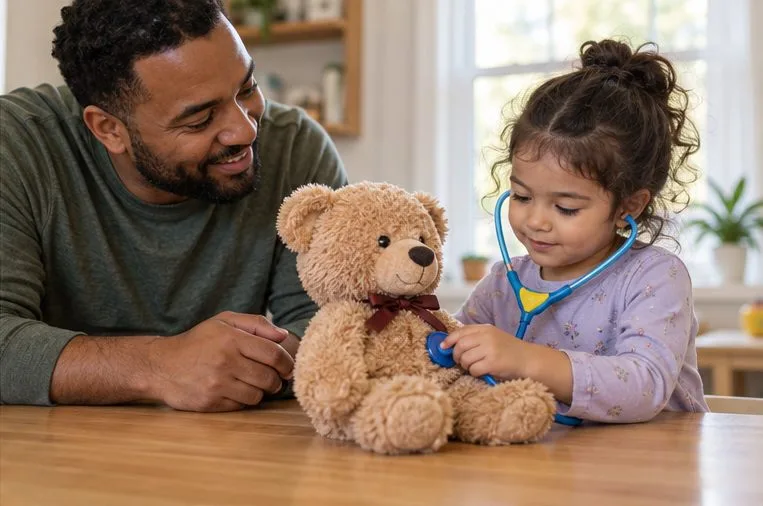
Help your child feel more prepared for a doctor visit with honest, age-appropriate explanations, simple choices, comfort items, and a practical plan for questions or procedures.
When homework runs long, track where time goes, check the task and routine, and work with the teacher if the pattern repeats. Learn what to watch for and when to ask for support.
Learn how one flexible family meal, a familiar food, and low-pressure repeat exposure can make dinner easier for picky eaters—plus when to ask a pediatrician for help.
The clocks fall back on November 1, 2026. Use a gentle bedtime plan, familiar routines, and morning light to help your child adjust.
Plan five low-cost October half-term outings with a preschooler, from libraries and museums to parks and art trails. Check dates, booking, and total costs first.
Learn how to determine your baby’s caloric needs, including the calories in breast milk and formula, to ensure your infant gets the right nutrition for healthy growth.