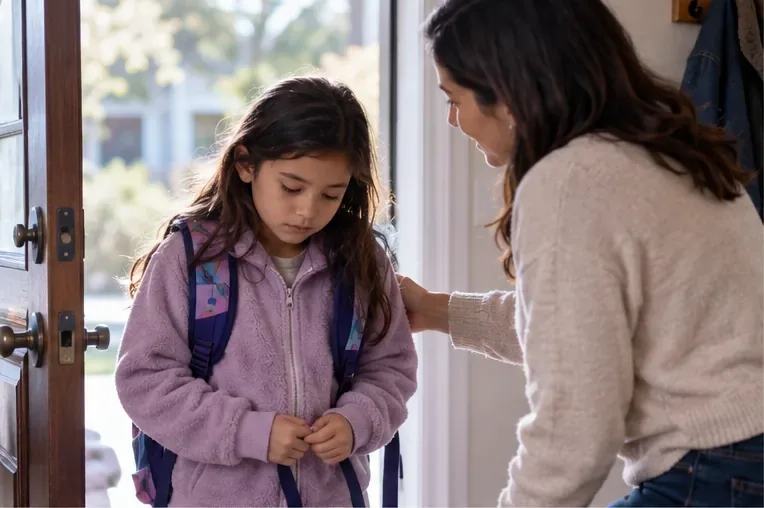
How to Teach Chores Without Redoing Every Task for Your Child

Teach kids to do chores with fewer reminders: set a clear finish line, model one task, step back, and correct only what is unsafe or unfinished.

For those who have never held a baby, the first time doing this will be very scary because the baby is so fragile and small. For a baby, being held is even more frightening than that. After months of being gently moved and safely lying in the uterus, being pulled up, rocked in the air can be a shock to your baby. Especially because your baby is not strong enough to hold the head and neck fixed, he will have a feeling of fear of falling, and therefore often react startled when held. So, if you hold your baby properly, it will help your baby feel more secure.
Before you touch your baby, help your baby recognize his presence through voice or eye contact. The reason for this action is that being lifted by an invisible hand can make your baby feel extremely confused.
Let your baby gradually adapt to the position change. You can support your baby by running your hand under the baby (one hand under the head and neck, the other under the buttocks) and holding it still for a while before lifting. Next, slide your hand from under the baby's head down to the back so that your arm supports the baby's back and neck, and your hand is around the baby's buttocks. Then use your other hand to support the legs and gently lift the baby towards your body and caress the baby. By leaning closer to your baby, you will limit the distance your baby has to collide in mid-air when holding and walking.
A small baby can be handled very neatly with just one arm with your hand underneath the baby, arms supporting the back, neck and head. This way is enough for you and your baby to feel safe. With older babies, both you and your baby will be more comfortable if you keep one hand under the baby's legs and buttocks and the other hand supports the baby's back, neck and head. Some babies like to be held on their shoulders the entire time they are held.
It is easy to hold the baby gently with one hand supporting the buttocks, the other under the baby's head and neck. You will have to support the baby's head for a long time until the baby can hold its own. However, you can still hold and hold the baby's head by snuggling the baby's lower body into your elbow behind the baby and your hand supporting the baby's head and neck.
Many children also love to be held facing forward so they can see the world around them. You can do this by holding your baby face forward, holding one hand across his chest, holding the baby's back toward you, and supporting the baby's buttocks with the other.
There is also a side grip. This grip gives you the freedom to use your hands to do chores around the house while keeping your baby on your side. However, you should avoid this hug if you yourself have lower back problems. Hold your baby upright with one hand and rest her lower body on your hips.
First, hold your baby close to you as you bend over the crib or stroller, with one hand under the baby, the other supporting the back, neck and head. Hold your hands in the same position for a few minutes until your baby feels comfortable and secure, then gently pull them out. You can also pat your baby a few times and say goodbye if he is awake. You have now put your baby in a safe cot or stroller and are ready to rest.
Teach kids to do chores with fewer reminders: set a clear finish line, model one task, step back, and correct only what is unsafe or unfinished.
Learn why toilet-trained children may start having pee or poop accidents again, what patterns to track, how to respond calmly, and when to call the pediatrician.
A child may repeat a reassurance question to process information, seek connection, or manage worry. Learn how to respond and when persistent anxiety needs support.
Learn how to set screen-time boundaries with predictable routines, warnings, calm follow-through, and better transitions—without turning every device handoff into a fight.
Teach children to handle losing without shame or explosive anger by validating feelings, setting behavior limits, modeling recovery, and practicing at the right difficulty.
A calm, practical plan for after-school meltdowns: reduce overload, keep limits clear, track patterns, coordinate with school, and know when to seek help.
Learn how to respond when a child feels unwanted, ask supportive questions, recognize bullying or ongoing distress, and know when to seek extra help.
Learn how to set up a shared bedroom for siblings with different bedtimes, from planning around age-based sleep needs to creating separate sleep spaces and quiet routines.
Compare full-day, gradual, and temporary at-home return plans, plus health checks and school supports that can help a child reenter safely.
Learn when a child can try to solve a friendship problem, when adults should step in, and how to tell whether support is helping or needs to change.