How to Teach Chores Without Redoing Every Task for Your Child

Teach kids to do chores with fewer reminders: set a clear finish line, model one task, step back, and correct only what is unsafe or unfinished.

Cutting with scissors requires smooth coordination of the baby's fingers. Therefore, you need to teach children skills to use scissors so that they do not cut off the hand.
Although many 3 - 4 year olds already have the skills to use scissors, most of these skills will not be fully developed until 6 years old. If your baby is becoming interested in using scissors, try the following steps to teach your child skills to use scissors safely.
Scissors come in many sizes. So find a pair of scissors that fits the child's hand. For beginners to cut, you should choose scissors that do not have sharp ends, and the tongue is sharp enough for children to cut the first cut.
Left-handed children should hold the left hand. If so, choose a pair of scissors where the top edge of the scissors is also on the left so that the child can see the cut. Be careful with scissors for ambidextrous, as the upper blade of these scissors is usually on the right side, making it difficult for lefties to see the cut.
Children with special needs such as weak hands or problems with coordination may need special scissors that are suitable for starting and will make certain improvements over time. There are many functional scissors available specifically for children with physical limitations. For example, the scissors with only the tip will automatically open after cutting. These scissors are very useful for children with weak arms and limited coordination.
As a parent, you often tend to choose for your child safety scissors when starting to cut. However, these scissors are often quite dull and difficult to cut, making it difficult for children to cut so they are easily discouraged.
The safety issue of using scissors is very important and should be emphasized when a child is just starting to practice. You should teach your children the following rules:
Scissors are used only to cut paper, not to cut anything, including shirts, crayons, fingers, hair and lips. If your child cuts something other than paper, pay attention and stop it. If this continues, the child will be foreclosed and no longer allowed to use it.
Children are not allowed to move around the classroom with scissors in their hands. If you must do so, you should teach your child how to hold the scissors safely. Remove the fingers from the handle of the scissors, close the tongue pull, grasp the tongue pull in the palm of your hand. When moving should hold the scissors close to the body. In this way, children will avoid unnecessary risks.
Before teaching your child to use scissors, you should organize some fun activities to help your child increase strength and improve hand and finger coordination. You can try having your child use a food clip to move small blocks from one container to another. Alternatively, you can try the following activities:
Tear paper into small pieces to improve both hand coordination.
Punch holes in cardboard with punchers to enhance hand muscles and coordination skills.
Squeeze water out of tub toys
Finger puppet games help kids become dexterous and flexible.
Once your child's arm muscles have strengthened and coordination has improved, start practicing with scissors. You can try the following instructions:
Fix your wrist, insert your thumb into the small hole of the scissors.
Insert the middle finger into the other hole. Some scissors have enough space for either your ring finger or all other fingers.
Place your index finger outside the pull hole, in front of the middle finger, this finger acts as a "guide".
The ring finger and the little finger should be rolled into the palm of the hand (unless the ring finger is in the hole with the middle finger).
When they get used to handling and manipulating scissors, they are ready to cut themselves. Children can start by cutting colorful straws into small pieces, then forming a colorful bracelet. If your child is used to it, let them practice cutting other harder things such as a cardboard sheet, an old binder ...
When practicing, have your child cut straight lines, curves and simple shapes. Initially, you can draw thick and bold lines for children to practice. As your child gets used to it, draw thinner lines. When teaching your child the skills of using scissors, you need time and patience.
Teach kids to do chores with fewer reminders: set a clear finish line, model one task, step back, and correct only what is unsafe or unfinished.
Learn why toilet-trained children may start having pee or poop accidents again, what patterns to track, how to respond calmly, and when to call the pediatrician.
A child may repeat a reassurance question to process information, seek connection, or manage worry. Learn how to respond and when persistent anxiety needs support.
Learn how to set screen-time boundaries with predictable routines, warnings, calm follow-through, and better transitions—without turning every device handoff into a fight.
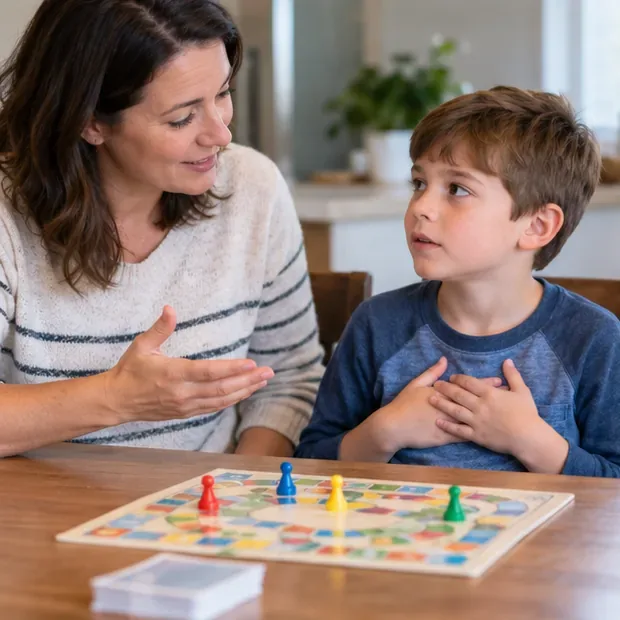
Teach children to handle losing without shame or explosive anger by validating feelings, setting behavior limits, modeling recovery, and practicing at the right difficulty.
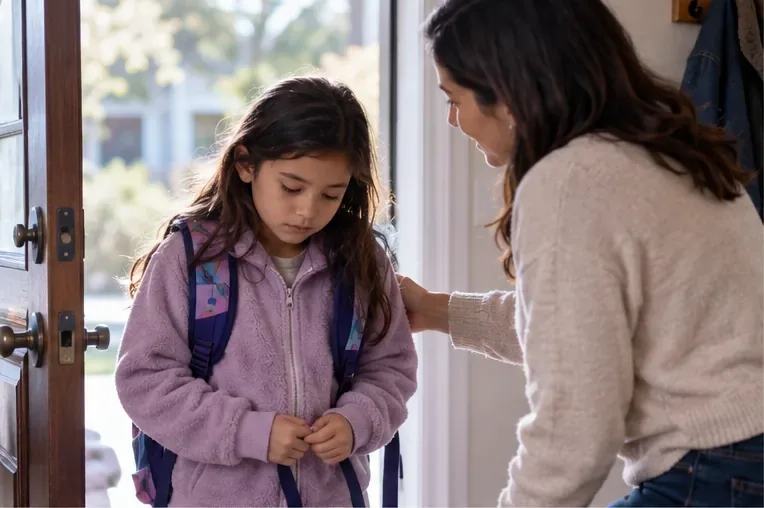
A calm, practical plan for after-school meltdowns: reduce overload, keep limits clear, track patterns, coordinate with school, and know when to seek help.
Learn how to respond when a child feels unwanted, ask supportive questions, recognize bullying or ongoing distress, and know when to seek extra help.
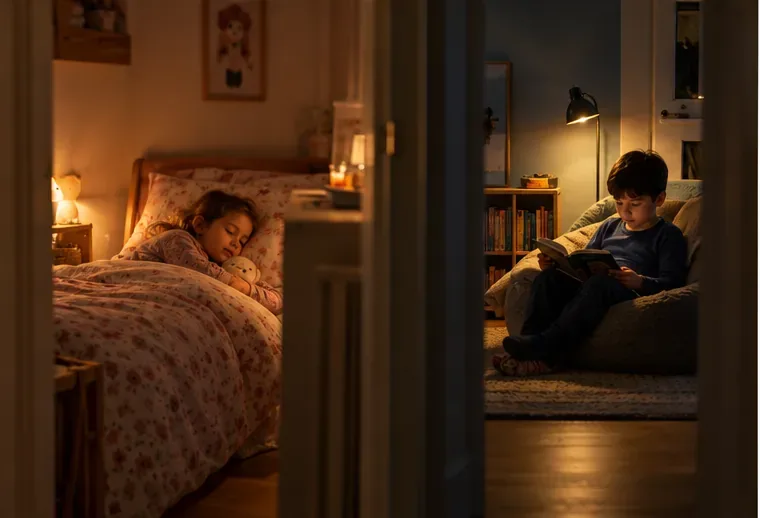
Learn how to set up a shared bedroom for siblings with different bedtimes, from planning around age-based sleep needs to creating separate sleep spaces and quiet routines.
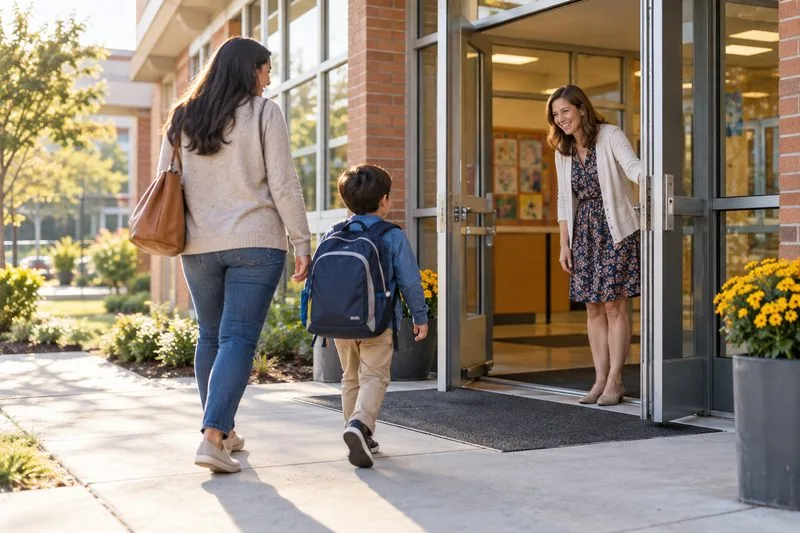
Compare full-day, gradual, and temporary at-home return plans, plus health checks and school supports that can help a child reenter safely.
Learn when a child can try to solve a friendship problem, when adults should step in, and how to tell whether support is helping or needs to change.