A road-trip feeding plan helps your dog eat familiar food, drink regularly, and take potty breaks without turning every stop into guesswork. Before you leave, write down your dog’s usual meal times and portions, then map those onto the drive. This five-step checklist is for healthy dogs with a regular routine; ask your veterinarian for an individual plan if your dog takes medication with food, has a medical condition, is very young, or gets carsick.
Prerequisites
| What to prepare | Why it helps |
|---|---|
| Your dog’s normal food, measuring cup or scale, and a clean scoop | Keeps the food and portions familiar and consistent. |
| Food containers or the original food bag, plus a sealed backup bag | Makes meals easy to portion while preserving product information and keeping food dry. |
| Fresh water, a travel bowl, and waste bags | Supports drinking and regular bathroom breaks on the route. |
| Your usual feeding schedule and an itinerary with planned stops | Lets you plan meal and potty opportunities instead of feeding on impulse. |
| Estimated planning time: 15–30 minutes for a day trip; longer if you need to check lodging or medical needs. Difficulty: Easy. | Estimate only; actual preparation varies with trip length and the dog’s needs. |
How to make a dog road-trip feeding checklist
Step 1: Record your dog’s normal meals and bathroom rhythm
Write down the time and amount of each regular meal, any food-related medication, and when your dog usually needs to go outside after eating or drinking. Use the amount already recommended for your dog rather than increasing the daily ration because the trip is active. Add routine snacks only if they are part of the dog’s usual plan, and include them in the day’s total if you normally track them.
Also note the foods your dog tolerates well. A road trip is a poor time to introduce a new brand, rich treat, or unfamiliar topper: a change can upset the stomach, and it becomes harder to tell whether travel stress or the food caused a problem. If your veterinarian has prescribed a diet, follow those instructions and bring enough of that exact food.
Step 2: Pack measured portions of the familiar food
Estimate the food needed for each planned meal and pack an extra meal or two in case of a delay. Keep dry food in its original bag, folded or sealed closed. The FDA recommends placing the entire original bag inside a storage container when using one; that keeps the product name, lot number, UPC, and best-by date available if you need to identify the food. If you transfer kibble out of the bag, use a clean, dry, tightly lidded container and save the label details.
Keep dry food in a cool, dry place, not in a hot parked car. The FDA says excess heat or moisture can affect nutrients and advises storage below 80°F. For canned or pouched food, carry only what you need and promptly refrigerate unused portions; FDA guidance says to keep the refrigerator at 40°F or below. If you cannot keep opened wet food safely chilled, pack single-serve portions or plan to discard leftovers rather than leaving them warm.
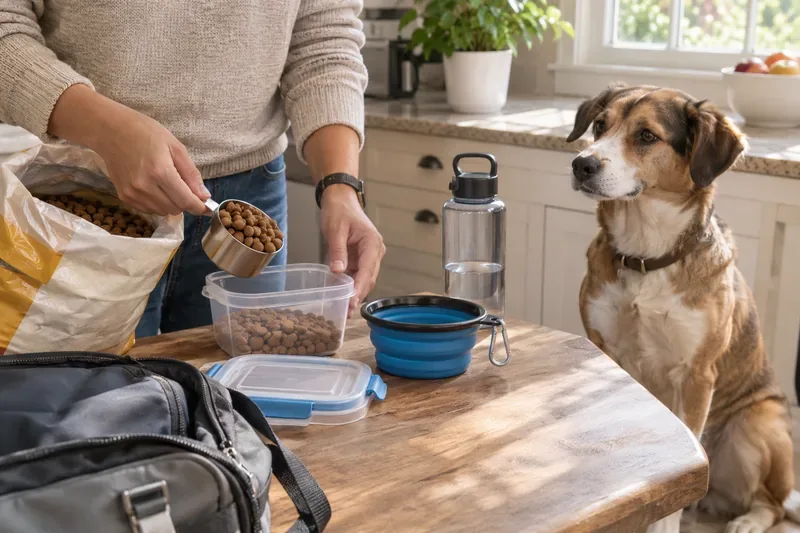
Step 3: Choose meal times around the drive, not just the clock
Keep meal times as close to the dog’s normal routine as practical, but coordinate feeding with safe stops. The American Veterinary Medical Association advises maintaining regular feeding and bathroom routines and offering small portions of food and water on long trips. The Cornell University College of Veterinary Medicine says to avoid feeding a dog for 4–6 hours before travel to help reduce motion sickness. These recommendations need to be applied to the individual dog: do not assume every dog should fast for the same duration, especially if your veterinarian has set a different schedule.
For example, if your dog normally eats breakfast at 7:00 a.m. and you plan to depart at 8:00 a.m., ask your veterinarian whether moving the meal earlier, offering a smaller portion at a stop, or adjusting the departure schedule is appropriate. For a dog that has no travel-related nausea and eats a prescribed breakfast, the veterinarian may advise a different approach. Never skip or delay food that is required with medication without checking first.
Step 4: Schedule water and potty stops
Carry water from home or another known safe source, plus a bowl your dog recognizes. Offer water during breaks and keep it available in a way that is safe for your restraint setup; do not try to hand-feed or manage bowls while driving. The AVMA recommends stopping about every two hours on long trips so dogs can exercise and relieve themselves. Treat that as a planning guide, not a substitute for your dog’s individual needs: puppies, older dogs, dogs with health conditions, and dogs that signal earlier may need more frequent stops.
At each break, secure the leash before opening the vehicle door, give your dog time to drink and sniff, and allow a bathroom opportunity. Keep meal and water breaks calm. Never leave a dog unattended in a parked car; the AVMA warns against leaving pets alone in vehicles.
Step 5: Confirm the day-of checklist and monitor your dog
Before departure, check that each meal is measured, medication instructions are packed, water is accessible, and the next stop is identified. Keep food and treats secured so your dog cannot eat the entire supply. If you will stay overnight, keep the same food and feeding utensils with you rather than relying on finding the exact diet along the route.
- Usual food and any veterinarian-approved extra portions
- Original package or saved product and lot information
- Measuring scoop, clean bowl, and travel water
- Medication instructions and your veterinarian’s contact information
- Planned feeding, water, and potty stops
Watch for repeated drooling, retching, vomiting, diarrhea, refusal to eat, unusual lethargy, or signs of dehydration. Pause at a safe location and contact a veterinarian if symptoms are significant, persistent, or concerning. Cornell notes that dogs with travel nausea may benefit from veterinary advice, including discussion of medication. Do not give human motion-sickness drugs or change a prescribed diet without veterinary guidance.
Worked example: a two-meal routine on a long drive
Suppose a healthy adult dog usually eats breakfast at 7:00 a.m. and dinner at 6:00 p.m., and the family expects to drive most of the day. The checklist would record both usual portions, the dog’s bathroom pattern, a departure time, and stop locations. The owner would ask the veterinarian how to handle the breakfast in light of the dog’s history with car rides, then plan smaller meal portions and water during safe stops if appropriate. Dinner can be offered at the usual time after arrival, if the dog is settled and there are no medical instructions to the contrary. This is a planning example, not a feeding prescription; the dog’s vet should advise when motion sickness, medication, or illness changes the routine.
Troubleshooting
My dog gets nauseated or vomits in the car. What should I change?
Do not simply withhold food or give a medication based on a general internet schedule. Note when the dog last ate, when symptoms began, and whether they happen on short rides too. Ask your veterinarian about meal timing and motion-sickness treatment before the next trip. Cornell’s 4–6-hour guidance is general advice for reducing nausea, not a rule for dogs with special feeding or medication needs.
The drive is delayed and a meal will be late. Should I feed at the roadside?
Pull over at a safe, dog-friendly location, never feed while the vehicle is moving, and offer the planned portion only if it fits your dog’s health instructions and motion-sickness plan. If a delay means a medication-related meal will be missed, call your veterinarian for direction. Do not compensate with a double portion later unless your veterinarian says to.
How do I keep food fresh in hot weather?
Keep dry food sealed in its original bag and out of heat and moisture; do not store it in a hot vehicle for extended periods. Use an insulated cooler with safe temperature control for opened wet food, and promptly refrigerate leftovers at 40°F or below when you arrive. Discard food that has been stored improperly or seems spoiled.
FAQ
Should I feed my dog before a road trip?
There is no single schedule for every dog. Cornell advises avoiding food for 4–6 hours before travel to reduce motion sickness, while the AVMA advises maintaining regular routines and using small portions on long trips. Ask your veterinarian which approach fits your dog, especially if the dog takes medication with food or has a health condition.
How often should I stop to feed and water my dog?
For long trips, the AVMA recommends small portions of food and water and planning a stop about every two hours for exercise and bathroom breaks. Adjust for your dog’s age, health, weather, and normal needs; keep fresh water available at safe breaks.
Can I put dog kibble in a travel container?
Yes. FDA recommends putting the entire original bag inside the container when possible. If you pour kibble into another container, make sure it is clean, dry, and tightly sealed, and keep the product and lot information.
Sources: American Veterinary Medical Association, Traveling with your dog or cat; Cornell University College of Veterinary Medicine, Traveling safely with your dog; and U.S. Food and Drug Administration, Proper Storage of Pet Food & Treats.